If you searched for “how does ai work,” the useful answer is not that AI is magic, conscious, or a giant rulebook. AI works by using data, algorithms, and computing power to find patterns, then applying those patterns to a new task.
The question “How does AI work?” has a practical answer: someone defines a job, data is gathered, a model is trained or configured, the model receives an input, and the output is checked before it is trusted. The useful test is whether the system turns patterns into a reviewable prediction, recommendation, draft, or action.
A useful how does AI work guide should help you do three things: understand the basic loop, recognize everyday examples, and decide when human review is required.
AI learns or applies patterns from data to classify, predict, recommend, generate, plan, or act.
Use AI first where a person can inspect the source, output, and consequence before anything ships.
AI can produce smooth answers that are incomplete, biased, outdated, private, or simply wrong.
How Does AI Work? The Plain Answer
Artificial intelligence is a broad field for systems that perform tasks associated with human intelligence: recognizing language or images, finding patterns, making predictions, recommending options, generating content, planning steps, or acting through software and machines.
Google Cloud describes AI systems as learning from data to identify patterns and make predictions or decisions without being explicitly programmed for every scenario. IBM frames AI around machines simulating human learning, comprehension, problem solving, decision-making, creativity, and autonomy. ISO is useful because it connects the technical idea to privacy, bias, transparency, and accountability.
Most AI work can be understood as five pieces:
| Piece | What it means | Everyday example | Human review point |
|---|---|---|---|
| Goal | The job the system is meant to do. | Block spam, suggest a route, summarize notes, detect a defect, or draft a reply. | If the goal is vague, the output will be hard to evaluate. |
| Data | Examples, documents, labels, images, transactions, sensor readings, prompts, or feedback the system can use. | Past spam messages, traffic reports, product clicks, support tickets, or meeting transcripts. | Check permission, quality, bias, freshness, and whether sensitive data is needed. |
| Model | The algorithmic system that represents patterns and turns inputs into outputs. | A classifier, recommendation model, neural network, language model, or agent workflow. | A model can be powerful without being transparent or appropriate for the task. |
| Input | The new thing you give the system. | A search query, photo, email, transaction, question, document, voice command, or prompt. | Weak context makes the model guess more than it should. |
| Output | The result the model returns. | A label, score, route, recommendation, summary, image, code draft, answer, or next action. | Important outputs need fact checks, source checks, tests, or approval before use. |
If you want the broader category map, start with our types of artificial intelligence guide. If you want to see the same idea through everyday scenarios, our artificial intelligence examples article covers common use cases.
The Core Loop Behind AI Work
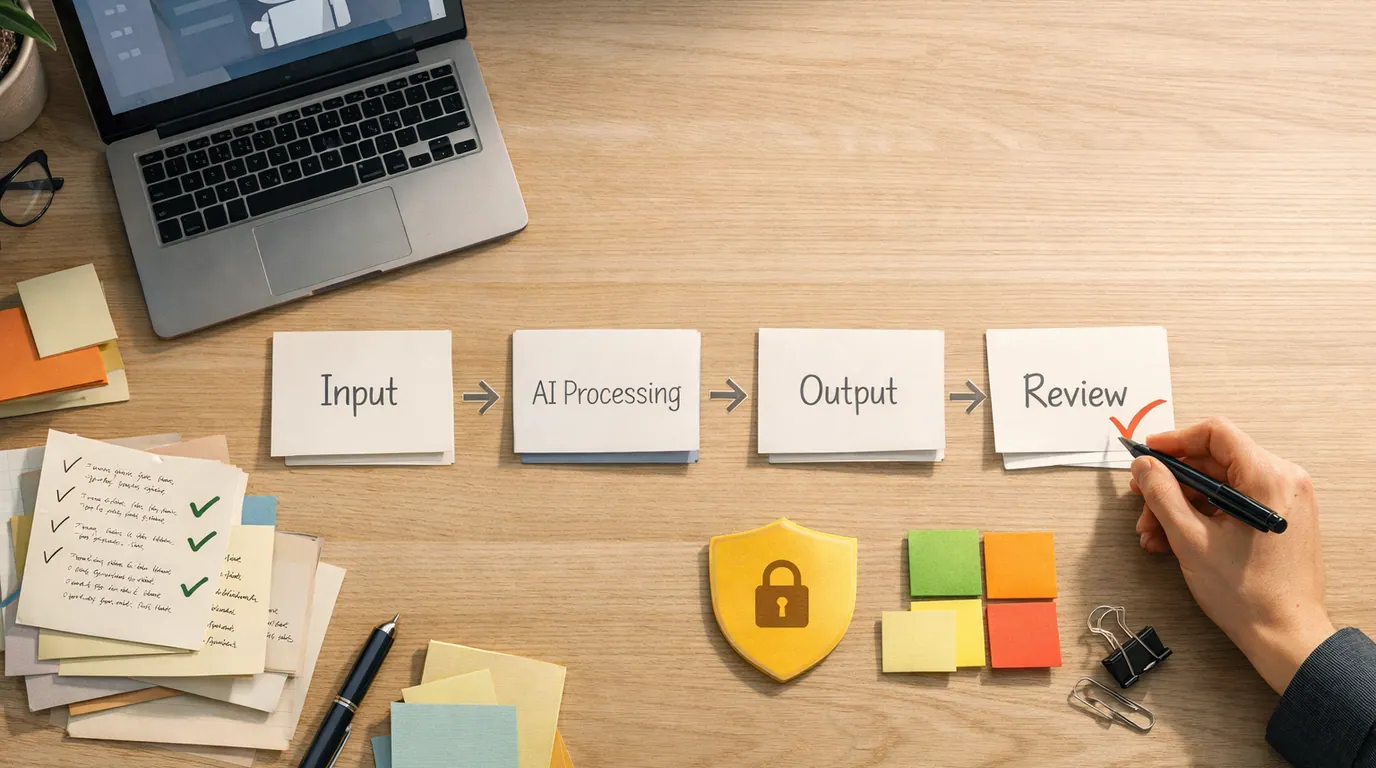
What makes AI work is not consciousness. It is a loop: define the task, learn from examples or rules, apply the model to a new input, measure the result, and improve the system when the result is weak.
In simple terms, the loop looks like this:
- Define the problem. Decide what the system should predict, classify, recommend, generate, search, summarize, or automate.
- Prepare the data. Gather examples, remove obvious errors, label data when needed, and separate useful signal from noise.
- Train or configure the model. The system learns relationships in the data or is connected to rules, tools, documents, and prompts that guide its behavior.
- Run inference. Inference is the moment the model receives a new input and produces an output.
- Evaluate the output. People or tests compare the result with a known answer, business rule, source document, safety policy, or quality standard.
- Improve the workflow. Better data, clearer prompts, stronger evaluation, retrieval, human feedback, or new model design can reduce errors.
Coursera describes a similar creation process: define the problem, determine outcomes, organize data, choose technology, and test solutions. That order matters. If the problem is unclear, better technology usually produces a more polished version of the wrong answer.
This is also the simplest answer to “does AI work?” Yes, AI can work extremely well inside a bounded task with good data, a measurable output, and review. It works poorly when people ask it to make hidden judgments, use data it should not have, or produce final decisions without oversight.
How Different AI Systems Learn
The phrase “AI” covers several methods. Some systems follow rules. Some learn from labeled examples. Some search for structure in unlabeled data. Some improve through rewards and penalties. Modern generative AI often uses deep learning models trained on massive text, image, code, audio, or video datasets.
| Approach | How it works | Example | Watch for |
|---|---|---|---|
| Rules and expert systems | People write explicit rules for the system to follow. | If a support ticket contains billing keywords, route it to the billing queue. | Rules are clear but brittle when real life gets messy. |
| Supervised machine learning | The model learns from examples that include the right answer. | A spam filter studies messages labeled spam or not spam. | Labels can be wrong, biased, or too narrow. |
| Unsupervised learning | The model finds patterns or groups without being given labels. | An ecommerce system clusters customers by browsing and buying behavior. | Clusters may look meaningful even when they are not useful. |
| Reinforcement learning | The system learns by taking actions and receiving rewards or penalties. | A game-playing system improves by learning which moves lead to better outcomes. | Reward design can create shortcuts or unexpected behavior. |
| Deep learning | Layered neural networks learn complex patterns in text, images, audio, code, or other high-dimensional data. | A language model drafts text or an image model recognizes objects. | The reasoning can be hard to inspect, and errors can sound confident. |
| Generative AI | A model creates new outputs from patterns, prompts, and context. | A chatbot summarizes a document, drafts an email, or creates a lesson outline. | Generated content needs fact, privacy, source, and originality checks. |
For the model hierarchy behind these terms, see our machine learning vs deep learning comparison. For systems that create text, images, code, audio, and structured drafts, our generative AI explained article goes deeper.
When someone asks “how does AI learn?”, the answer depends on the method. A spam filter may learn from labeled email examples. A recommendation system may learn from user behavior. A language model may learn statistical relationships among tokens and context. A robot may learn from sensors, simulation, and feedback. The common thread is pattern use, not human-like understanding.
How AI Works in Everyday Examples
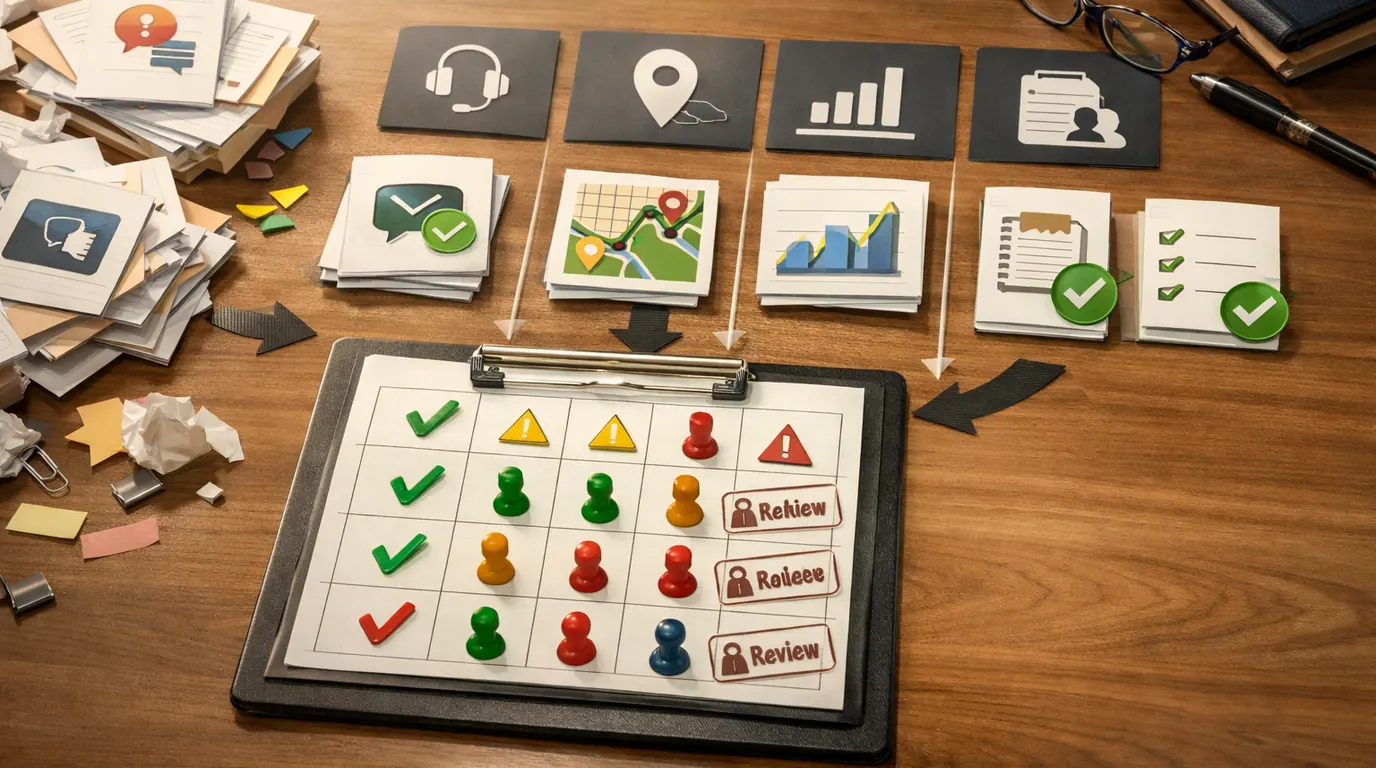
The best how does AI work use cases are easy to understand because you can name the input, output, and failure mode. If you cannot name those three, the system will be hard to trust.
| Example | Input | What the AI does | Output | Review point |
|---|---|---|---|---|
| Email spam filter | Sender signals, message text, links, attachments, and user feedback. | Classifies messages based on learned suspicious patterns. | Inbox, spam folder, or warning label. | Check important folders for false positives. |
| Streaming recommendation | Watch history, ratings, skips, similarity patterns, and catalog metadata. | Ranks options that look likely to fit your behavior. | Suggested movies, shows, songs, or videos. | Recommendations may optimize for engagement, not wellbeing or variety. |
| Navigation app | Map data, traffic reports, location, road constraints, and historical patterns. | Predicts likely travel time and compares route options. | A route, ETA, or rerouting suggestion. | Use local judgment for road closures, safety, and special constraints. |
| Voice assistant | Speech audio, device context, and command history. | Transcribes speech, interprets intent, and triggers a response. | A timer, reminder, search result, call, or smart-home action. | Confirm actions that spend money, unlock access, or share information. |
| Customer support chatbot | User question, conversation history, help-center articles, and policy rules. | Retrieves context, generates a reply, or routes the case. | Answer, summary, draft response, or escalation. | Sensitive, angry, legal, billing, or account-access cases need escalation. |
| Meeting summary tool | Transcript, agenda, participants, and notes. | Extracts decisions, topics, action items, and follow-ups. | Summary, task list, or owner table. | Confirm names, commitments, deadlines, and anything disputed. |
| Image inspection | Product photos, medical scans, security footage, or manufacturing images. | Detects visual patterns or anomalies. | Label, score, highlighted area, or alert. | False positives and false negatives can both be costly. |
These examples explain why AI can feel smart without being generally intelligent. The system can be excellent at one pattern task and unreliable outside that task. A route planner is useful for traffic, but it is not qualified to judge whether a neighborhood is safe for your specific situation. A writing assistant can draft a paragraph, but it does not know whether your promise to a customer is contractually allowed.
A How Does AI Work Strategy for Real Decisions
A practical how does AI work strategy starts with the job, not the model. Ask what output you need, what data the system would require, how mistakes show up, and who reviews the result.
If the awkward search phrase in your notes is “best how does AI work,” translate it into a better decision: which explanation helps you choose a safe use case and avoid over-trusting the output?
Use this decision table before you add AI to a workflow:
| Question | Good signal | Risk signal | Decision rule |
|---|---|---|---|
| Can the output be reviewed? | A person can inspect, edit, approve, or reject it. | The model makes a hidden or final decision. | Use AI for support before authority. |
| Is the data appropriate? | The input is public, approved, anonymized, or protected by policy. | The tool needs customer, employee, student, patient, legal, or confidential data without clear controls. | Set privacy rules before testing. |
| Is the task repeated? | The same kind of work appears often enough to justify a process. | The task is rare, political, ambiguous, or high-stakes. | Automate repeatable bottlenecks first. |
| Is quality measurable? | You can compare outputs against examples, tests, source documents, rubrics, or edit time. | Success is just whether the result sounds impressive. | Define acceptance criteria. |
| Is failure manageable? | A wrong output can be caught and corrected before harm. | A wrong output affects health, safety, money, legal rights, employment, grades, identity, or public claims. | Add review, escalation, or avoid AI for now. |
This is where “does AI” become the wrong starting point. The better question is: does this AI system have the right data, constraints, evaluation, and human review for this specific job?
For repeatable business processes, connect the decision to the operating model in our AI workflow automation guide. For prompt-led tasks, the context and review pattern in our guide to writing better AI prompts will help you ask for outputs that can actually be checked.
A How Does AI Work Workflow You Can Reuse
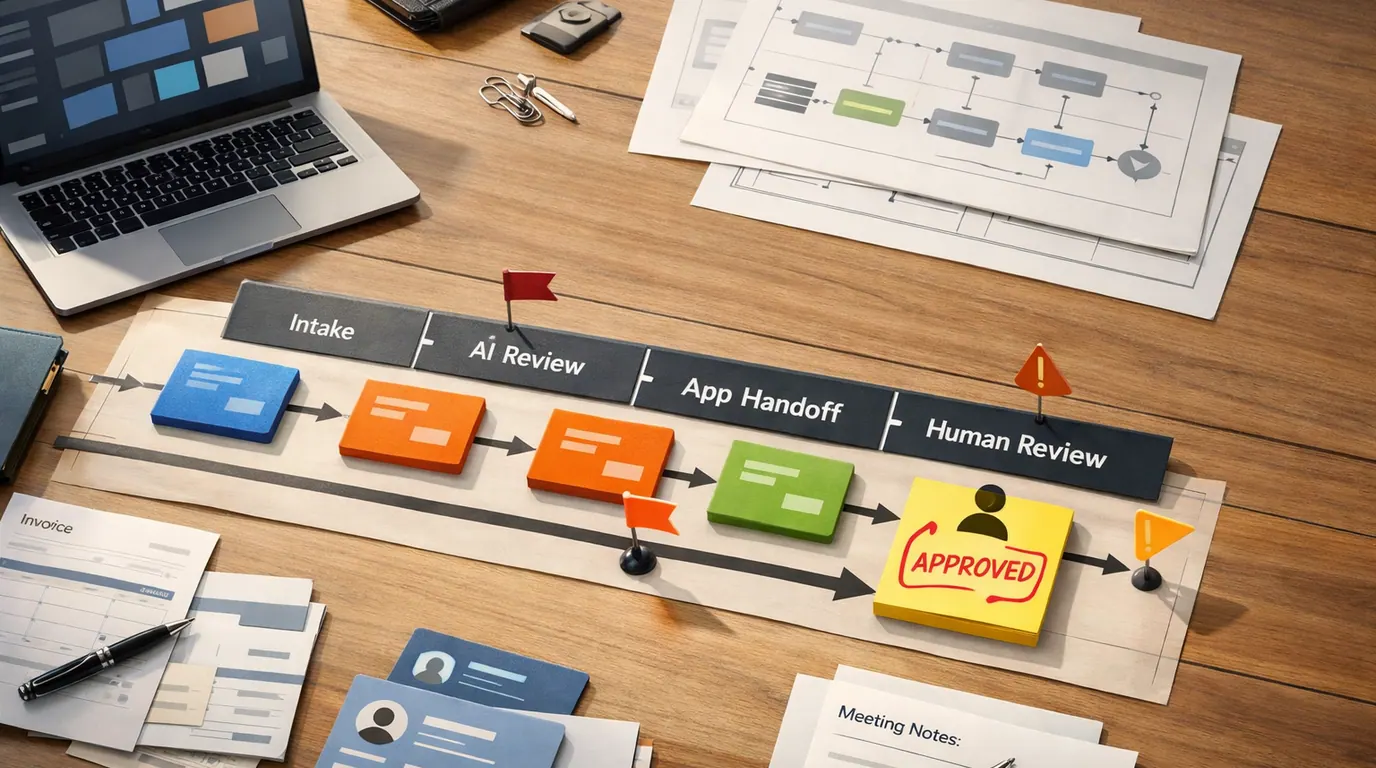
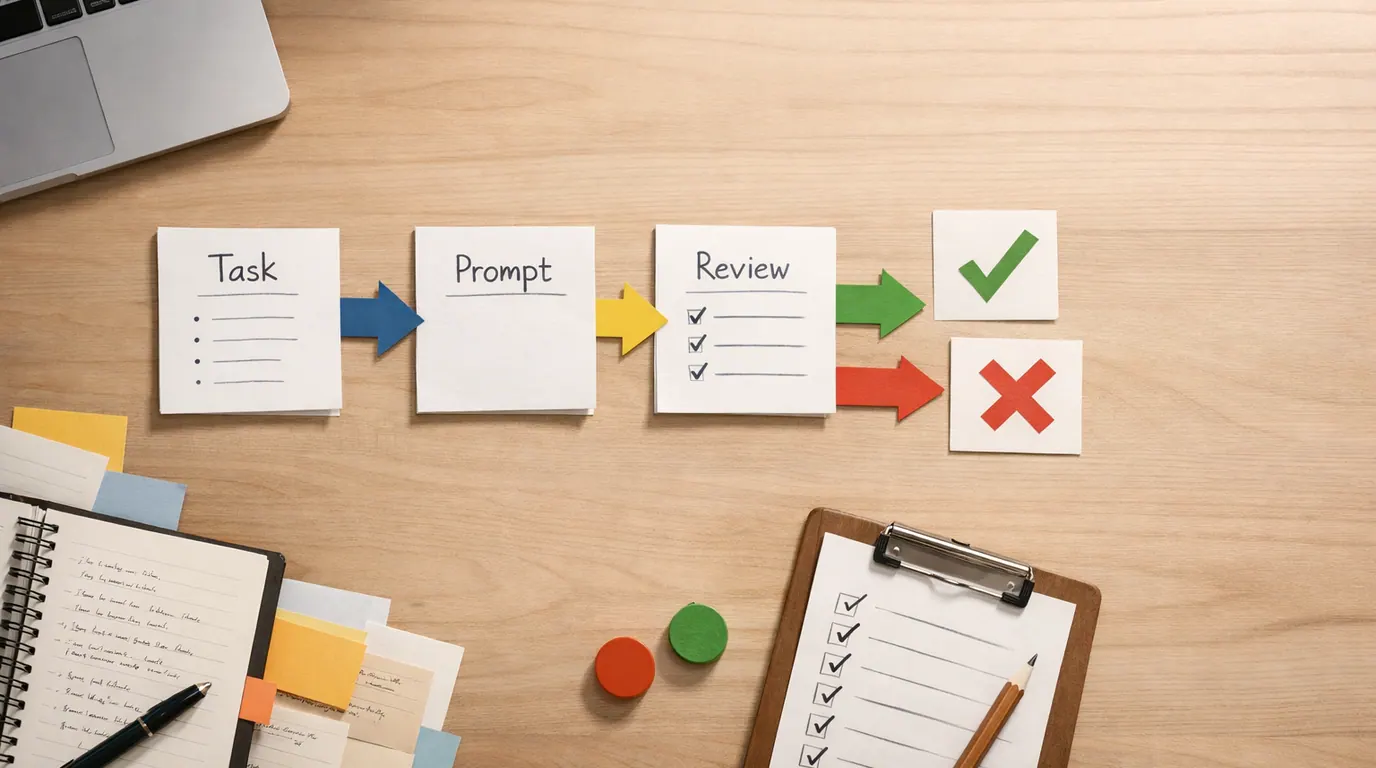
Use this how does AI work workflow when you want to try AI without turning it into an unreviewed decision maker.
- Name the task in one verb. Predict, classify, summarize, draft, explain, translate, recommend, detect, plan, search, or act.
- Write the input boundary. Decide what data the system may use and what data it must not receive.
- Specify the output format. Ask for a label, table, source-grounded summary, draft, checklist, score with evidence, or set of options.
- Ask for uncertainty. Require assumptions, missing information, weak evidence, and claims that need verification.
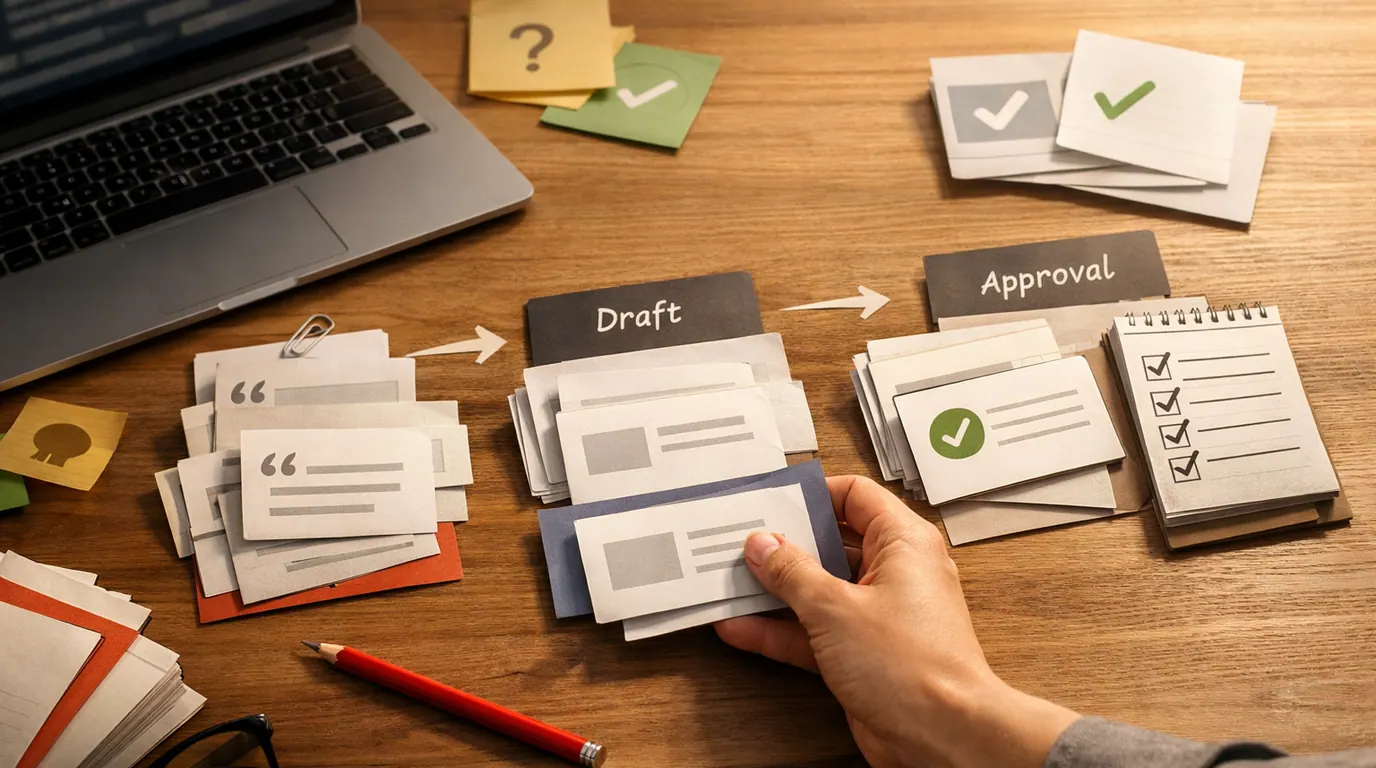
- Review before action. Check accuracy, privacy, bias, tone, legal claims, citations, calculations, and downstream impact.
- Save what works. Turn good prompts, examples, rubrics, and escalation rules into a repeatable process.
Here is the practical difference. A weak request says, “Use AI to improve support.” A stronger workflow says, “Summarize the customer’s issue, identify the likely policy article, draft a reply, flag missing account details, and require a support lead to approve refunds or cancellations.”
That structure keeps the AI useful. It also makes failure visible: bad source, bad label, weak draft, missing evidence, privacy concern, or approval needed.
Cautions: Where AI Gets Things Wrong
AI can reduce repetitive work, but it can also hide risk behind speed and polish. The main danger is not that the system is obviously bad. The danger is that an answer looks finished before anyone checks whether it is true, fair, current, allowed, or appropriate.
Works Well When
- Use AI for low-risk drafts, summaries, explanations, classifications, recommendations, and options that a person can review
- Use AI when the input data is approved and the output has a clear success standard
- Use AI to prepare work for a reviewer who understands the domain
- Use AI where mistakes are reversible and the workflow has an escalation path
Watch Out For
- Do not use unapproved AI tools with private customer, employee, student, patient, legal, financial, or source-code data
- Do not rely on generated citations, current facts, pricing, legal claims, medical advice, or financial recommendations without checking original sources
- Do not let AI make final decisions about health, safety, money, employment, grades, identity, access, or rights without accountable human oversight
- Do not mistake fluent language for understanding, consent, fairness, or truth
The common failure patterns are practical:
- Hallucination: the model invents names, sources, dates, numbers, product details, or explanations.
- Bias: the system learns unfair patterns from historical data, missing groups, labels, or feedback loops.
- Privacy exposure: prompts, files, transcripts, embeddings, logs, or tool calls can contain sensitive information.
- Data drift: a model trained on old behavior may fail when products, policies, fraud tactics, language, or markets change.
- Over-automation: a draft assistant slowly becomes a decision system because nobody defines approval boundaries.
- Weak explainability: the model returns an output without enough evidence for a person to challenge or correct it.
If your workflow uses personal information, company records, customer conversations, or sensitive files, read our AI privacy concerns guide before connecting tools or uploading data.
Human Review Checklist
Use this checklist before you trust an AI output:
- Task: Can you describe the exact job without vague words like “optimize” or “make better”?
- Source: Is the input data allowed, current, relevant, and limited to what the task needs?
- Evidence: Does the output show which facts, documents, calculations, or examples support it?
- Fit: Does the answer match the audience, policy, tone, context, and real-world constraints?
- Risk: What happens if the output is wrong, biased, leaked, outdated, or misunderstood?
- Reviewer: Who has authority to approve, revise, reject, or escalate the result?
- Fallback: What is the manual path when the AI refuses, guesses, contradicts a source, or fails?
- Learning: What feedback will improve the prompt, dataset, rule, model, or review process next time?
If most answers are unclear, the workflow is not ready for AI. Narrow the task, remove sensitive data, define the output, or keep the work manual until review is obvious.
The Bottom Line
AI works by turning data and context into useful patterns, then using those patterns to produce an output for a new situation. That output might be a prediction, recommendation, label, draft, answer, route, image, score, summary, or action.
The practical question is not whether AI is intelligent in a human sense. It is whether the system has the right goal, data, model, input, output, evaluation, and reviewer for the job in front of you.
Start with reviewable work. Use AI for drafts, summaries, classifications, explanations, and options before you use it for decisions. The more an output affects people, money, safety, rights, or public claims, the stronger the human review point should be.
Frequently asked questions
How does AI work in simple terms?
AI works by turning examples into patterns a computer model can use. The system is trained on data, receives a new input, and produces an output such as a prediction, label, recommendation, answer, image, or action. The output is a useful guess, not guaranteed truth.
Does AI actually understand what it is doing?
Most AI systems do not understand the world like people do. They process patterns, context, probabilities, rules, and learned relationships. A chatbot can explain a topic fluently, but that fluency does not prove awareness, judgment, or reliable knowledge unless the answer is checked.
What data does AI need to work well?
AI needs data that matches the job: clear examples, labels when needed, enough variety, current information, and permission to use it. Bad, biased, stale, incomplete, or sensitive data can make the model inaccurate, unfair, or unsafe even when the technology is advanced.
What is the difference between AI, machine learning, and deep learning?
Artificial intelligence is the broad field of systems that perform tasks associated with human intelligence. Machine learning is a major AI approach where systems learn from data. Deep learning is a subset of machine learning that uses layered neural networks for complex data such as text, images, audio, and video.
Why does AI make mistakes?
AI makes mistakes because it learns from imperfect data, guesses from patterns, may lack recent or private context, and can optimize for plausibility instead of truth. Errors are more dangerous when outputs sound confident, so important AI work needs evidence checks, testing, and human review.
How should beginners start using AI safely?
Start with low-risk, reviewable tasks such as summarizing notes, rewriting an email, explaining a concept, brainstorming options, or organizing a checklist. Avoid private data, legal or medical decisions, financial instructions, and anything that affects another person until you have clear review rules.