If you searched for “types of artificial intelligence,” the useful answer is not a giant vocabulary list. It is a way to tell what a system can do, what it cannot do, and how much human review it needs before you trust it in real work.
This types of artificial intelligence guide uses the common academic categories, then translates them into everyday examples: chatbots, recommendation engines, fraud detection, image recognition, classroom tools, medical decision support, and agentic workflows that use other software.
The short version: AI can be grouped by capability, by function, and by practical job. The first two help you understand the theory. The third helps you choose a safe workflow.
Today’s useful systems are built for specific tasks, even when the interface feels conversational or flexible.
Choose AI by the output you need: create, predict, classify, recommend, converse, see, or act.
The more an output affects people, money, safety, or rights, the stronger the review point should be.
Types of Artificial Intelligence: The Plain Answer
There are three useful ways to organize the types of artificial intelligence:
| Lens | Main categories | Best use | Common mistake |
|---|---|---|---|
| Capability | Narrow AI, AGI, superintelligent AI | Understanding what the system can do compared with human flexibility. | Assuming a fluent chatbot has general intelligence. |
| Function | Reactive, limited memory, theory of mind, self-aware | Understanding whether the system uses context, memory, social reasoning, or self-modeling. | Treating theoretical categories as available products. |
| Practical job | Generative, predictive, conversational, vision, recommendation, agentic, robotics | Choosing a tool or workflow for a real task. | Buying a label instead of matching the workflow, data, and review need. |
IBM’s AI taxonomy is a useful starting point because it separates capability from functionality. NASA’s AI overview is also helpful because it frames AI as systems and techniques that can support perception, planning, reasoning, learning, communicating, decision-making, and acting.
A useful AI taxonomy is less like a ladder and more like a map: it tells you what the system can do, where it fails, and who must review the result.
AI Types by Capability: Narrow, General, and Superintelligent
Capability categories answer a simple question: how broadly can the system apply intelligence?
| Capability type | What it means | Everyday example | Caution |
|---|---|---|---|
| Narrow AI, or ANI | AI built for a specific task or bounded set of tasks. | Spam filters, translation tools, search ranking, voice assistants, image classifiers, recommendation systems, and generative chat assistants. | It can be excellent inside its lane and unreliable outside it. |
| Artificial General Intelligence, or AGI | A theoretical system that could learn, reason, and transfer knowledge across unfamiliar tasks with human-like flexibility. | No dependable consumer or business product should be treated as AGI for planning. | Do not build policies, budgets, or risk assumptions around AGI as if it were already operational. |
| Artificial Superintelligence, or ASI | A hypothetical system that would exceed human intelligence across most domains. | Science-fiction scenarios and long-range research debates, not a routine software category. | Useful for ethics and risk discussion, but not a procurement category for teams today. |
For daily decisions, assume available AI systems are narrow AI unless a vendor can prove otherwise in the exact task, data environment, and review process you care about. A writing assistant can draft text. A fraud model can flag suspicious transactions. A vision model can classify images. None of those facts mean the system has broad judgment.
This matters when people ask for the best types of artificial intelligence. There are no universal best types of artificial intelligence; there are best fits for a problem. Narrow AI is the best fit for repeatable, bounded work. AGI and superintelligence are not practical choices for a team building a workflow in 2026.
AI Types by Function: How the System Behaves
Functional categories describe how an AI system responds to information. They are useful because two tools can both be narrow AI while behaving very differently.
| Functional type | What it does | Example | Human review point |
|---|---|---|---|
| Reactive machine AI | Responds to the current input without keeping a memory of previous interactions. | A rules-heavy chess engine or a basic classifier that evaluates one item at a time. | Check whether the input contains everything the system needs, because it will not remember missing context. |
| Limited-memory AI | Uses recent or historical data to improve predictions, recommendations, or responses. | Navigation apps, recommendation engines, fraud detection, chatbots with conversation context, and many generative AI systems. | Review data quality, retention, privacy, bias, and whether old patterns still apply. |
| Theory-of-mind AI | A proposed class that would understand beliefs, emotions, intentions, and social context deeply enough to adapt interaction. | No mature general-purpose example should be treated as solved. | Do not assume sentiment detection equals emotional understanding. |
| Self-aware AI | A hypothetical system with an internal sense of self, state, and potentially its own goals. | No operational product category for normal business or personal use. | Keep it in the ethics and future-risk bucket, not the implementation plan. |
Most modern tools people use at work are limited-memory narrow AI. They learn from training data, use context windows, retrieve documents, or adapt from historical patterns. That does not mean they remember safely, reason like a person, or understand the social consequence of an answer.
If your notes include clumsy search phrases like “intelligence AI” or “artificial intelligence AI,” translate them into a cleaner question: what kind of intelligence is the system simulating, and what evidence would prove it is reliable for this task?
Practical Types of AI You See Every Day
The capability and function labels help with theory, but practical types of AI are easier for everyday decisions. They describe the job the system performs.
| Practical type | What it is good at | Common use case | Watch for |
|---|---|---|---|
| Generative AI | Creating new text, images, code, audio, video, summaries, outlines, and structured drafts. | Writing a first draft, creating design variations, generating code suggestions, or summarizing notes. | It can invent facts, miss context, copy style too closely, or sound confident when evidence is weak. |
| Predictive AI | Forecasting likely outcomes from historical and current data. | Demand planning, churn prediction, credit risk signals, maintenance alerts, or health-risk stratification. | Predictions can fail when data shifts, bias enters the dataset, or people treat probabilities as certainties. |
| Conversational AI | Interpreting language and responding through chat or voice. | Customer support chatbots, voice assistants, internal help desks, and tutoring interfaces. | Escalation rules matter when the user is upset, the question is sensitive, or the answer affects money or safety. |
| Computer vision | Interpreting images, video, scans, or sensor feeds. | Quality inspection, medical imaging support, visual search, accessibility tools, and driver-assistance systems. | False positives and false negatives can be costly, especially in healthcare, safety, policing, or identity use cases. |
| Recommendation AI | Ranking options based on behavior, similarity, relevance, or predicted preference. | Streaming recommendations, ecommerce products, news feeds, learning content, and next-best actions. | Optimization can narrow exposure, reinforce bias, or prioritize engagement over user wellbeing. |
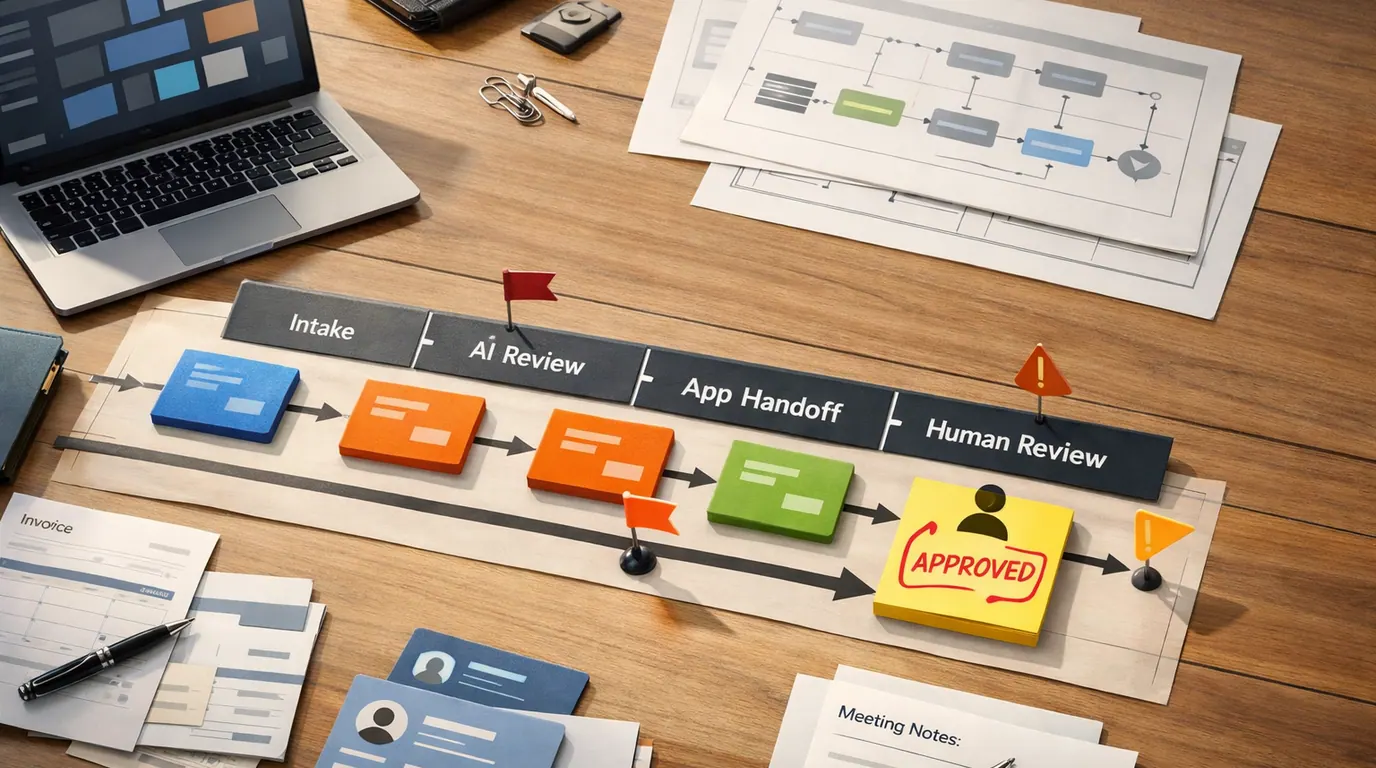
| Agentic AI | Using models plus tools to complete multi-step tasks with more autonomy. | Research assistants, workflow automation, ticket routing, calendar actions, and internal operations bots. | Tool permissions, logging, rollback, and approval gates are critical because the system can take action. |
| Robotics and embodied AI | Combining perception, planning, sensors, and physical movement. | Warehouse robots, surgical assistance, drones, agricultural machines, and autonomous vehicles. | Physical-world failures need stronger testing, safety controls, and human override paths. |
Microsoft’s comparison of generative and other AI types makes a useful distinction: predictive AI forecasts outcomes, while generative AI creates new output. That distinction is often more useful than asking which model sounds more advanced.
NIBIB’s overview of artificial intelligence in biomedical research shows why this practical lens matters. A deep learning system that helps analyze medical images is not the same job as a chatbot that explains symptoms, even though both sit under the broad artificial intelligence umbrella.
Types of Artificial Intelligence Use Cases by Goal
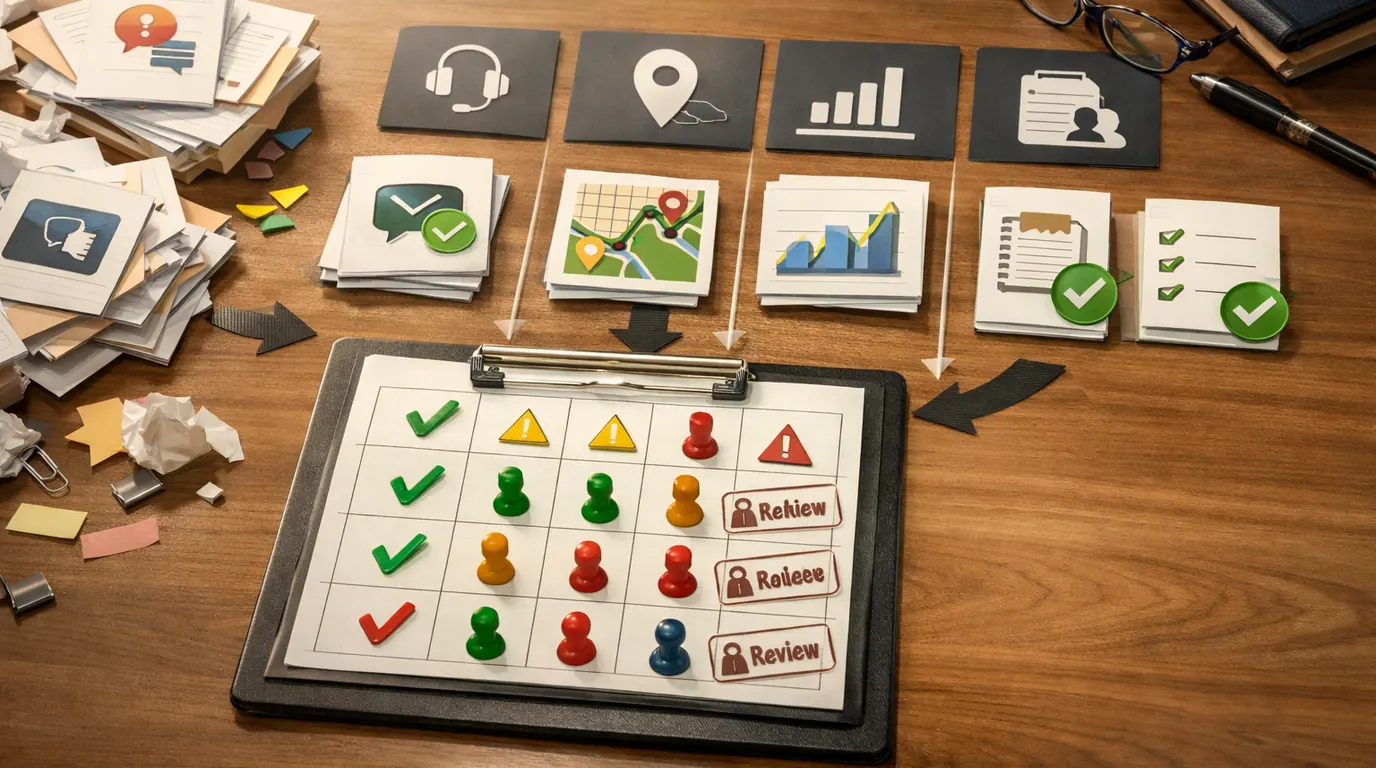
The fastest way to choose between AI categories is to name the work. Start with the verb.
| Goal | Better-fit AI type | Example | Review before trusting |
|---|---|---|---|
| Create | Generative AI | Draft an email, product brief, lesson activity, code snippet, image concept, or meeting summary. | Facts, citations, privacy, tone, legal claims, and whether the draft matches the source material. |
| Predict | Predictive AI | Estimate demand, risk, churn, maintenance needs, support volume, or likely next action. | Dataset quality, drift, bias, confidence level, and whether the prediction should trigger action or only review. |
| Classify | Machine learning or computer vision | Sort support tickets, detect defects, tag documents, classify images, or flag suspicious transactions. | Borderline cases, error cost, auditability, and whether the classes are fair and useful. |
| Recommend | Recommendation AI | Rank products, lessons, videos, articles, next tasks, or knowledge-base answers. | Feedback loops, diversity, user control, transparency, and hidden optimization goals. |
| Converse | Conversational AI | Answer customer questions, coach students, help employees search policy, or guide users through forms. | Escalation, refusal behavior, source grounding, and sensitive data boundaries. |
| Act | Agentic AI or robotics | Book a meeting, update a CRM field, run a report, move inventory, or trigger a workflow. | Permissions, approvals, undo path, logs, and clear ownership when the action is wrong. |
This is where a types of artificial intelligence strategy becomes practical. Do not start by asking whether your team needs AI. Ask which repeated task is slow, evidence-heavy, error-prone, or expensive enough to justify a system, then decide which type of AI fits that job.
For writing, planning, and review-heavy work, the prompt structure in our guide to writing better AI prompts can help you define the task, context, criteria, format, and review path. For data-sensitive workflows, pair that with the guardrails in our AI privacy concerns guide.
A Types of Artificial Intelligence Workflow for Choosing Safely
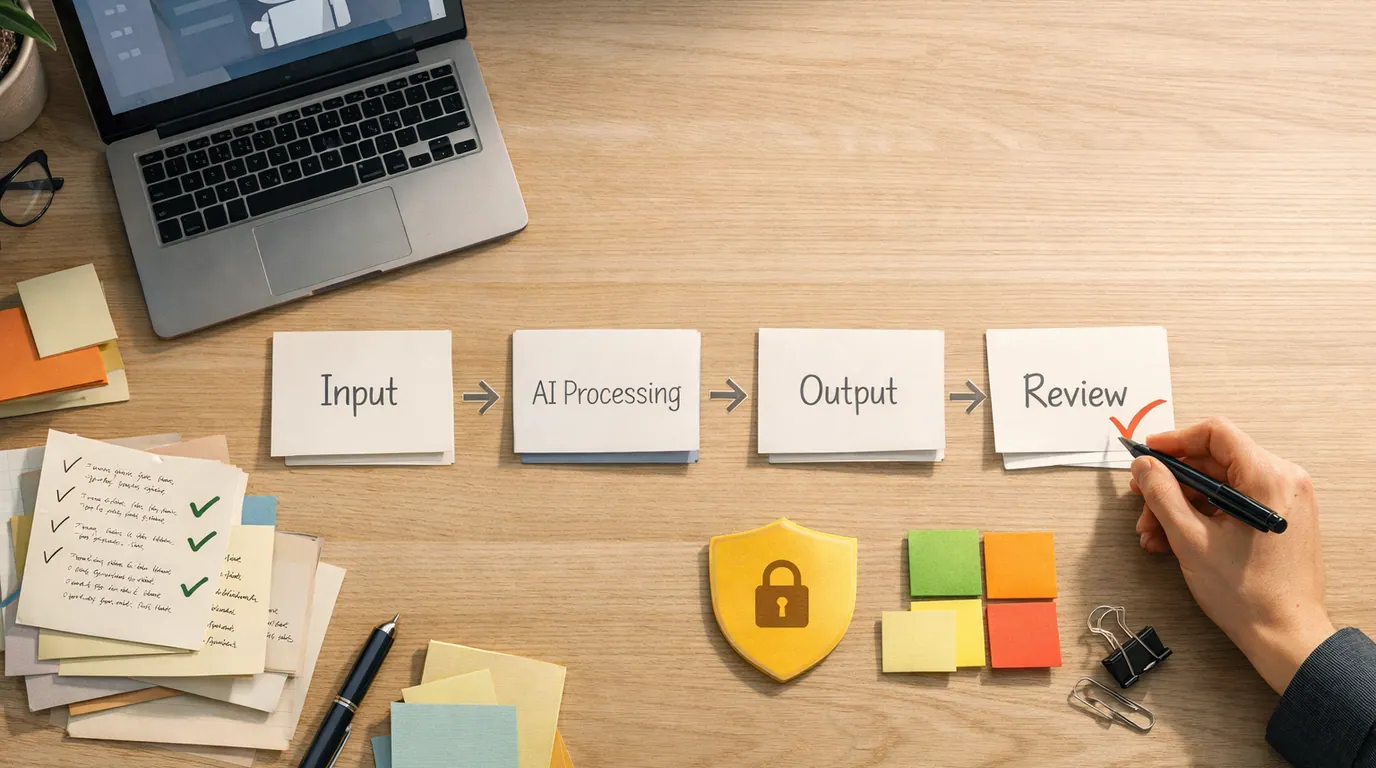
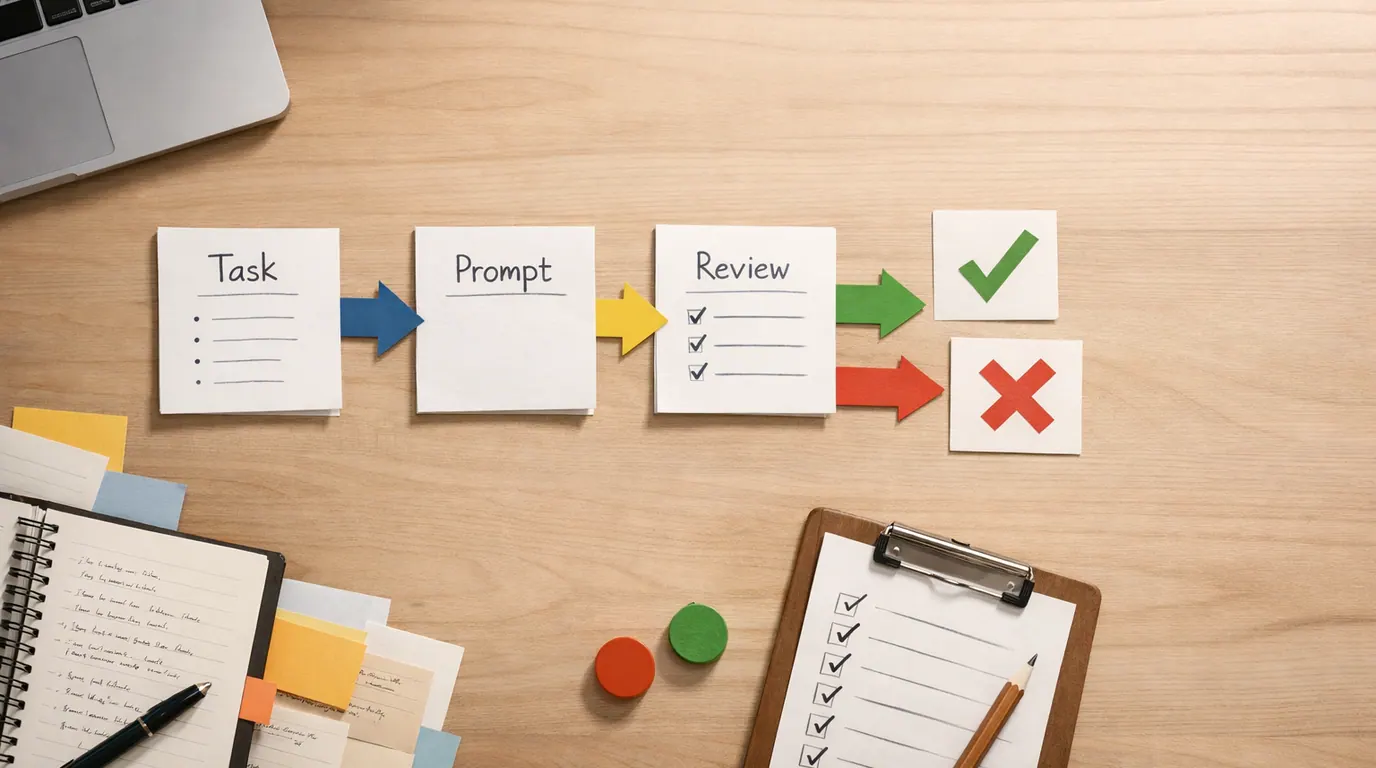
Use this types of artificial intelligence workflow before you adopt a tool, automate a process, or approve an AI-assisted decision.
- Name the job. Write the real task in one verb: create, predict, classify, recommend, converse, search, decide, or act.
- Choose the AI pattern. Match the job to a practical AI type, then identify whether it is narrow, limited-memory, agentic, or physically embodied.
- Map the data. Identify whether the workflow uses public, internal, personal, regulated, proprietary, student, patient, financial, legal, or source-code data.
- Estimate the error cost. Ask what happens if the output is wrong, biased, leaked, outdated, overconfident, or acted on too quickly.
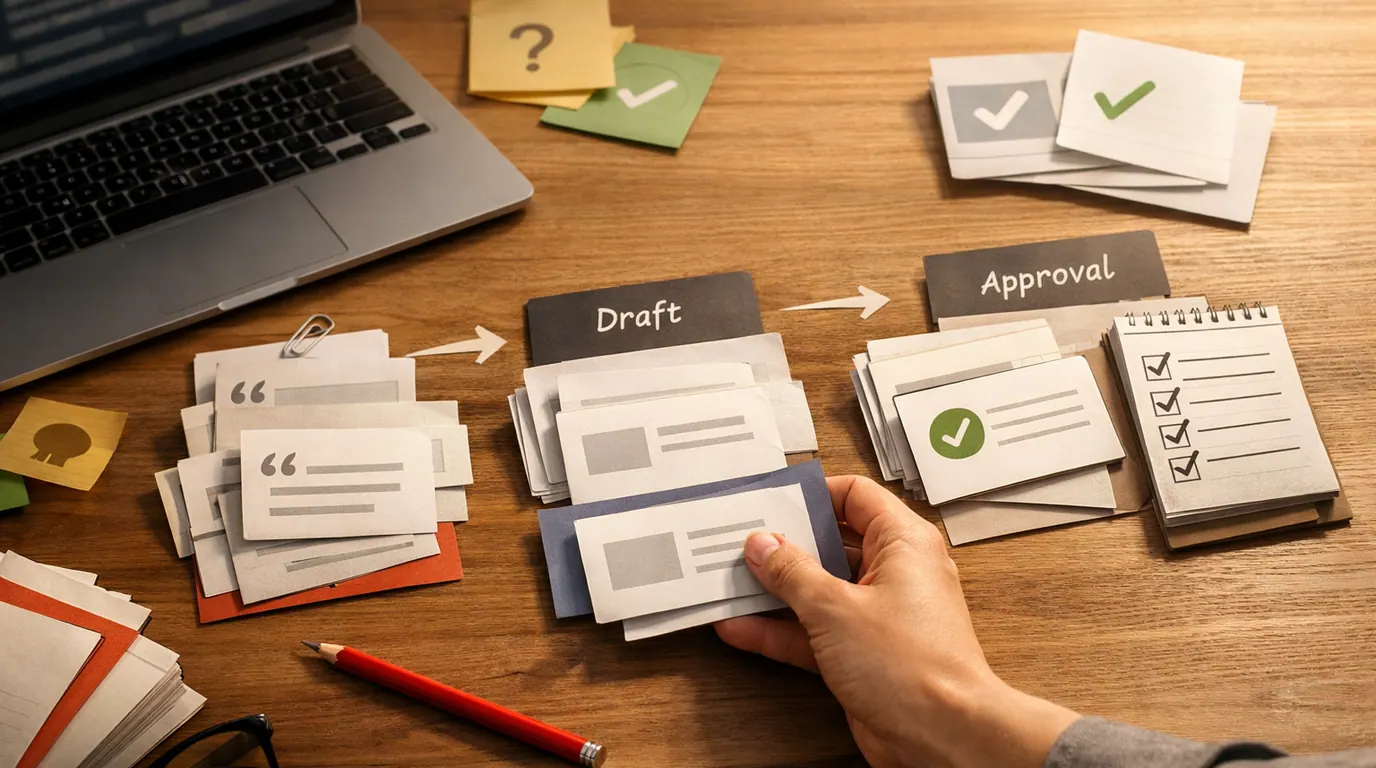
- Set the review point. Decide who checks the output before it affects customers, students, patients, employees, money, safety, legal rights, or public claims.
- Start with a reversible pilot. Test on low-risk inputs, compare against human work, document failure cases, and only then expand the workflow.
Works Well When
- The task repeats often enough that review effort will pay back
- The input and output can be inspected by a responsible person
- The workflow has a clear success measure and fallback
- The tool can be limited to the data it actually needs
Watch Out For
- The task requires hidden judgment, empathy, or context the system cannot verify
- The output directly affects rights, safety, money, health, grades, or employment without review
- The data is sensitive and the tool's retention or training rules are unclear
- The team cannot explain what should happen when the AI is wrong
Education is a good example of this tradeoff. AI can help with practice questions, lesson variations, and feedback drafts, but sensitive grading or student support decisions need stronger rules. Our AI in education explainer walks through that kind of supervised workflow.
Common Mistakes When Comparing AI Types
The labels are useful only if they prevent bad decisions. Watch for these mistakes:
- Confusing fluency with understanding. A model that writes smoothly can still misunderstand the source, invent a citation, or ignore a constraint.
- Calling every chatbot generative AI. Some chatbots retrieve fixed answers, some use language models, and some combine retrieval, generation, and workflow actions.
- Assuming more autonomy is better. Agentic workflows can save time, but every extra permission creates a larger failure surface.
- Treating AGI as a near-term operating plan. It is fine to track research, but everyday governance should focus on systems people are actually deploying.
- Ignoring data drift. Predictive systems can degrade when user behavior, markets, policy, fraud tactics, or input sources change.
- Skipping human review because the task is boring. Boring tasks can still contain private data, contractual commitments, unsafe advice, or customer-impacting errors.
The cleanest rule is this: use AI to produce reviewable work before using it to produce irreversible action. That keeps the benefit of automation without pretending the system has judgment it has not earned.
The Bottom Line
The most useful types of artificial intelligence are not just narrow, general, reactive, or generative as abstract labels. They are choices about scope, behavior, data, action, and review.
Use capability categories to stay realistic: narrow AI is what you can use today; AGI and superintelligence are theoretical planning topics. Use functional categories to understand memory and context. Use practical categories to choose the right workflow.
Then take one concrete next step: pick a repeated task, identify the AI type that fits, write the human review rule, and run a low-risk pilot before scaling.
Frequently asked questions
What are the main types of artificial intelligence?
The main capability types are narrow AI, artificial general intelligence, and artificial superintelligence. The common functional types are reactive machines, limited-memory AI, theory-of-mind AI, and self-aware AI. For practical work, also separate generative, predictive, conversational, vision, recommendation, agentic, and robotics systems.
Which types of AI exist today?
Available AI products are best treated as narrow AI: systems trained for specific tasks such as writing, search, image recognition, prediction, translation, routing, or automation. Some assistants feel broad because they handle many prompts, but they still need boundaries, data, tools, and human review.
Is generative AI one of the types of AI?
Yes, generative AI is a practical type of AI focused on creating new text, images, code, audio, video, or structured outputs. It usually sits inside narrow AI because it is powerful within defined tasks but does not have general human-level understanding, accountability, or judgment.
What is the difference between narrow AI and AGI?
Narrow AI performs specific tasks within a defined scope, such as recommending videos, drafting text, or detecting fraud. AGI would be able to learn, reason, and transfer knowledge across many unfamiliar domains at roughly human-level flexibility. AGI remains theoretical for planning purposes.
How do I choose the right type of AI for a workflow?
Start with the job, not the label. If you need a draft, consider generative AI; if you need a forecast, predictive AI; if you need image or sensor interpretation, computer vision; if you need multi-step execution, an agentic workflow. Then check data sensitivity, error cost, review ownership, and fallback plans.
What are the biggest risks when using different AI types?
The biggest risks are using a system outside its designed scope, trusting outputs without review, exposing private data, automating a consequential decision too early, or confusing fluent language with reliable reasoning. The higher the consequence for people, money, safety, or rights, the stronger the human control should be.