If you searched for “ai in everyday life,” the useful answer is not a futuristic tour of robots. It is a practical map of where AI already shows up, which uses are worth trying, and where you still need to slow down and check the result.
AI already helps sort email, predict routes, recommend music, flag bank fraud, unlock phones, summarize documents, translate text, draft messages, and personalize feeds. Some of that happens quietly inside apps. Some happens through obvious chatbots. The important question is not whether the tool is called AI. The important question is whether it improves a real task without hiding the risk.
This AI in everyday life guide gives you examples, a decision framework, a reusable workflow, cautions, and a template you can use before handing daily work to a model.
Name the job: filter, predict, summarize, draft, recommend, translate, detect, or plan.
The output should be something you can inspect before it affects money, health, safety, privacy, or another person.
AI can be useful and still be wrong, biased, outdated, overconfident, or based on data you should not share.
What AI in Everyday Life Actually Means
AI in everyday life means artificial intelligence used inside ordinary routines: communication, navigation, shopping, entertainment, learning, home management, banking, health tracking, work, and personal planning.
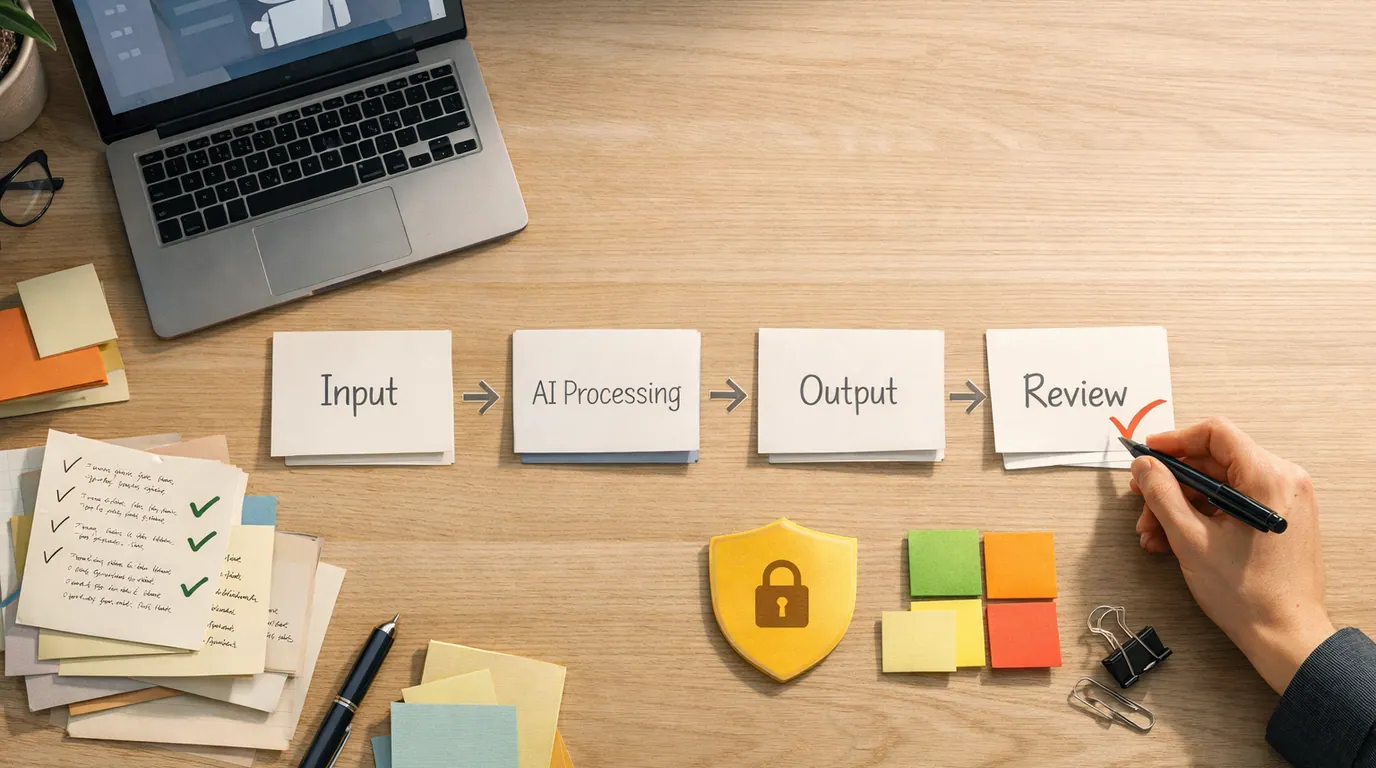
In plain terms, AI is software that uses data, rules, or learned patterns to perform work associated with human intelligence. It may recognize speech, classify a message, predict traffic, recommend a song, summarize a file, detect unusual spending, or generate a draft. For a deeper foundation, our how does AI work guide explains the pattern of data, model, input, output, and review.
Caltech’s Science Exchange notes that AI and machine-learning technologies already appear across medicine, transportation, finance, agriculture, entertainment, retail, customer service, manufacturing, and other fields. Pew Research Center’s 2025 survey also shows the adoption gap clearly: many people have heard of chatbots, while AI experts use them much more frequently than the general public.
That gap matters because people often use AI without recognizing it. A fraud alert, keyboard suggestion, route update, spam filter, or watch notification may be AI-powered even when it does not feel like a chatbot.
Everyday AI Applications to Notice First
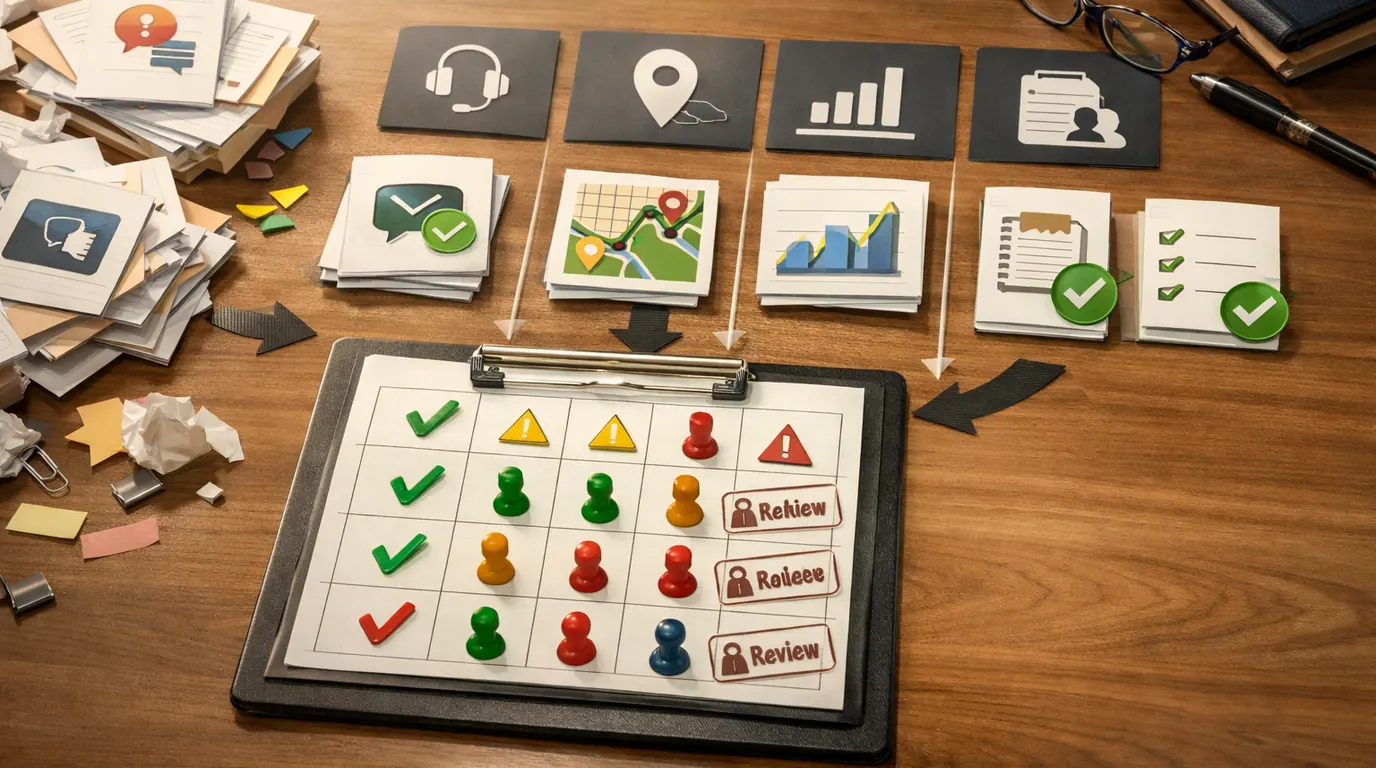
The easiest everyday AI applications to evaluate are the ones where you can see the input, output, and failure mode. The phone in your pocket is often the easiest place to see AI clearly because the output is immediate and the failure mode is visible.
| Daily moment | What AI is doing | Useful when | Human check |
|---|---|---|---|
| Typing a message | Predicts words, corrects spelling, rewrites tone, or suggests a reply. | You want a cleaner first draft or faster routine response. | Check names, promises, tone, and whether the message still sounds like you. |
| Opening email | Classifies spam, priority, promotions, receipts, calendar details, and likely replies. | You want fewer distractions and faster sorting. | Check spam folders for bills, travel notices, account alerts, and work messages. |
| Driving or commuting | Combines map data, traffic patterns, incidents, and route history to estimate travel time. | Conditions change and you need a better route. | Use local judgment for unsafe roads, restricted turns, weather, or accessibility needs. |
| Choosing entertainment | Ranks songs, movies, videos, podcasts, games, and articles from behavior patterns. | You want discovery without searching from scratch. | Watch for narrowed feeds, over-personalization, and recommendations optimized for engagement. |
| Shopping or groceries | Suggests products, compares similar items, predicts replenishment, or surfaces deals. | You need options organized by budget, preference, or timing. | Verify price, quantity, seller, return policy, and whether the recommendation is sponsored. |
| Banking | Detects unusual transactions, login behavior, device changes, or spending patterns. | You need fast warnings about possible fraud. | Respond through official bank channels and avoid sharing codes or passwords with a chatbot. |
| Fitness and health tracking | Finds patterns in activity, sleep, heart rate, workouts, or habit data. | You want trend awareness or reminders. | Treat it as wellness support, not diagnosis. Ask a clinician about symptoms or medical decisions. |
| Smart home routines | Uses sensors, schedules, voice commands, and habits to adjust lights, temperature, cleaning, or security. | You want convenience or energy savings. | Review cameras, microphones, guest access, location sharing, and manual override. |
| Learning something new | Explains concepts, generates practice questions, translates, tutors, or creates study plans. | You want active practice and quick feedback. | Check the explanation against trusted material and do the hard thinking yourself. |
| Work and admin | Summarizes meetings, drafts emails, extracts tasks, organizes notes, and turns files into checklists. | You need a reviewable first pass. | Confirm facts, deadlines, ownership, confidential data, and source support before sending. |
Tableau’s overview of everyday AI examples is useful because it shows how many AI systems work behind familiar consumer services, not only in specialized technical tools. The practical takeaway is simple: if an app predicts, ranks, classifies, recognizes, or generates, there is probably an AI or machine-learning step somewhere in the workflow.
The Best AI in Everyday Life Is Chosen by Job
If you came from a “best AI in everyday life” search, do not start with a list of brand names. Start with the job you want done. The best AI in everyday life is the one that handles a narrow task, respects your data boundary, produces something you can review, and disappears when it is not useful.
| Everyday job | Good AI fit | Weak AI fit | Decision rule |
|---|---|---|---|
| Understand information | Summarize a document, explain unfamiliar terms, compare options, or turn notes into questions. | Accepting a summary as evidence without opening the source. | Use AI to prepare reading, not replace reading. |
| Write faster | Draft an email, simplify a paragraph, change tone, or create an outline. | Letting the model invent facts, claims, apologies, prices, or commitments. | Give real facts and review every claim before sending. |
| Plan a routine | Build a grocery plan, travel checklist, weekly schedule, or errand order from your constraints. | Assuming it knows current prices, hours, traffic, closures, or personal obligations. | Verify anything time-sensitive or costly in the original app or source. |
| Learn a skill | Ask for practice questions, examples, feedback, and explanations at your level. | Copying generated answers without understanding the work. | Use AI as a tutor that asks you to think. |
| Make a decision | List tradeoffs, criteria, missing information, and questions to ask. | Delegating the final decision, especially when it affects health, money, legal rights, or another person. | Let AI structure the decision, then make the decision yourself. |
| Automate a habit | Turn repeated low-risk actions into reminders, drafts, summaries, or sorted queues. | Giving the tool permission to act without review when mistakes matter. | Start with suggestions before automation. |
This is the same judgment we use in our artificial intelligence examples guide: a useful AI example has a clear input, a clear output, a visible failure mode, and a human reviewer.
AI in Everyday Life Use Cases You Can Reuse This Week
The most useful AI in everyday life use cases are ordinary. They remove friction from tasks you already do, instead of forcing you to redesign your whole day around a tool.
Turn a long article into a reading plan
Paste or upload material only when you are allowed to use it in that tool. Ask AI to summarize the main argument, define unfamiliar terms, list assumptions, and create five questions you should answer after reading. Then read the original source and correct the summary. This works for personal research, schoolwork, product research, and policy reading.
For deeper source checks, use the workflow in our guide to using AI for research.
Draft a message without outsourcing the judgment
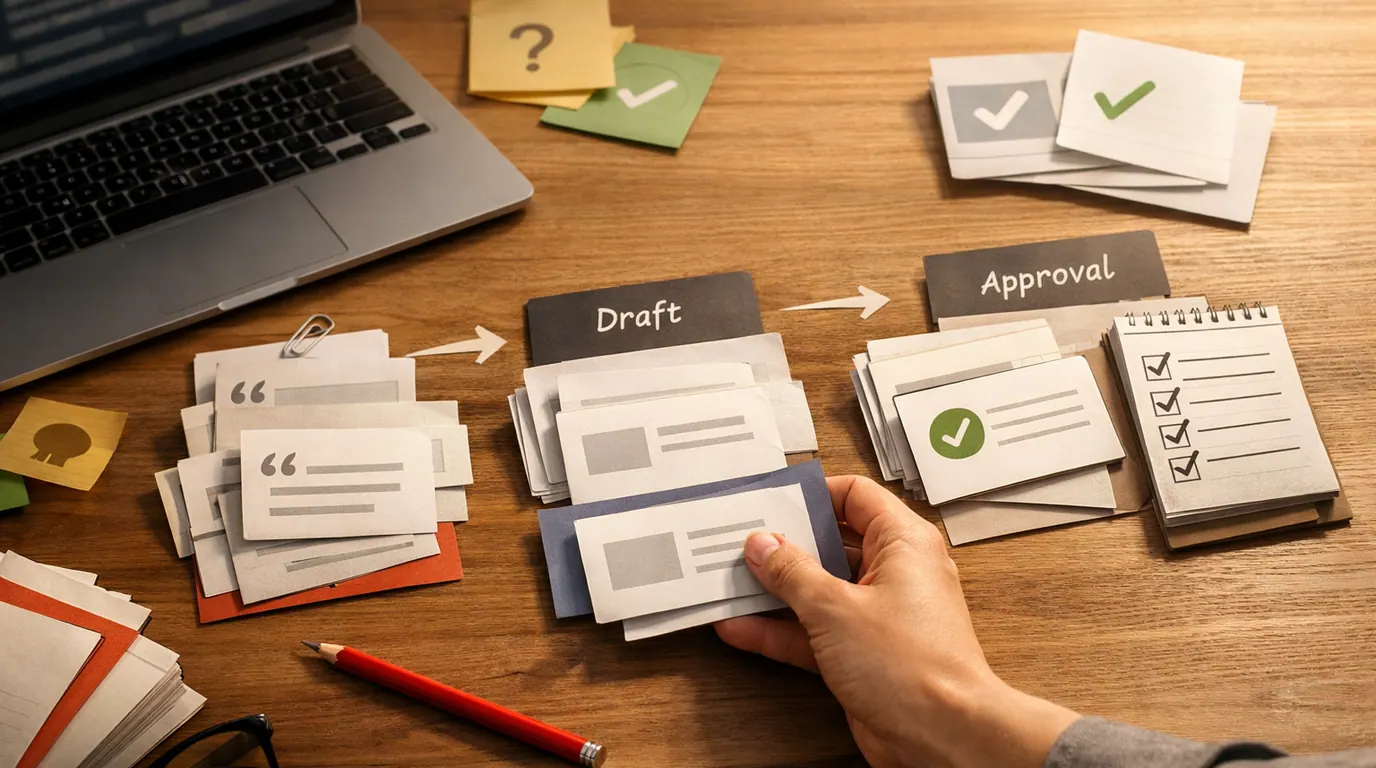
Use AI to produce a first draft for a routine email, apology, reminder, negotiation note, thank-you message, or update. Give it the audience, goal, facts, constraints, and tone. Before sending, check whether the draft invents details, overpromises, sounds unlike you, or reveals something private.
If prompts are the bottleneck, the task-context-criteria-format pattern in how to write better AI prompts is the safest starting point.
Plan meals, errands, or travel constraints
AI can turn constraints into a plan: time available, budget, dietary restrictions, location, household preferences, energy level, or what is already in the pantry. The output should be a plan you inspect, not an automatic purchase or booking. Verify store hours, prices, reservations, transit schedules, and accessibility details in the source app.
Learn by being quizzed
Ask AI to explain a concept, then quiz you one question at a time. Tell it not to reveal the answer until you try. This is useful because it changes AI from an answer machine into a practice partner. Our how to use AI for studying guide covers that active-learning pattern in more detail.
Organize messy notes into action
After a meeting, phone call, appointment, or brainstorming session, ask AI to turn notes into decisions, open questions, owners, due dates, and follow-ups. Then confirm the names, commitments, dates, and context yourself. This is one of the safest AI in everyday life examples because the output is a checklist you can edit.
Compare choices before buying
AI can build a comparison table for appliances, subscriptions, phones, insurance questions, travel options, or home projects. Give it your criteria and ask for tradeoffs, missing information, and questions to verify. Do not rely on generated pricing, availability, medical claims, legal interpretations, or warranties without checking current primary sources.
Build an AI in Everyday Life Strategy Around Low-Risk Wins
An AI in everyday life strategy does not need a stack of tools. It needs boundaries. Pick one or two low-risk routines, write down the review rule, and stop using the tool where it adds more correction work than value.
Use this sequence:
- Pick a repeated annoyance. Good candidates include summarizing, rewriting, comparing, organizing, translating, planning, and making checklists.
- Exclude sensitive data. Remove passwords, account numbers, medical records, identity documents, private messages, customer data, student records, and confidential work unless the tool is approved.
- Ask for a reviewable output. Prefer a table, checklist, draft, ranked options, questions, assumptions, or next actions over a vague answer.
- Set a stop rule. Decide when the task must move to a person, professional, official source, or original app.
- Save the good version. If a prompt or workflow works, keep it as a reusable note so you do not start from scratch each time.
This is also how to avoid tool clutter. You do not need a new AI app for every task. A general chatbot, a source-grounded notebook, a phone assistant, a writing assistant, and built-in app features may cover most low-risk routines. Add specialized tools only when the job, privacy boundary, and review process are clear.
A Simple AI in Everyday Life Workflow
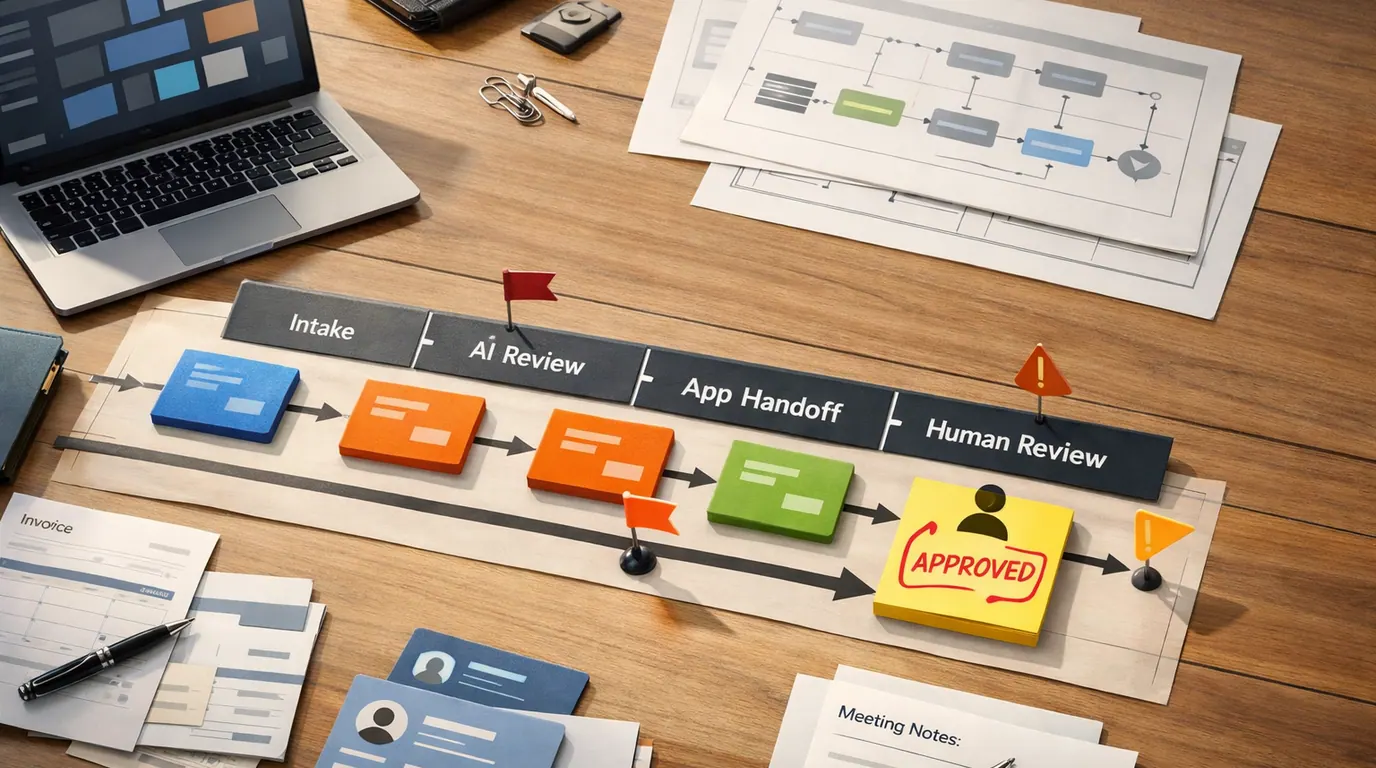
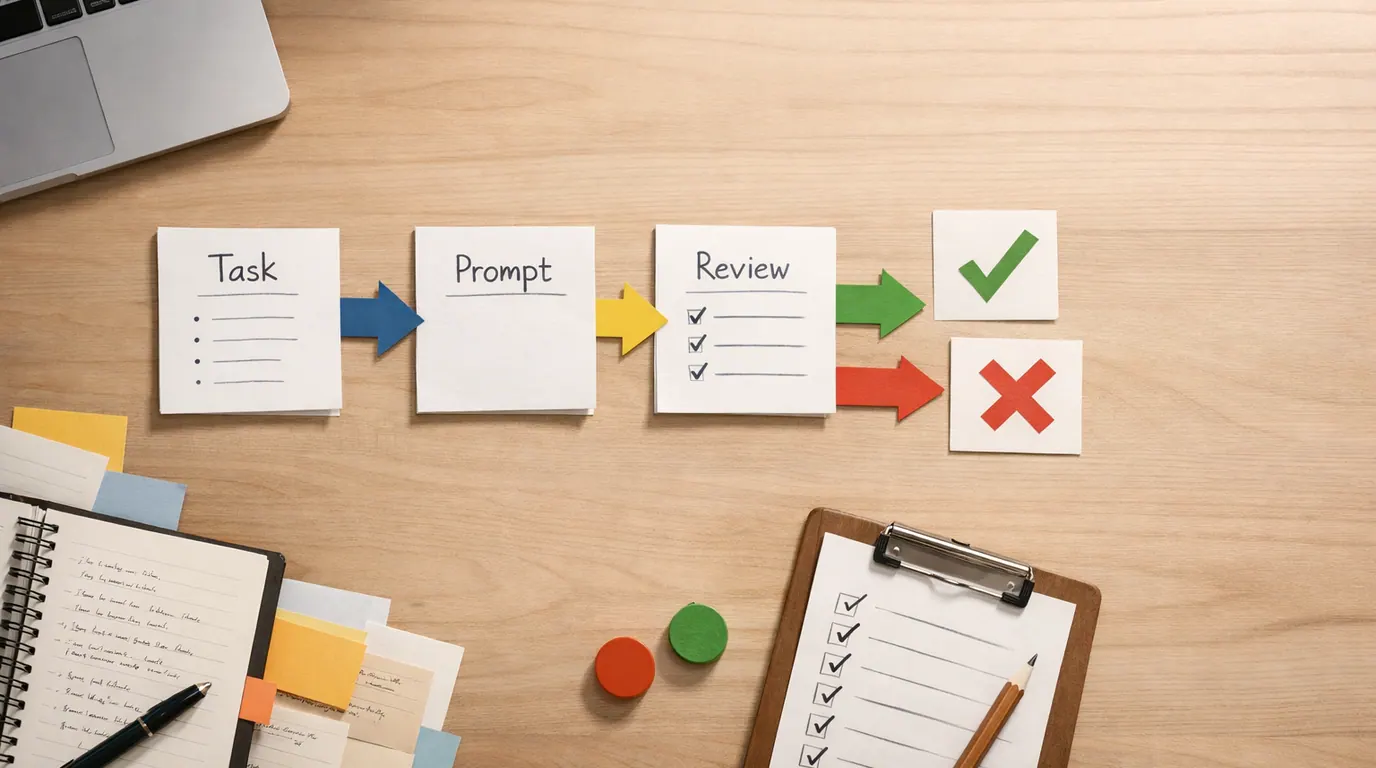
Use this AI in everyday life workflow whenever you are about to ask AI for help with a real task:
| Step | Question to ask | Good output | Review point |
|---|---|---|---|
| 1. Name the task | What exactly do I want AI to do? | Summarize, draft, compare, classify, plan, translate, quiz, extract, or brainstorm. | If the task is vague, the answer will be vague. |
| 2. Set the boundary | What information may the tool use? | Allowed context, public facts, pasted notes, approved files, or anonymized details. | Do not upload sensitive data by accident. |
| 3. Define the format | How should the answer come back? | Table, checklist, outline, draft, questions, risks, or next actions. | Format makes the output easier to inspect. |
| 4. Ask for uncertainty | What might be missing or wrong? | Assumptions, weak evidence, verification tasks, and questions for you. | This reduces the risk of treating fluency as truth. |
| 5. Review before use | What could happen if this is wrong? | Corrections, edits, source checks, professional advice, or no action. | The higher the consequence, the stronger the review. |
| 6. Save or discard | Was this actually better? | Reusable prompt, better habit, or decision to stop using AI for this task. | Do not keep workflows that create hidden rework. |
Here is the difference in practice. A weak request says, “Plan my week.” A stronger request says, “Using only the tasks below, group them into errands, calls, focused work, and home admin. Suggest a realistic order for Tuesday afternoon. Mark anything that depends on another person or a current price, address, deadline, or appointment I must verify.”
That prompt gives AI a useful job and tells you where the human check belongs.
Cautions: Where Everyday AI Needs Human Review
AI can make daily life easier, but it can also make weak judgment look polished. The biggest risk is not a silly answer. The bigger risk is a confident answer that slips into a real decision without enough context.
SNHU’s overview of AI in daily life makes a useful point for beginners: AI can help with brainstorming, research, planning, and proofreading, but people should remember its strengths and weaknesses. That is the right posture for daily use. Treat AI as a helper that prepares work, not as the accountable person.
Works Well When
- Use AI for low-risk drafts, summaries, checklists, practice questions, translations, comparisons, and planning support.
- Use AI when you can inspect the source, output, assumptions, and consequence before acting.
- Use AI when a mistake is reversible and the tool saves more time than it costs to review.
- Use AI to surface options, questions, and tradeoffs you might otherwise miss.
Watch Out For
- Do not use everyday AI tools as your doctor, lawyer, accountant, therapist, bank, employer, school official, or safety authority.
- Do not upload private, regulated, confidential, or another person's sensitive information into unapproved tools.
- Do not rely on generated prices, citations, availability, local rules, medical advice, legal advice, or financial advice without checking primary sources.
- Do not let recommendations narrow what you read, buy, watch, believe, or decide without periodically resetting the inputs.
Pay special attention to these failure modes:
- Confident errors: chatbots can produce polished explanations with missing context, outdated claims, or invented details.
- Privacy leakage: prompts, files, transcripts, voice recordings, and outputs may contain more sensitive information than you realize.
- Recommendation loops: feeds can learn what keeps you engaged, not what is healthiest, fairest, or most useful.
- Bias: AI systems can reproduce unfair patterns from data, especially in hiring, lending, education, policing, healthcare, and housing.
- Automation creep: a harmless draft assistant can become an unreviewed decision system if you keep giving it more permissions.
If an everyday workflow touches personal data, customer conversations, student records, health details, finances, identity, location, or confidential work, read our AI privacy concerns guide before uploading files or connecting apps.
AI in Everyday Life Checklist and Template
Use this AI in everyday life checklist before you turn a useful experiment into a habit:
- Task: Can I state the job in one sentence?
- Input: Is the information allowed, necessary, accurate, and limited?
- Output: Will AI produce something I can review, edit, reject, or verify?
- Risk: What happens if the answer is wrong, biased, outdated, private, or misunderstood?
- Reviewer: Am I the right person to check it, or does this need a professional, teacher, manager, official source, or original app?
- Stop rule: When should I stop using AI and handle the task another way?
- Reuse: Is this a one-off question, or should I save the prompt as a repeatable workflow?
Here is an AI in everyday life template you can copy into a chatbot or adapt for a built-in assistant:
Act as a practical assistant for a low-risk daily task.

Task:
[summarize, draft, compare, plan, organize, translate, quiz, brainstorm, or make a checklist]

Context I am allowed to share:
[paste only non-sensitive details, approved notes, public information, or anonymized facts]

What you must not assume:
[current prices, availability, medical advice, legal advice, financial advice, private facts, deadlines, or details I did not provide]

Output format:
[table, checklist, short draft, step-by-step plan, questions, tradeoff list, or action items]

Review requirements:
- Mark assumptions clearly.
- List anything I should verify in an original source or official app.
- Separate facts from suggestions.
- Tell me where human judgment is required.
- Keep the answer concise enough for me to check.
The template works because it makes the AI job smaller. It also gives you a built-in review list, which is the difference between helpful assistance and hidden delegation.
The Bottom Line
AI in everyday life is already here, but the best use is usually modest: sort the inbox, draft the message, compare the options, summarize the long thing, make the checklist, explain the concept, or prepare the next step.
The habit to build is not “use AI for everything.” The habit is to ask: What task is this, what data is allowed, what output will I check, what could go wrong, and who owns the final decision?
Start with one low-risk routine this week. Use the workflow once, keep the parts that save time, and draw a firm line around anything that affects health, money, safety, privacy, identity, legal rights, or another person’s future.
Frequently asked questions
What is AI in everyday life?
AI in everyday life means artificial intelligence built into ordinary tools such as phones, maps, email, banking alerts, streaming apps, wearables, smart home devices, search, and chatbots. It usually helps by recognizing patterns, predicting needs, recommending options, or drafting something a person can review.
What are common examples of AI in daily life?
Common examples include spam filters, route suggestions, search autocomplete, product recommendations, voice assistants, face unlock, fraud alerts, smart thermostats, fitness insights, translation, photo search, writing assistants, and chatbots. The safest examples have clear outputs and easy human checks.
What is the best way to start using AI every day?
Start with low-risk, reversible tasks: summarize a long article, draft an email, compare options, plan errands, organize notes, or turn a messy idea into a checklist. Do not begin with medical, legal, financial, employment, identity, or safety decisions unless a qualified person reviews the result.
Can AI replace everyday human decisions?
AI can prepare information, suggest options, and reduce repetitive work, but it should not replace judgment in situations that affect people, money, health, safety, privacy, or rights. Treat AI output as a draft, signal, or recommendation until you verify the facts and decide what to do.
What information should I avoid putting into everyday AI tools?
Avoid uploading private health details, financial records, passwords, identity documents, customer data, student records, unpublished work, confidential company files, or another person's sensitive information unless the tool is approved for that data and you understand retention, access, and training settings.
How do I know if an AI use case is worth keeping?
Keep an AI use case when it saves time or improves clarity without increasing risk. A good use case has a clear task, allowed data, reviewable output, visible failure mode, and a human checkpoint. Drop it if you spend more time correcting it than doing the task yourself.