If you searched for “chatgpt prompts for teachers”, you probably do not need another giant list of generic commands. You need prompts that fit the work teachers actually do: plan tomorrow’s lesson, adjust the reading level, draft a rubric, create practice questions, respond to a parent, or turn a vague activity into something teachable.
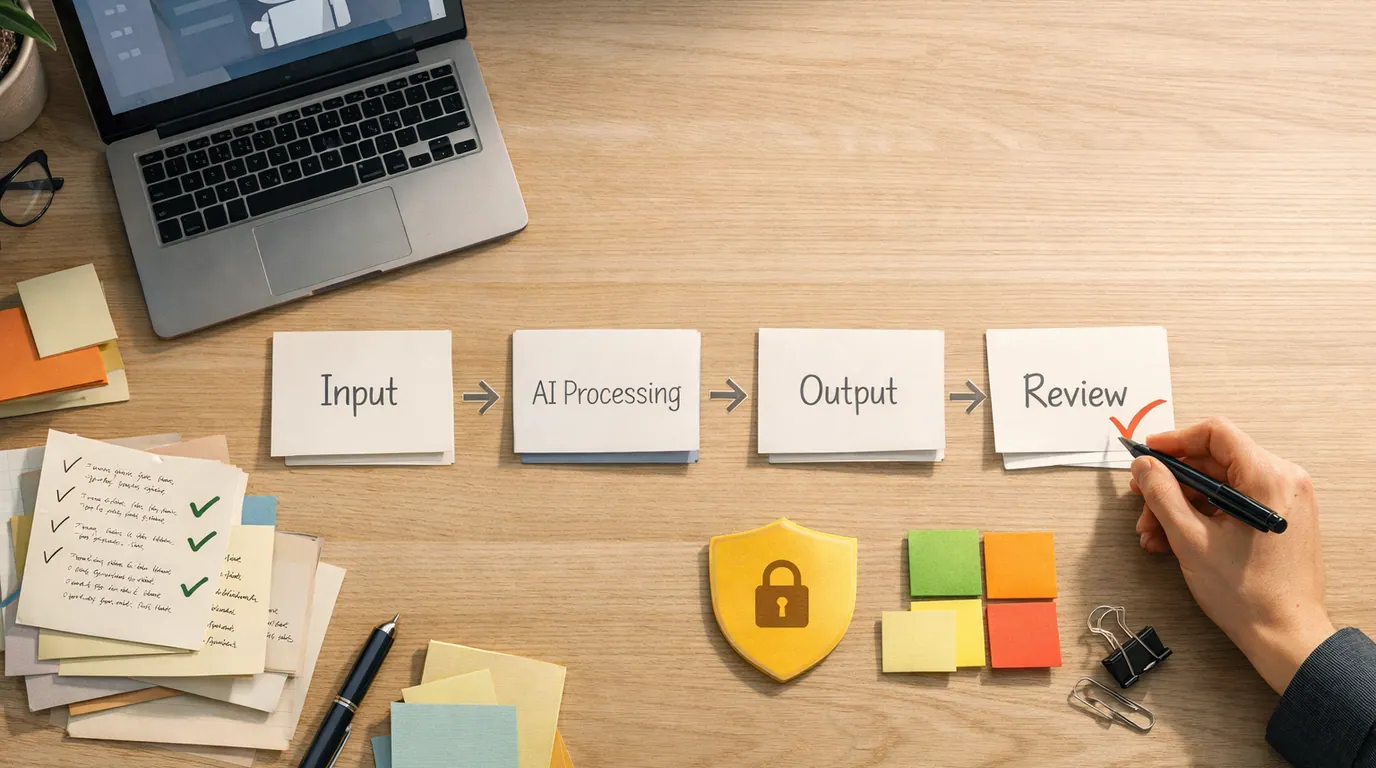
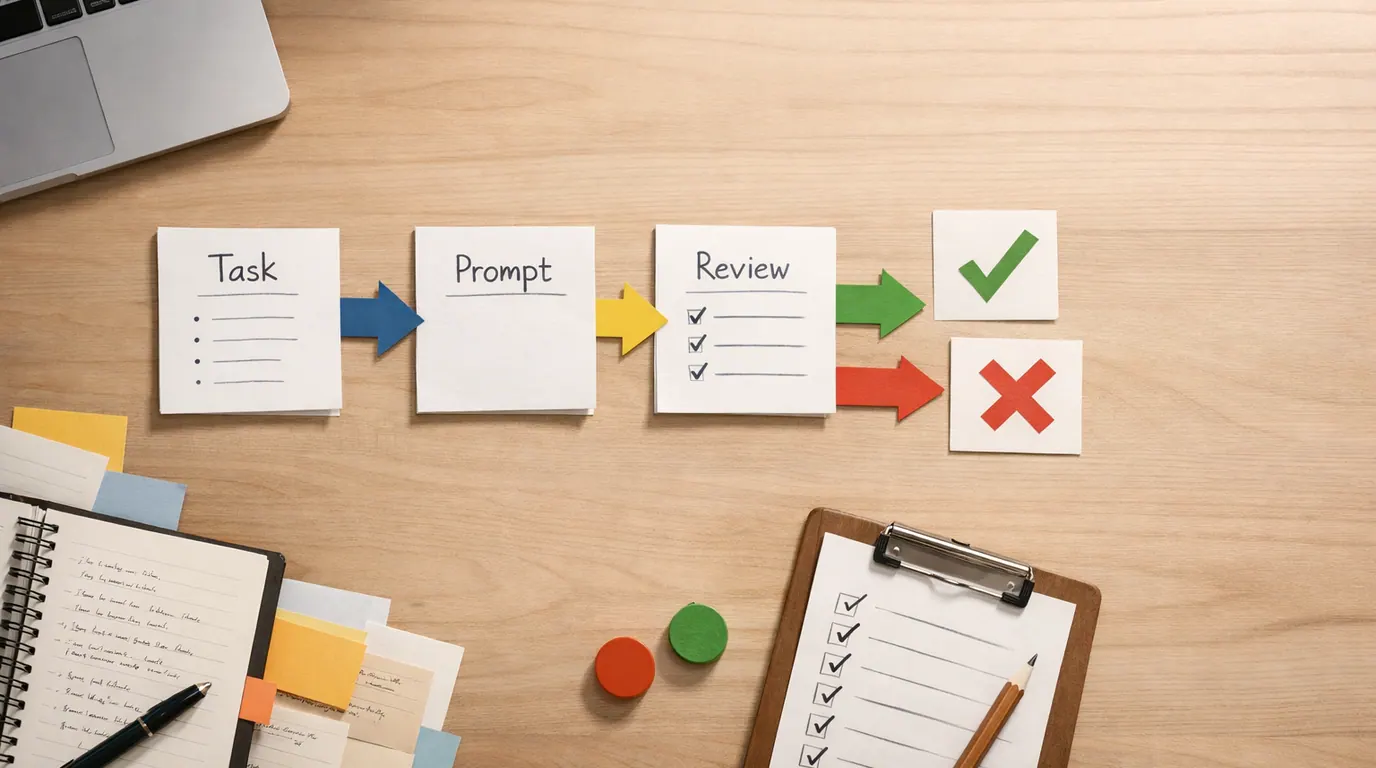
Good ChatGPT prompts for teachers are not magic phrases. They are small classroom briefs. They tell the model the grade, subject, learning target, constraints, format, and review standard, then leave the final instructional judgment with the teacher.
Use this ChatGPT prompts for teachers guide as a working library. Copy a template, add your real classroom context, and review the output before it reaches students, families, or records.
Pick the task first: plan, adapt, assess, explain, communicate, practice, or review.
Include grade, subject, objective, period length, materials, student needs, and output format.
Verify facts, standards, privacy, fairness, accessibility, tone, and whether it fits your students.
Start With the Teaching Job and Review Rule
The strongest teacher prompt is not the cleverest sentence; it is the one that names the classroom decision clearly enough for a human to review it.
Before you ask ChatGPT for anything, write one sentence about the job:
I need help with [teaching task] for [grade/subject] so students can [learning goal], and I will review [accuracy, fit, fairness, privacy, or timing] before using it.That review rule changes the output. A vague prompt like “make a lesson about kinetic energy” may return a polished but unusable plan. A stronger prompt says the class period is 45 minutes, the students have rolling carts, the objective is to connect speed and energy, and the output should include questions, materials, timing, and misconceptions to check.
This is the same structure behind strong AI prompts: task, context, criteria, format, and review. For schoolwide boundaries, our AI in education guide covers policy, privacy, and human oversight in more detail.
Prompt Library: ChatGPT Prompts for Teachers by Job
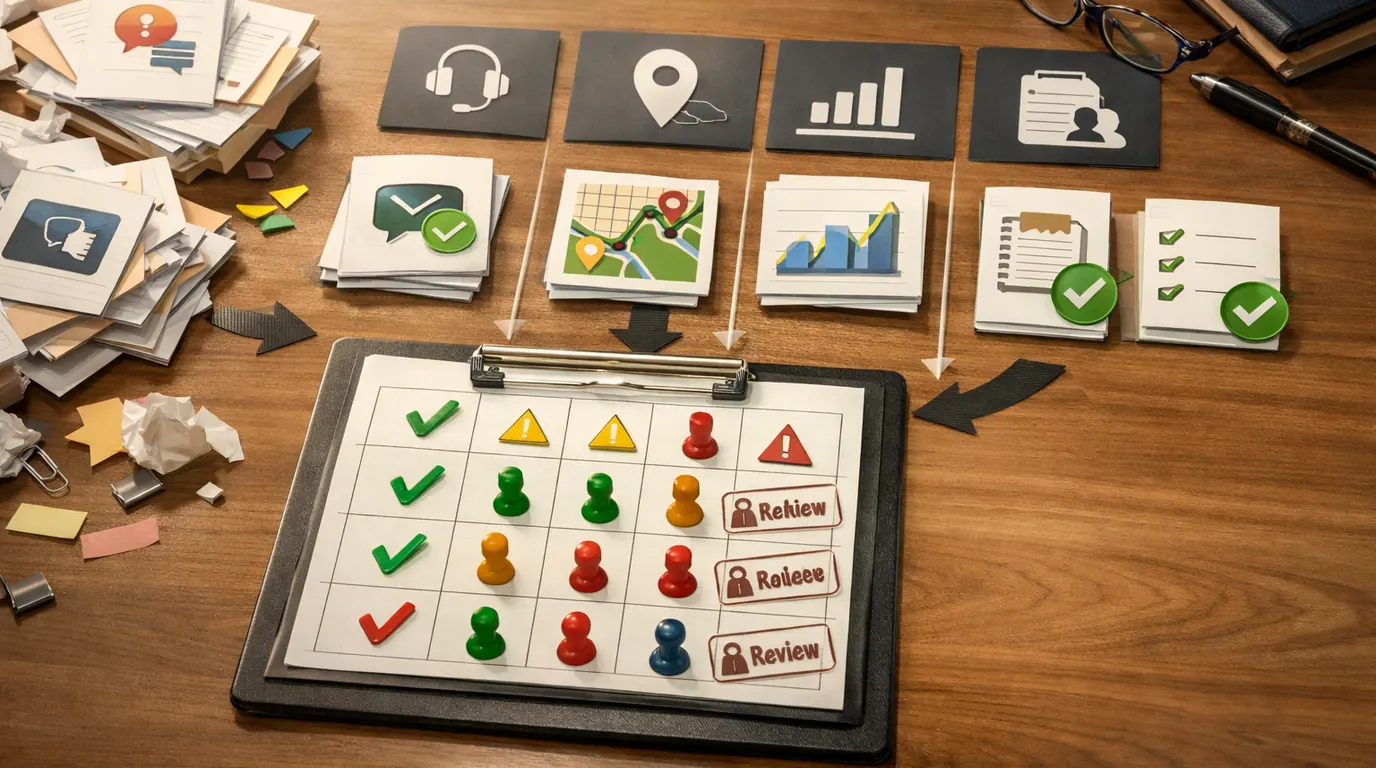
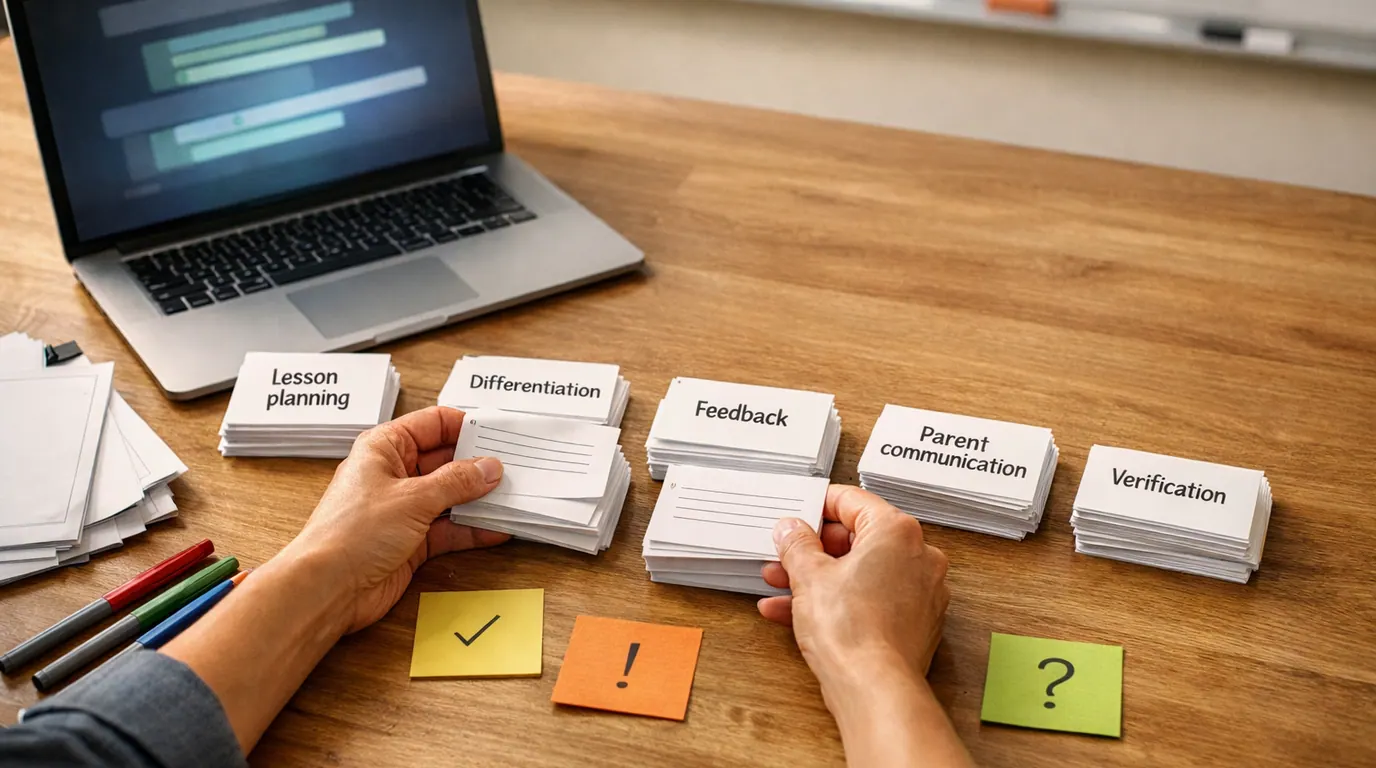
Use this table as the shortcut. These ChatGPT prompts for teachers use cases are grouped by everyday teaching work, not by novelty.
| Teaching job | Use when | Prompt starter | Teacher review point |
|---|---|---|---|
| Lesson planning | You need a usable first draft for tomorrow or a new unit segment. | Create a [minutes]-minute lesson plan for [grade] [subject] on [topic] with objective, warm-up, activity, checks for understanding, and exit ticket. | Check standards, factual accuracy, pacing, materials, and whether the plan fits your students. |
| Differentiation | One activity needs versions for different readiness levels or language needs. | Adapt this activity for [student needs] while keeping the same learning objective and giving three support levels. | Verify accommodations, dignity, rigor, and whether the adaptation is appropriate for the learner. |
| Rubrics | The task is clear but the success criteria are fuzzy. | Draft a four-level rubric for [assignment] aligned to [skills] with student-friendly descriptors and common mistakes. | Make sure the rubric rewards the actual objective, not style or compliance alone. |
| Feedback | You need comment drafts for common patterns in student work. | Write formative feedback options for a student who [pattern], using warm, specific, actionable language tied to this rubric. | Remove identifying details, check tone, and confirm the comment reflects the student's actual work. |
| Parent communication | You need a clear message without sounding abrupt or vague. | Draft a concise parent email about [situation] that is factual, respectful, and action-oriented, with no confidential details about other students. | Confirm policy, privacy, tone, and whether the message should go through an approved system. |
| Practice and review | Students need more questions, examples, or retrieval practice. | Generate [number] practice questions on [topic] at [difficulty] with answer key, explanations, and likely misconceptions. | Check every answer and align difficulty with what has actually been taught. |
If you are looking for the best ChatGPT prompts for teachers, start with the row that matches your bottleneck. A prompt that saves ten minutes on the right recurring job is more valuable than fifty prompts you never reuse.
Copyable Prompt Templates for Common Classroom Work
These templates are designed to be edited. Replace the bracketed fields, add your local requirements, and ask for revisions when the first answer is too broad.
Lesson plan prompt
Act as an experienced [grade/subject] teacher helping me draft a lesson plan.

Class context: [grade, subject, class length, class size, prior knowledge]
Topic: [topic]
Learning objective: [students will be able to...]
Materials available: [materials, devices, readings, lab items, none]
Constraints: [timing, standards, accessibility needs, behavior routines, no-prep limit]

Create a lesson plan with:
1. Objective in student-friendly language
2. Warm-up
3. Direct instruction or modeling
4. Student activity
5. Checks for understanding
6. Common misconceptions
7. Exit ticket
8. Teacher review checklist

If any information is missing, ask up to three clarifying questions first.
Differentiation prompt
I have this activity: [paste or summarize activity].

Keep the same learning objective, but create three versions:
- Support version for students who need more scaffolding
- Core version for the expected level
- Extension version for students ready for more challenge

For each version, include teacher directions, student directions, materials, expected output, and one quick check for understanding.
Avoid lowering expectations unnecessarily. Flag any assumptions.
Rubric and feedback prompt
Act as a teacher assistant drafting support materials, not as the final grader.

Assignment: [assignment]
Learning goals: [skills or standards]
Grade level: [grade]
Rubric scale: [3-point, 4-point, standards-based, other]

Create:
1. A concise rubric with clear descriptors
2. Three examples of strong evidence
3. Three common issues to watch for
4. Feedback sentence starters for strengths and next steps

Do not assign grades. Add a final section titled "Teacher must verify" with fairness, accuracy, and bias checks.
Parent email prompt
Draft a parent or guardian email about [situation].

Tone: respectful, calm, specific, and solution-focused
Audience: [family context if relevant, without private details]
Must include: [facts, dates, next step, meeting request, resource]
Must avoid: blame, labels, confidential details about other students, unsupported claims
Length: [short / 150 words / two paragraphs]

Give me one polished version and one warmer version.
Add a checklist of anything I should verify before sending.
This section is the reusable ChatGPT prompts for teachers template to save in your own notes. Over time, keep the parts that consistently work for your school context and delete the parts that create extra cleanup.
A Safe ChatGPT Prompts for Teachers Workflow
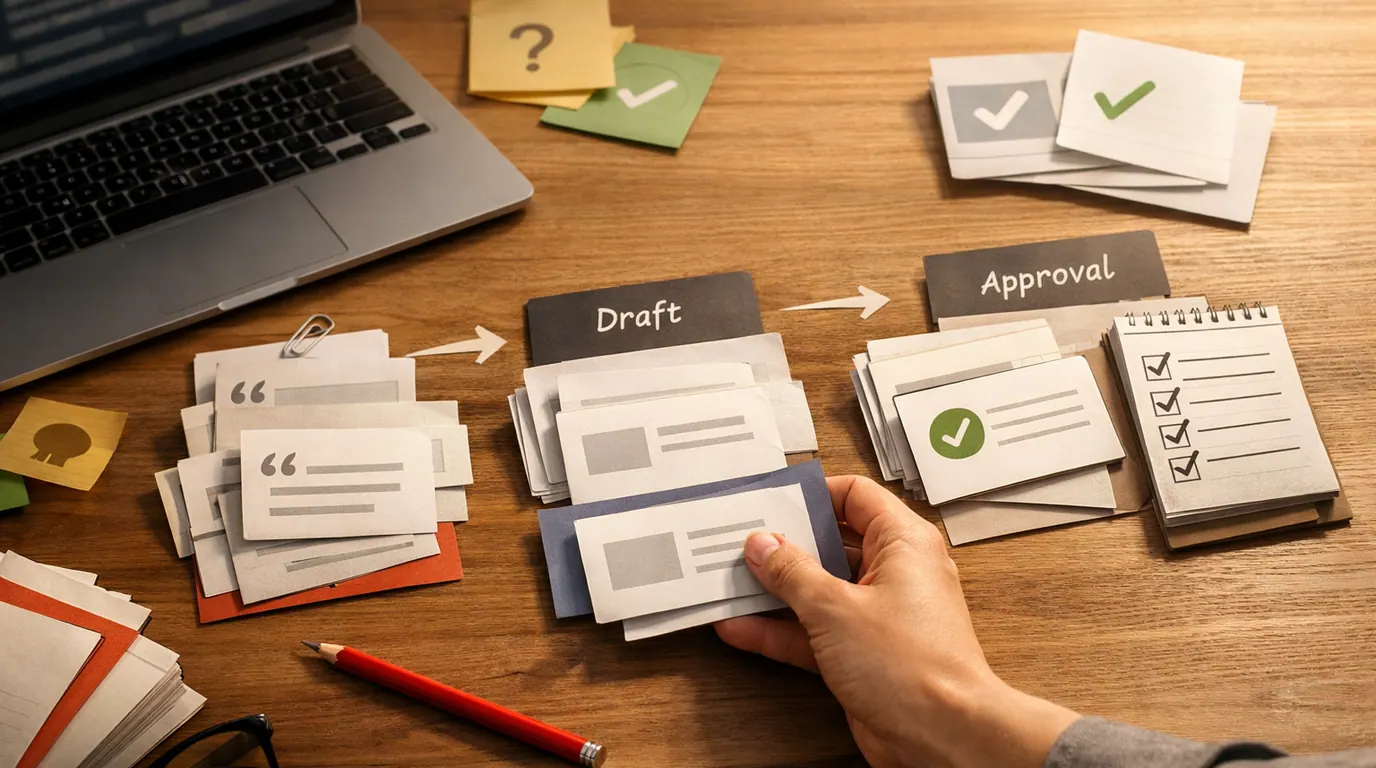
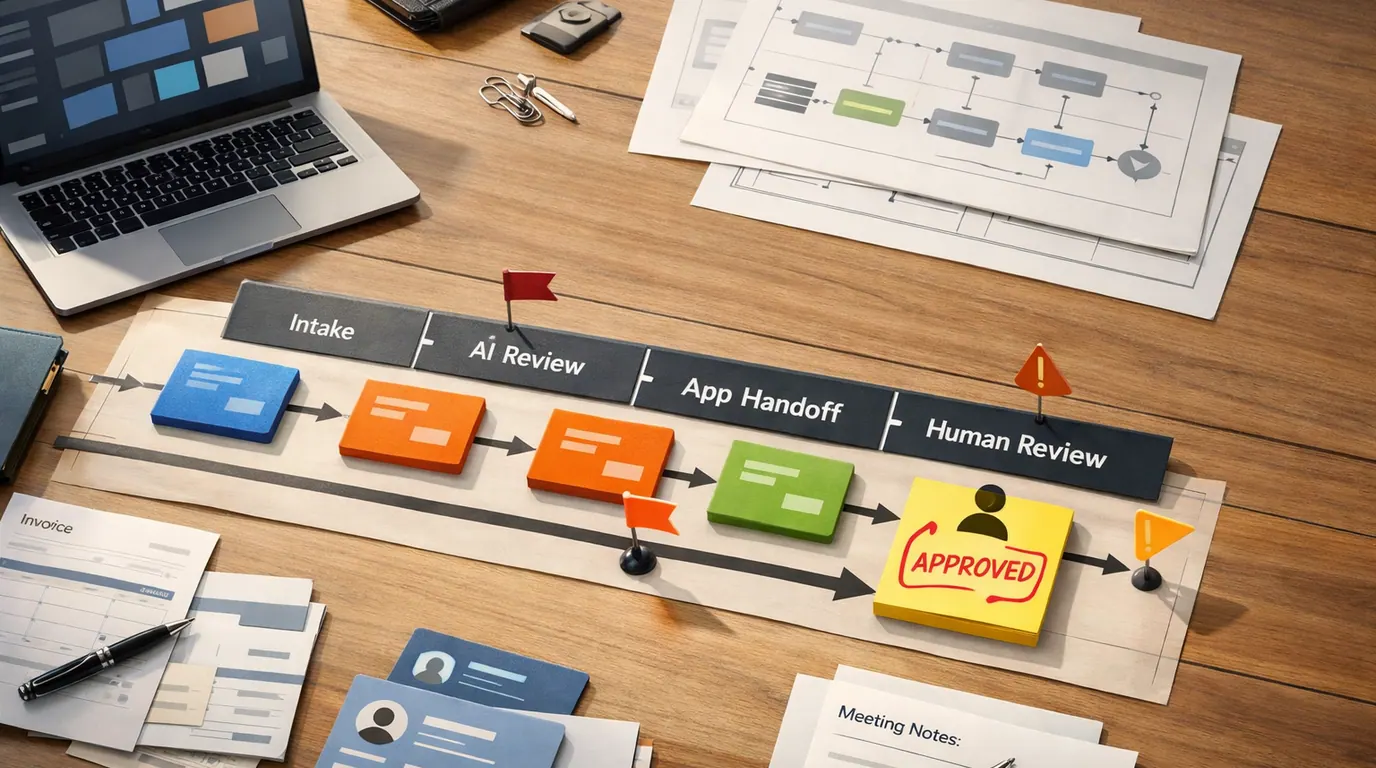
A practical ChatGPT prompts for teachers workflow keeps AI in the drafting lane and puts the teacher in the approval lane. Use this loop for most planning and communication tasks.
- Define the teaching job. Name the objective, audience, constraints, and output format before opening the chat.
- Use non-sensitive context. Describe the class without student names, grades, discipline records, medical details, or private family information.
- Ask for a reviewable draft. Request tables, steps, rubrics, questions, or options rather than a final decision.
- Check against the real classroom. Review accuracy, timing, accessibility, standards, policy, tone, and whether students have been taught the prerequisite material.
- Revise into your own version. Keep what helps, remove what does not fit, and save the improved prompt only if the task repeats.
This is the ChatGPT prompts for teachers strategy that prevents most low-quality output: give the model enough classroom context to be useful, but keep sensitive details and final judgment out of the tool.
Checklist Before You Reuse a Prompt
Use this ChatGPT prompts for teachers checklist before turning a one-off answer into a recurring workflow.
- Learning target: Does the prompt name what students should know or be able to do?
- Classroom fit: Does it include grade, subject, period length, materials, and prior knowledge?
- Output shape: Does it ask for a lesson, table, rubric, email, quiz, checklist, or discussion plan?
- Human review: Does it force a check for accuracy, bias, privacy, accessibility, and policy?
- Student dignity: Does it avoid labels, deficit language, and over-personalized assumptions?
- Verification: Can you quickly check the facts, answers, standards, and examples before using them?
The best reusable prompts are usually boring in a good way. They make the same review points visible every time.
Examples: Turn Vague Requests Into Classroom-Ready Prompts
Strong ChatGPT prompts for teachers examples show the difference between asking for content and briefing a teaching decision.
| Vague request | Classroom-ready version | Why it works better |
|---|---|---|
| Make a lesson about fractions. | Create a 45-minute Grade 4 lesson on comparing fractions with unlike denominators using number lines, including warm-up, guided practice, exit ticket, and misconceptions. | It gives grade, topic, model, timing, activity type, and review points. |
| Write feedback for this essay. | Draft formative comments for a Grade 9 argument essay using this rubric. Focus on claim clarity, evidence, reasoning, and one next step. Do not rewrite the essay. | It keeps the teacher in control and limits the output to feedback, not replacement writing. |
| Make this easier. | Adapt this reading task for students who need vocabulary support while preserving the same learning objective and adding one extension question for early finishers. | It asks for support without lowering the goal or flattening rigor. |
| Email a parent. | Draft a factual, respectful email about missing assignments that includes dates, next steps, and an invitation to discuss support. Avoid blame and confidential details. | It sets tone, facts, action, and privacy boundaries. |
For student-facing prompt boundaries, see our guide to ChatGPT prompts for students. Teachers can share the principle, but student prompts should emphasize tutoring, practice, explanation, and academic integrity rather than material generation.
Cautions for Student Data, Accuracy, and Voice
ChatGPT can make teacher work faster, but it can also make weak material look finished. That is the main risk. A smooth lesson plan may miss a prerequisite. A rubric may reward the wrong behavior. A parent email may sound polished but include a claim you cannot support.
Works Well When
- The task repeats often and the output is easy for a teacher to inspect.
- The prompt uses anonymized context instead of private student records.
- The output helps create options, drafts, examples, questions, or checklists.
Watch Out For
- The answer affects grades, discipline, placement, legal compliance, or student records.
- The prompt requires private or sensitive student data in an unapproved tool.
- The generated output cannot be quickly checked against sources, standards, or school policy.
If you use AI for feedback, keep it formative unless your school has a clear approved process. If you use it for parent communication, make sure the facts are documented. If you use it for student materials, verify answers before printing or posting. If you use it to adapt work for specific learners, avoid naming students and check accommodations against official plans through approved channels.
Build Your Own Small Prompt System
You do not need hundreds of prompts. You need a small set that supports your recurring work.
Start with five saved templates:
- Lesson plan draft
- Activity adaptation
- Practice question generator
- Rubric and feedback support
- Parent or guardian communication draft
After each use, add one note: what you had to fix. If the same problem repeats, update the prompt. For example, add “include likely misconceptions” if plans are too clean, “keep activities under 10 minutes” if timing is unrealistic, or “ask clarifying questions first” if the model guesses too much.
That habit turns ChatGPT prompts into a teacher workflow instead of a pile of disconnected chats.
The Bottom Line
ChatGPT prompts for teachers are most useful when they reduce repetitive drafting without hiding professional judgment. Start with the teaching job, give practical classroom context, ask for a reviewable format, and keep sensitive information out of the prompt.
The right goal is not to automate teaching. It is to make planning, adaptation, practice, communication, and feedback easier to inspect, improve, and use with the students in front of you.
Frequently asked questions
What are the best ChatGPT prompts for teachers?
The best teacher prompts are specific to a classroom job: lesson planning, differentiated practice, rubric drafting, feedback, parent communication, or activity design. Include grade level, subject, objective, student context, constraints, output format, and a review rule so the answer is useful without becoming autopilot.
Can teachers use ChatGPT for lesson plans?
Yes, ChatGPT can draft lesson outlines, guiding questions, activities, checks for understanding, and assessment ideas. Treat the output as a planning draft. The teacher still needs to verify standards alignment, factual accuracy, timing, accessibility, materials, and whether the activity fits the actual students.
What should teachers avoid putting into ChatGPT?
Avoid student names, grades, discipline records, disability details, medical information, family details, unpublished student work, passwords, and confidential school documents unless your district has approved the tool and data controls. Use anonymized summaries or fictional examples for most planning prompts.
How do I make ChatGPT prompts more classroom-ready?
Add the practical classroom constraints a colleague would ask about: grade, period length, class size, reading level, materials, learning target, accommodations, assessment method, and what the final output should look like. Then ask ChatGPT to flag assumptions and list what a teacher must review.
Can ChatGPT grade student work?
ChatGPT can help draft rubric language or suggest formative comments, but high-stakes grading should not be delegated to an unchecked model. If you use AI for feedback support, remove identifying details, compare suggestions against the rubric, check for bias, and make the final judgment yourself.
Should students use the same teacher prompts?
Usually no. Teacher prompts often create materials, examples, and feedback systems, while student prompts should support learning without completing the assignment. If students use AI, give them separate rules that define allowed help, disclosure, source checks, and what work must remain their own.