If you searched for “chatgpt prompts for productivity”, you probably do not need another giant list of clever one-liners. You need prompts that turn a messy day into priorities, a vague project into next actions, and a noisy meeting into decisions you can actually use.
Good ChatGPT prompts for productivity work like a short operating brief. They give the model the task list, constraints, deadlines, energy level, output format, and review rule a practical assistant would need.
Use this ChatGPT prompts for productivity guide as a working library. Pick the bottleneck, copy the template, add real context, and review the output before you commit your calendar, promise a deadline, or send work to someone else.
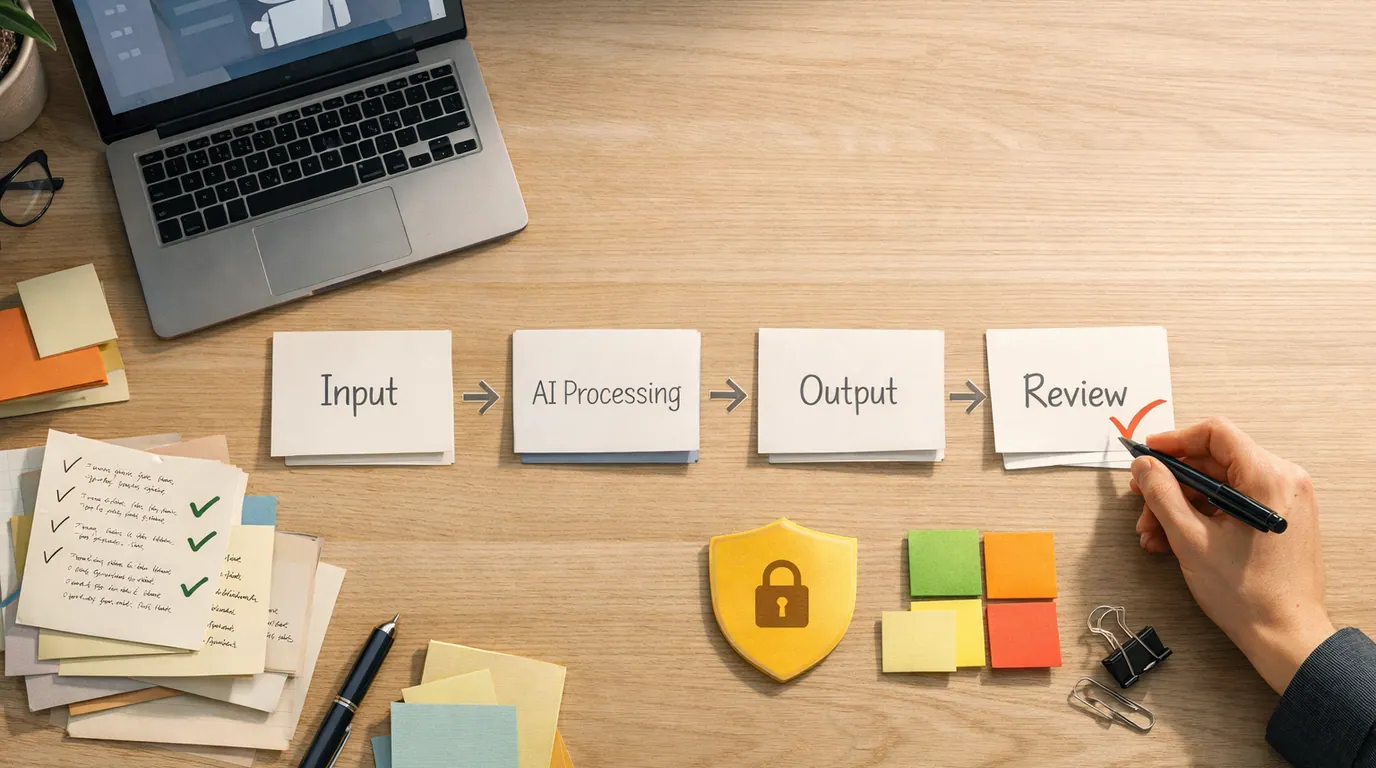
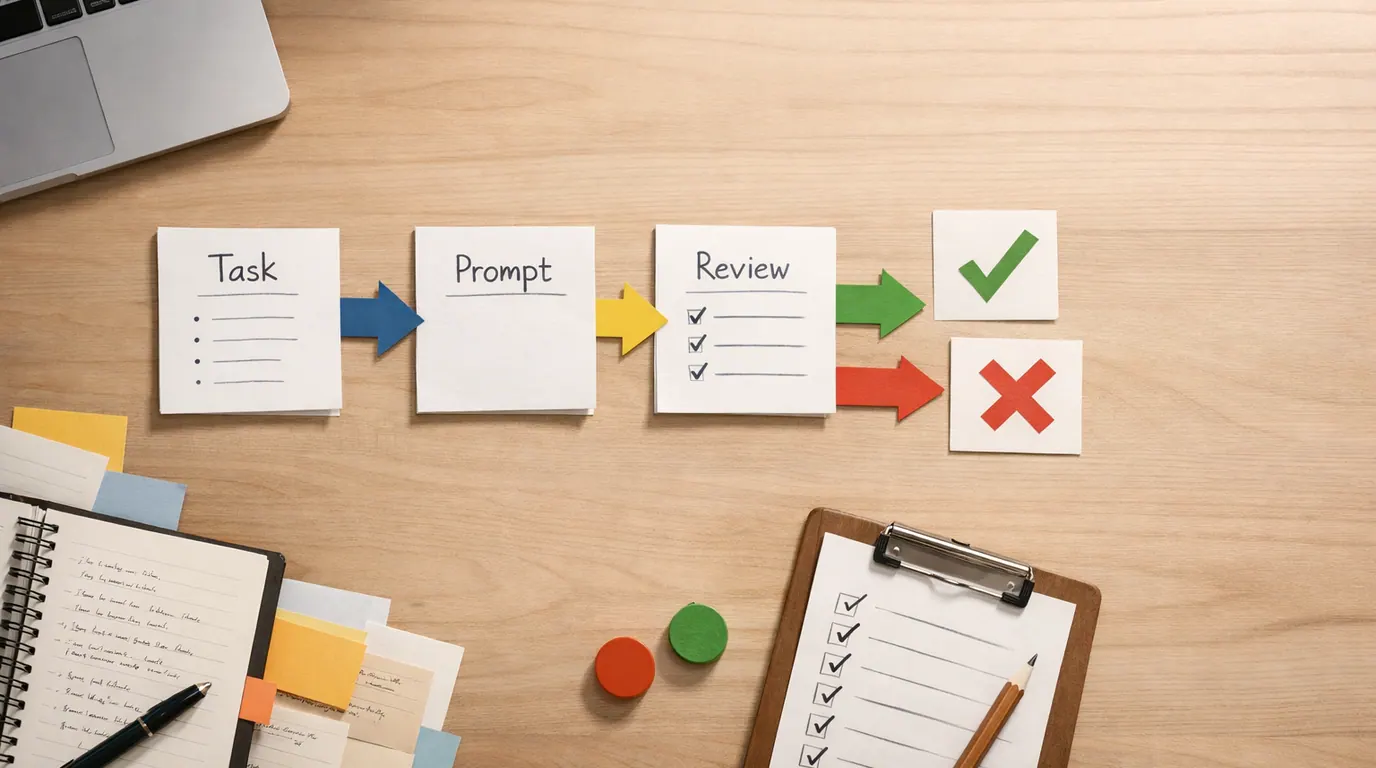
Name the blocked job first: plan, prioritize, focus, summarize, decide, delegate, or review.
Use tasks, deadlines, available time, energy patterns, meeting notes, dependencies, and quality bars.
Confirm priorities, promises, private data, calendar impact, and whether the plan fits the actual day.
Start With the Productivity Bottleneck
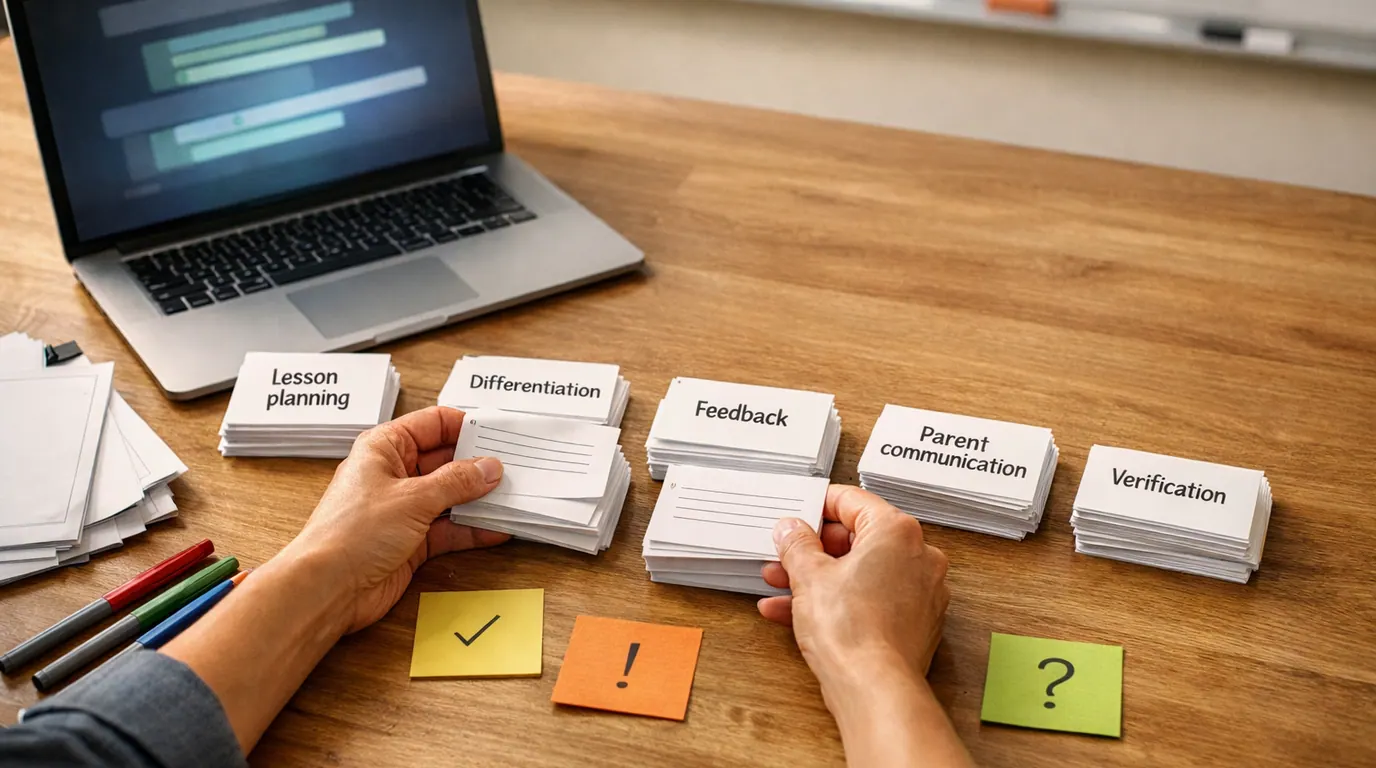
The best ChatGPT prompts for productivity are not universal productivity hacks. They are clear requests for help with one kind of friction: choosing what matters, breaking work down, recovering focus, preparing a meeting, making a decision, or closing the loop at the end of the week.
A practical ChatGPT prompts for productivity strategy is to separate planning from execution. Ask ChatGPT to organize the work, then you choose what deserves time. If you ask it to optimize everything, it may produce a crowded plan that looks impressive and fails by noon.
Use this base ChatGPT prompts for productivity template whenever you are not sure which specific prompt to pick:
Act as a practical productivity assistant.

My current goal: [what I need to accomplish]
My inputs: [tasks, notes, deadlines, meetings, worries, project details]
Constraints: [available time, energy, tools, people, budget, dependencies]
Quality bar: [what good enough means and what must be excellent]
Output format: [top priorities, time blocks, checklist, decision table, meeting brief, next actions]
Review rule: [what I must verify before acting]

Before giving the plan, ask up to [number] clarifying questions if the input is not enough.
Flag assumptions clearly.If you want the broader mechanics behind task, context, constraints, format, and review, start with our guide to writing better AI prompts. If your issue is choosing software rather than writing prompts, compare the workflow map in Best AI Tools for Productivity.
Prompt Library: ChatGPT Prompts for Productivity by Job
These ChatGPT prompts for productivity use cases are organized by the work problem, not by novelty. Start with the row that matches your day, then use the copyable ChatGPT prompts for productivity examples in the next section.
| Productivity job | Use when | Ask ChatGPT for | Human review point |
|---|---|---|---|
| Daily triage | Your task list is too long and everything feels urgent | Top priorities, deferrals, time blocks, and a realistic first action | Confirm what is truly urgent and what can wait. |
| Project breakdown | A project feels vague, large, or hard to start | Milestones, next actions, dependencies, risks, and a one-hour starter task | Check owners, deadlines, and missing context. |
| Focus block | You have a work window but keep context-switching | A focused work plan, task boundaries, interruption rules, and a restart step | Make sure the block is small enough to finish. |
| Meeting prep | A meeting needs decisions instead of more discussion | Agenda, desired outcomes, questions, pre-reads, and decision criteria | Confirm stakeholders, facts, and what is actually up for decision. |
| Meeting recap | Notes, transcripts, or memory need to become follow-up work | Decisions, action items, owners, deadlines, open questions, and follow-up draft | Verify speaker intent, commitments, dates, and private details. |
| Decision filter | You are stuck between options | Clarifying questions, tradeoffs, scorecard, risks, and next evidence to gather | Use your real priorities, not the model's default assumptions. |
| Inbox and admin | Small messages and chores keep interrupting deeper work | Batching plan, reply drafts, delegation options, and rules for future handling | Check tone, promises, privacy, and whether replies should be sent. |
| Weekly review | The week ended with loose ends and no clear reset | Wins, misses, carryovers, lessons, next-week priorities, and not-to-do list | Keep only commitments you can defend and schedule. |
This is the useful difference between random ChatGPT prompts and a prompt system: each output has a place to go next.
Copyable ChatGPT Prompts for Productivity Examples
Replace the bracketed fields with your real information. The more specific the input, the less ChatGPT has to guess about your work, calendar, or standards.
1. Daily triage prompt
Use this when your morning starts with a long list and no obvious order.
Act as a calm productivity planner.

Here is my task list for today:
[paste tasks, meetings, errands, deadlines, and worries]

Available work time: [time blocks]
Energy pattern: [best focus time, low-energy time, hard stop]
Must not miss: [deadlines, people waiting, fixed commitments]
Can move if needed: [flexible work]

Create:
1. The top 3 priorities for today
2. A realistic time-blocked plan
3. Tasks to defer, delegate, or delete
4. The first 15-minute action
5. Assumptions I should verify before starting
Human review: reject any schedule that ignores real meetings, family commitments, travel, recovery time, or the fact that some work needs setup before it can begin.
2. Project breakdown prompt
Use this when a project is important but too blurry to start.
Act as a project planner who favors simple next actions.

Project: [project name]
Goal: [what done means]
Deadline or target date: [date]
Current status: [what is already done]
Constraints: [people, tools, budget, approvals, dependencies]
Known risks: [risks or blockers]

Break this into:
- 3 to 5 milestones
- The next 10 concrete actions
- Dependencies and decisions
- A one-hour starter task I can do today
- Questions that could change the plan

Keep the plan realistic and mark anything based on assumptions.
This prompt is better than asking for a motivational plan because it forces the model to produce work you can inspect.
3. Focus block prompt
Use this when you have a 25-, 45-, or 90-minute work block and need momentum.
Act as a focus coach for one work block.

Task: [task]
Available time: [25, 45, or 90 minutes]
Definition of done for this block: [specific output]
Likely distractions: [messages, tabs, anxiety, unclear next step, interruptions]
Tools or materials available: [docs, notes, files, software]

Create a block plan with:
- Setup steps
- Work sequence
- What to ignore until the block ends
- A fallback if I get stuck
- A short closing checklist
Everyday example: for a quarterly report, the first block might be “collect the three source files, outline the report sections, and write the findings bullets”, not “finish the report”.
4. Meeting prep prompt
Use this before meetings that need a decision, not just a conversation.
Act as a meeting operator.

Meeting topic: [topic]
Participants: [roles or names]
Desired outcome: [decision, alignment, options, approval, next steps]
Context: [background notes, constraints, prior decisions]
Open questions: [what is unresolved]

Create:
1. A 30-minute agenda
2. The decision or output each agenda item should produce
3. Questions to ask before the meeting
4. A short pre-read note
5. Risks if the meeting ends without a decision
Human review: confirm who has authority to decide. ChatGPT can structure the meeting, but it cannot know your organization’s real power map unless you provide it.
5. Meeting recap prompt
Use this with your notes or a transcript after a call.
Act as a careful meeting note editor.

Summarize the meeting notes below into:
- Decisions made
- Action items with owner and deadline
- Open questions
- Risks or blockers
- Follow-up message draft
- Items that need verification because the notes are unclear

Do not invent names, dates, or commitments.
If ownership is unclear, mark it as unassigned.

Meeting notes:
[paste notes or transcript excerpt]
Meeting summaries are high-leverage, but they can also create fake certainty. Verify commitments before assigning work.
6. Decision filter prompt
Use this when you are choosing between tools, tasks, ideas, or next moves.
Act as a decision assistant.

Decision: [what I need to choose]
Options: [option A, option B, option C]
Success criteria: [speed, quality, cost, risk, learning, reputation, revenue, relationship, stress]
Constraints: [budget, deadline, people, reversibility]
Known facts: [what I know]
Unknowns: [what I need to learn]

Ask up to 3 clarifying questions first if needed.
Then create a scorecard with:
- Pros and cons
- Time cost
- Money cost
- Stress or coordination cost
- Long-term payoff
- Reversibility
- One low-risk next step
Use the scorecard as a thinking aid, not a final answer. You still decide which criteria matter most.
7. Inbox and admin batching prompt
Use this when small tasks are consuming attention.
Act as an admin workflow assistant.

Here are the messages, chores, and small tasks I need to handle:
[paste list]

Constraints:
- Available admin time: [time]
- Messages that need my personal voice: [items]
- Tasks that can be delegated or templated: [items]
- Things I should not promise: [limits]

Group the work into batches.
Draft replies where useful.
Create rules for what to handle now, later, delegate, or ignore.
Flag any reply that needs careful human review.
Human review: never send a generated reply that changes price, legal position, scope, deadline, hiring status, or a sensitive relationship without reading it closely.
8. Weekly review and reset prompt
Use this at the end of the week or before planning Monday.
Act as a practical weekly review partner.

This week:
Completed: [wins and finished work]
Unfinished: [carryovers]
Problems: [delays, energy drains, unclear work, distractions]
Upcoming commitments: [deadlines, meetings, deliverables]
Personal constraints next week: [travel, family, energy, appointments]

Create:
1. A short review of what happened
2. The 3 most important priorities for next week
3. A not-to-do list
4. Tasks to delegate or renegotiate
5. One process improvement
6. A first action for Monday
This is where ChatGPT prompts for productivity can become a real system. The weekly review turns one-off chats into a repeatable planning loop.
Build a Simple ChatGPT Prompts for Productivity Workflow
The strongest ChatGPT prompts for productivity workflow is small enough to repeat. You do not need a life operating system before lunch. You need a loop that catches work, sorts it, helps you act, and forces review.
- Capture messy inputs. Put tasks, notes, deadlines, ideas, and worries in one place before asking ChatGPT to organize them.
- Choose the job. Decide whether you need triage, breakdown, focus, meeting prep, recap, decision support, admin batching, or weekly review.
- Add constraints. Include available time, energy, deadlines, dependencies, quality bar, and anything the model should not optimize away.
- Ask for a reviewable output. Request a table, checklist, time-blocked plan, agenda, decision scorecard, or follow-up draft you can inspect quickly.
- Decide what survives contact with reality. Delete low-value tasks, renegotiate overloaded commitments, and move only real priorities into your calendar or task manager.
For team or business workflows, use the same structure with more explicit ownership. Our ChatGPT prompts for business guide covers operating briefs, handoffs, and review rules for shared work. For writing-heavy productivity, the ChatGPT prompts for writing library is more specific.
Use This ChatGPT Prompts for Productivity Checklist
Use this ChatGPT prompts for productivity checklist before trusting the output. It is short because the goal is to make review easier, not turn prompting into another project.
- Task is specific. The prompt asks for one job, such as triage or meeting recap, instead of asking ChatGPT to make you more productive.
- Inputs are real. The prompt includes actual tasks, notes, deadlines, constraints, or source material.
- Priority criteria are visible. The model knows whether speed, quality, risk, money, learning, or relationship cost matters most.
- Output is easy to use. The answer comes back as a table, checklist, agenda, scorecard, calendar block, or next-action list.
- Assumptions are labeled. Anything the model does not know should be marked as an assumption or question.
- Human review is explicit. The prompt names the facts, commitments, privacy concerns, or judgment calls you must verify.
- There is a next action. The output ends with something small enough to do now, schedule, delegate, or reject.
The same checklist also helps you judge prompt libraries you find online. If a prompt sounds clever but does not ask for constraints, assumptions, and review, it is probably too vague for real productivity work.
What to Avoid With Productivity Prompts
ChatGPT can make a messy day clearer, but it can also create a polished fantasy schedule. The risk is not only wrong facts. The risk is outsourcing judgment about what deserves your limited attention.
Works Well When
- Use ChatGPT to sort messy tasks into priorities, deferrals, and next actions.
- Use ChatGPT to turn notes, transcripts, and decisions into reviewable follow-up work.
- Use ChatGPT to create options, scorecards, and checklists before you choose.
- Use ChatGPT to make repeated routines easier to start and easier to inspect.
Watch Out For
- Do not let ChatGPT decide final priorities when the stakes involve people, money, customers, health, legal claims, or job outcomes.
- Do not paste private data, confidential records, contracts, credentials, or sensitive employee information into an unapproved tool.
- Do not accept a full-day plan that ignores breaks, transitions, meetings, emotional load, or real dependencies.
- Do not treat a neat table as proof that the model understood the situation.
The practical rule is simple: use AI to prepare work, not to become the owner of the work. You still own the calendar, the promise, the relationship, and the final decision.
The Bottom Line
ChatGPT prompts for productivity are most useful when they turn overload into a smaller decision: what matters, what can wait, what the next action is, and what needs review before it moves forward.
Start with one repeated bottleneck this week. Save the prompt that helps, delete the ones that only create busywork, and keep your human review step visible. A good productivity prompt does not make every task look important; it helps you see which work deserves your attention now.
Frequently asked questions
What are the best ChatGPT prompts for productivity?
The best prompts are tied to one bottleneck, such as planning today, breaking down a project, summarizing a meeting, choosing between options, or reviewing the week. They include real tasks, deadlines, energy limits, output format, and a human review step.
Can ChatGPT actually improve productivity?
ChatGPT can improve productivity when it reduces planning friction, organizes messy inputs, drafts first versions, or turns notes into next actions. It does not create more time by itself, so the gain depends on whether you act on the output and remove work that no longer matters.
Should I use one long productivity prompt or several short prompts?
Use several short prompts for work that changes during the day: triage, time block, focus, summarize, and review. Use one longer template only for stable routines such as weekly planning or project breakdowns, where the same fields and review rules repeat.
What should I include in a productivity prompt?
Include the task list, deadlines, effort level, dependencies, available time, energy pattern, quality bar, and output format. Also tell ChatGPT what not to optimize for, such as cramming too much into the day or treating every task as equally important.
How do I keep ChatGPT productivity advice from becoming generic?
Paste real inputs instead of asking for abstract advice. Add your calendar limits, current workload, blocked tasks, meeting notes, project constraints, and examples of what counts as done. Then ask ChatGPT to flag assumptions before it builds the plan.
What productivity work should not be delegated to ChatGPT?
Do not delegate final priorities, sensitive personnel decisions, legal or financial commitments, private data handling, customer promises, or calendar changes that affect other people without review. Use ChatGPT to prepare the decision, not to become the accountable owner.