If you searched for “chatgpt prompts for copywriting”, you probably do not need a giant list of clever one-liners. You need prompts that help you turn customer language, offer details, and proof into usable copy without letting the model invent the substance.
Good ChatGPT prompts for copywriting work like short creative briefs. They tell the model who the buyer is, what action you want, what proof is available, which channel the copy is for, and what must be checked before anything ships.
The best ChatGPT prompts for copywriting do not ask ChatGPT to “write something persuasive” from thin air. They help you create useful options faster, then make the human decision clearer: which angle is true, which claim is supportable, and which draft deserves revision.
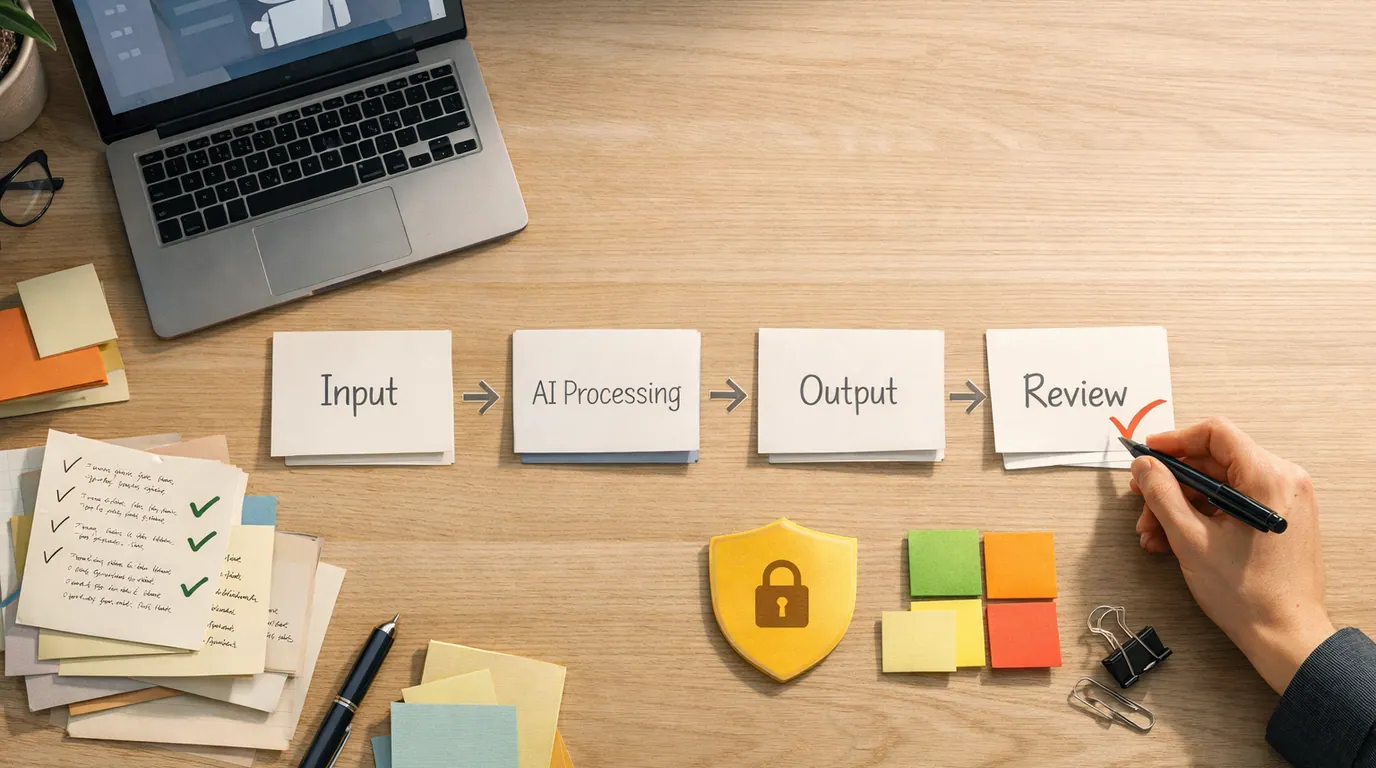
Define the audience, awareness level, problem, product, promise, and desired action before asking for copy.
Use customer quotes, product details, objections, testimonials, reviews, call notes, and approved claims.
Verify claims, privacy, compliance, tone, differentiation, and whether the copy fits the channel.
Start With the Copywriting Brief
Most weak AI copy fails because the prompt asks for the final asset before defining the selling situation. “Write a landing page for our app” leaves ChatGPT to guess the buyer, pain, offer, proof, objection, tone, and conversion goal.
Use this ChatGPT prompts for copywriting template when you are not sure where to start:
Act as a practical copywriting assistant.

Product or offer: [what you sell]
Audience: [who buys it, awareness level, role, situation, objection]
Desired action: [buy, book a call, start a trial, subscribe, download, reply, click]
Channel: [landing page, email, ad, product page, social post, sales page, website section]
Customer language: [quotes, reviews, survey responses, sales-call notes, support tickets]
Proof available: [testimonial, demo, feature, guarantee, case study, data, founder story, comparison]
Brand voice: [plain, expert, warm, punchy, technical, premium, playful, direct]
Constraints: [claims to avoid, legal limits, words to avoid, length, format, platform rules]
Output: [hooks, headline variants, page section, email sequence, ad concepts, critique, checklist]
Human review: [facts, privacy, claims, tone, compliance, offer accuracy, CTA fit]

If the input is too thin, ask up to five clarifying questions before drafting.
Do not invent customer quotes, results, statistics, guarantees, or product capabilities.
This is the useful core of any ChatGPT prompts for copywriting guide: the model can help with copy only after you give it the same context a capable copywriter would ask for.
If you want the broader prompting formula behind this structure, start with our guide to writing better AI prompts. If your copy is part of a wider campaign, the ChatGPT prompts for marketing library can help with strategy, calendars, and analytics.
Prompt Library: ChatGPT Prompts for Copywriting by Job
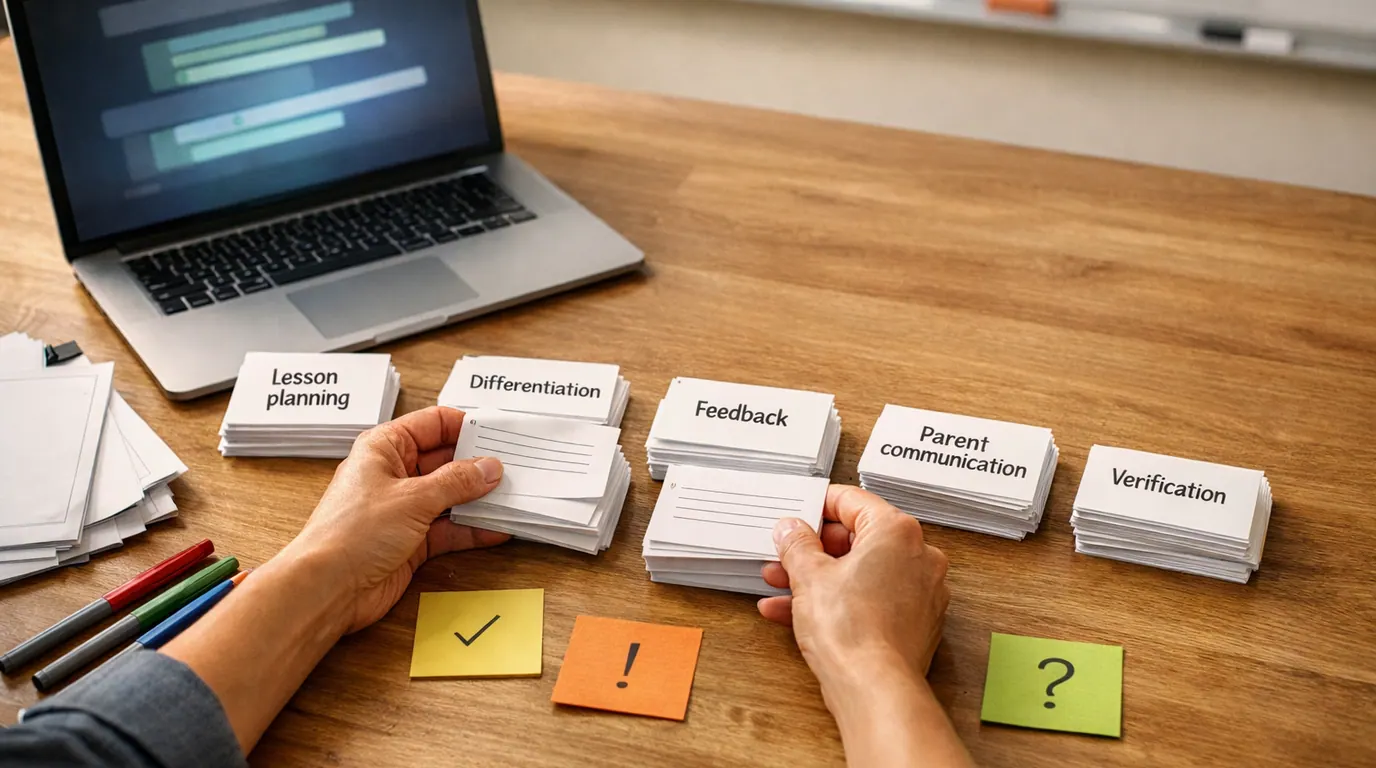
The table below maps common ChatGPT prompts for copywriting use cases to the output you should request. Pick the row that matches the bottleneck, then use the copyable templates in the next section.
| Copywriting job | Use when | Ask ChatGPT for | Human review point |
|---|---|---|---|
| Voice-of-customer analysis | You have reviews, survey responses, sales notes, or support tickets | Pain points, desired outcomes, objections, repeated phrases, proof gaps | Do not treat AI clustering as research truth; compare it with the source material. |
| Positioning and angles | The offer is real but the message feels flat | Message angles, buyer triggers, objections, promises, and risks | Choose only angles you can support with product truth and customer evidence. |
| Hooks and headlines | You need first-line options for ads, landing pages, emails, or social posts | Headline families, hook variants, curiosity gaps, and benefit-led options | Reject clickbait, vague benefits, and unsupported urgency. |
| Landing page sections | You need structure for a page, not only a slogan | Hero copy, problem section, benefit blocks, proof sections, FAQs, CTA variants | Check that every section earns attention and matches the actual offer. |
| Email copy | You need a launch, nurture, winback, onboarding, or follow-up sequence | Subject lines, preview text, body copy, objections, CTAs, and sequence logic | Verify promises, links, sender tone, deliverability risk, and unsubscribe clarity. |
| Ad copy | You need short variants for search, social, display, or retargeting | Concepts, primary text, headlines, CTAs, proof points, test hypotheses | Review platform rules, regulated claims, landing-page match, and audience targeting. |
| CTA and microcopy | The page or email is almost done but the action language is weak | CTA options by intent, button copy, form helper text, reassurance lines | Make sure the CTA describes the next step honestly. |
| Rewrite and tighten | The copy is accurate but too long, dull, vague, or hard to scan | A tighter version, stronger verbs, removed repetition, and before/after notes | Preserve meaning and avoid turning specific detail into generic polish. |
| Critique before publishing | A draft exists and you need a second-pass review | Priority issues, weak claims, missing proof, unclear CTAs, tone risks | Use AI as a reviewer, not the final approver. |
The fastest path is not a longer prompt. It is a clearer job. Ask for analysis when you need evidence, options when you need direction, and critique when you need judgment before revision.
Copyable ChatGPT Prompts for Copywriting Examples
These ChatGPT prompts for copywriting examples are reusable templates. Replace the bracketed fields with real details, paste source material when you have it, and keep the human-review instruction.
1. Voice-of-customer analysis prompt
Use this before writing any high-stakes page, email, or ad. It helps turn messy research into copy inputs without pretending the model conducted the research.
Act as a conversion copy researcher.

Product or offer: [what we sell]
Audience: [who the buyer is]
Source material:
[paste anonymized reviews, survey responses, interview notes, sales-call summaries, support tickets, or testimonial excerpts]

Analyze the source material and return a table with:
- Repeated customer pain
- Desired outcome
- Exact customer phrase or close paraphrase
- Objection or hesitation
- Trigger moment
- Proof we would need to answer the objection
- Copy angle this could support

Use only the source material. If a theme is weak or appears only once, label it as tentative.
Do not invent quotes, statistics, customer stories, or product results.
Human review: open the original notes while you review the table. AI can group patterns quickly, but you still need to check whether the language is faithful, representative, and safe to use.
2. Positioning and message-angle prompt
Use this when you understand the offer but need sharper choices before drafting. This is a practical ChatGPT prompts for copywriting strategy prompt because it separates angle selection from wordsmithing.
Act as a senior conversion copywriter.

Offer: [product, service, plan, feature, launch, webinar, guide, consultation]
Audience: [segment, awareness level, buying situation, role, industry]
Problem we solve: [specific problem]
Alternatives the buyer may consider: [competitors, manual process, doing nothing, hiring someone]
Proof available: [testimonials, demo, feature proof, case study, guarantee, customer quote]
Constraints: [claims to avoid, compliance concerns, pricing language, tone, words to avoid]

Create five message angles.
For each angle, include:
- Core promise
- Buyer belief it depends on
- Main objection
- Proof needed
- Best channel or asset for the angle
- Example headline
- Risk if we overstate it

Recommend the strongest two angles and explain what evidence would make each one credible.
Human review: choose the angle that has the strongest proof, not only the sharpest headline. A persuasive line that outruns the product creates refund, trust, and compliance problems.
3. Hook and headline prompt
Use this when a page, email, or ad needs stronger opening options.
Act as a direct-response copy editor.

Asset: [landing page, email, ad, product page, social post, webinar invite]
Audience: [who will read it]
Offer: [what action we want]
Main buyer problem: [specific pain or desire]
Proof or differentiator: [what makes the promise believable]
Voice: [tone]
Avoid: [clickbait, hype, false urgency, banned words, unsupported numbers]

Write 20 hooks or headlines grouped by:
- Problem-aware
- Outcome-led
- Objection-aware
- Proof-led
- Curiosity-driven but honest

For each group, explain when that angle fits.
Mark any headline that would need stronger proof before use.
Human review: delete anything that sounds clever but unclear. A headline earns its place only if the right reader understands the promise and has a truthful reason to keep reading.
4. Landing page prompt
Use this after you know the buyer, offer, and proof. Do not use it as a substitute for positioning.
Act as a landing page copywriter.

Offer: [what the page sells or asks for]
Audience: [who the page is for and what they already know]
Traffic source: [search, paid social, email, partner, direct, sales referral]
Desired action: [book a demo, buy, start trial, download, subscribe, join waitlist]
Customer pain and language: [paste notes or summary]
Proof available: [testimonials, product details, demos, screenshots to describe, case study, guarantees]
Objections to answer: [price, trust, complexity, time, switching, risk]
Brand voice: [tone]
Constraints: [claims to avoid, required details, page length, legal or compliance notes]

Draft a page outline and sample copy for:
1. Hero section
2. Problem section
3. Outcome or benefit section
4. How it works
5. Proof section
6. Objection-handling FAQ
7. CTA section

After the draft, list weak claims, missing proof, and sections that need human review.
Human review: compare the page to the traffic source. A search visitor, a warm email subscriber, and a retargeted ad click do not need the same opening.
5. Email sequence prompt
Use this for product launches, nurture campaigns, onboarding, webinar follow-ups, and reactivation.
Act as an email copywriter.

Campaign goal: [launch, nurture, onboarding, winback, event registration, demo request]
Audience: [segment and awareness level]
Offer: [what we want the reader to do]
Reader objection: [why they might ignore, delay, distrust, or say no]
Proof available: [testimonial, case study, product detail, founder note, demo, report]
Sequence length: [number of emails]
Tone: [plain, founder-led, expert, warm, concise, premium]
Constraints: [claims, deadlines, links, compliance, unsubscribe expectations]

Return a sequence table with:
- Email number
- Purpose
- Subject line options
- Preview text
- Body copy draft
- CTA
- Objection addressed
- Proof needed

Do not invent scarcity, results, testimonials, or deadlines.
Human review: check every promise, date, link, and CTA. Email copy can move quickly, so false urgency and invented proof are common failure modes.
6. Ad copy prompt
Use this when you need variants for testing, not one supposedly perfect ad.
Act as a performance copywriter.

Platform or placement: [search, Meta, LinkedIn, TikTok, display, retargeting]
Audience: [target segment and awareness level]
Offer: [what the ad promotes]
Landing page promise: [what the click leads to]
Main proof: [approved proof point]
Objections: [price, trust, time, complexity, switching, risk]
Constraints: [platform rules, regulated claims, length, banned words, brand voice]

Create:
- 5 ad concepts
- 3 headline options per concept
- 2 primary text options per concept
- CTA options
- The hypothesis each concept tests
- Claims that need legal, platform, or product review

Keep each concept distinct. Do not use fake urgency or unsupported numbers.
Human review: make sure the ad and landing page match. A strong ad that sends people to a mismatched page creates wasted spend and weak trust.
7. Rewrite and critique prompt
Use this when you already have draft copy and want a sharper second pass.
Act as a strict but practical copy editor.

Audience: [who this copy is for]
Goal: [what the copy should make the reader understand, feel, or do]
Brand voice: [tone]
Draft copy:
[paste draft]

Review the draft before rewriting.
Return:
1. The five biggest problems in priority order
2. Any vague claims, unsupported promises, or confusing lines
3. A tighter rewrite that preserves true meaning
4. Three alternative CTAs
5. A final checklist of what a human must verify

Do not add new claims, statistics, testimonials, guarantees, or product features.
Human review: keep the specific details that make the copy believable. AI often improves flow while sanding away the texture that made the draft credible.
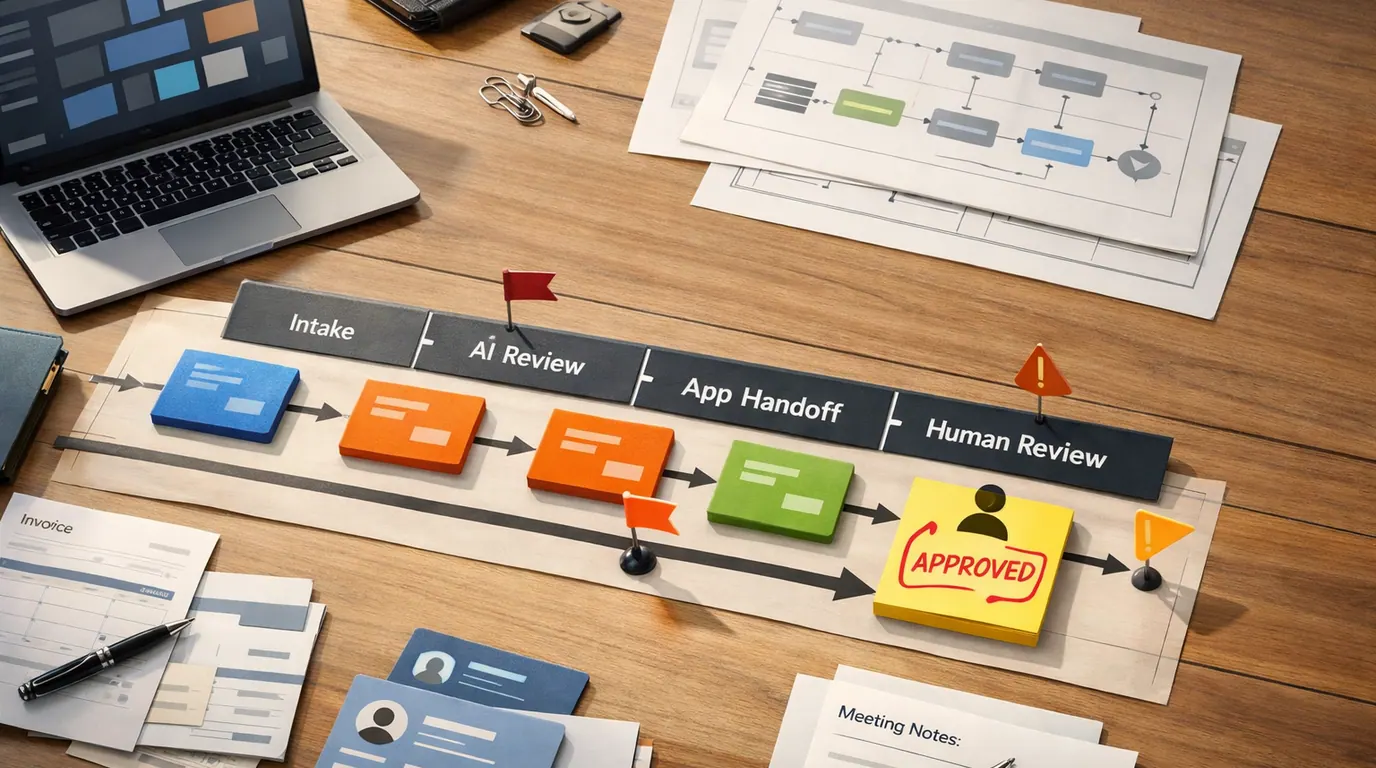
A ChatGPT Prompts for Copywriting Workflow
Use this ChatGPT prompts for copywriting workflow when the copy matters enough to review but not enough to create a complicated production process.
- Collect real inputs. Gather the offer, buyer, channel, proof, objections, constraints, and customer language before writing.
- Analyze before drafting. Ask ChatGPT to summarize pains, outcomes, objections, and proof gaps from the source material.
- Generate distinct angles. Request several positioning or headline options with assumptions and proof requirements.
- Draft one asset at a time. Write the landing page, ad, email, or CTA in a channel-specific prompt instead of asking for a full campaign in one pass.
- Critique before polish. Ask for weak claims, vague benefits, missing proof, unclear CTAs, and audience mismatch before requesting a final rewrite.
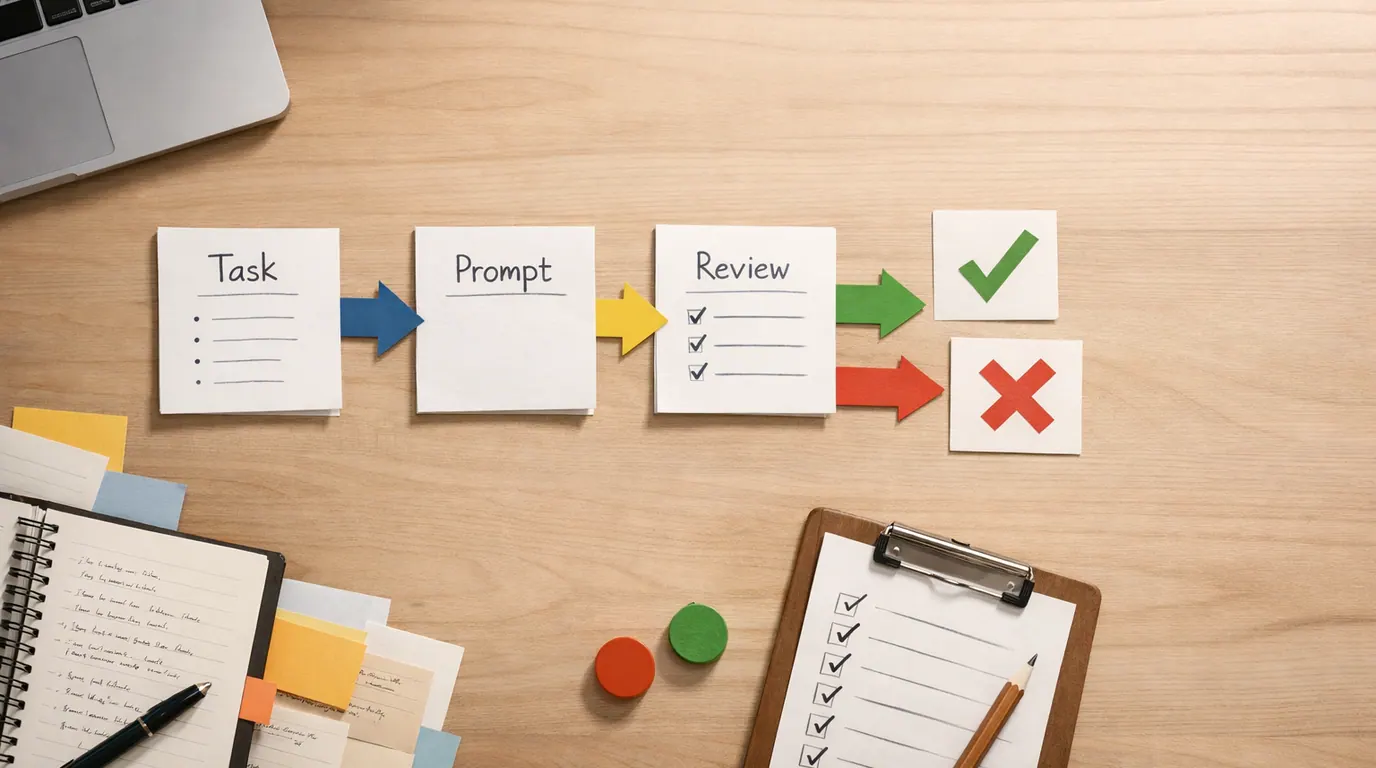
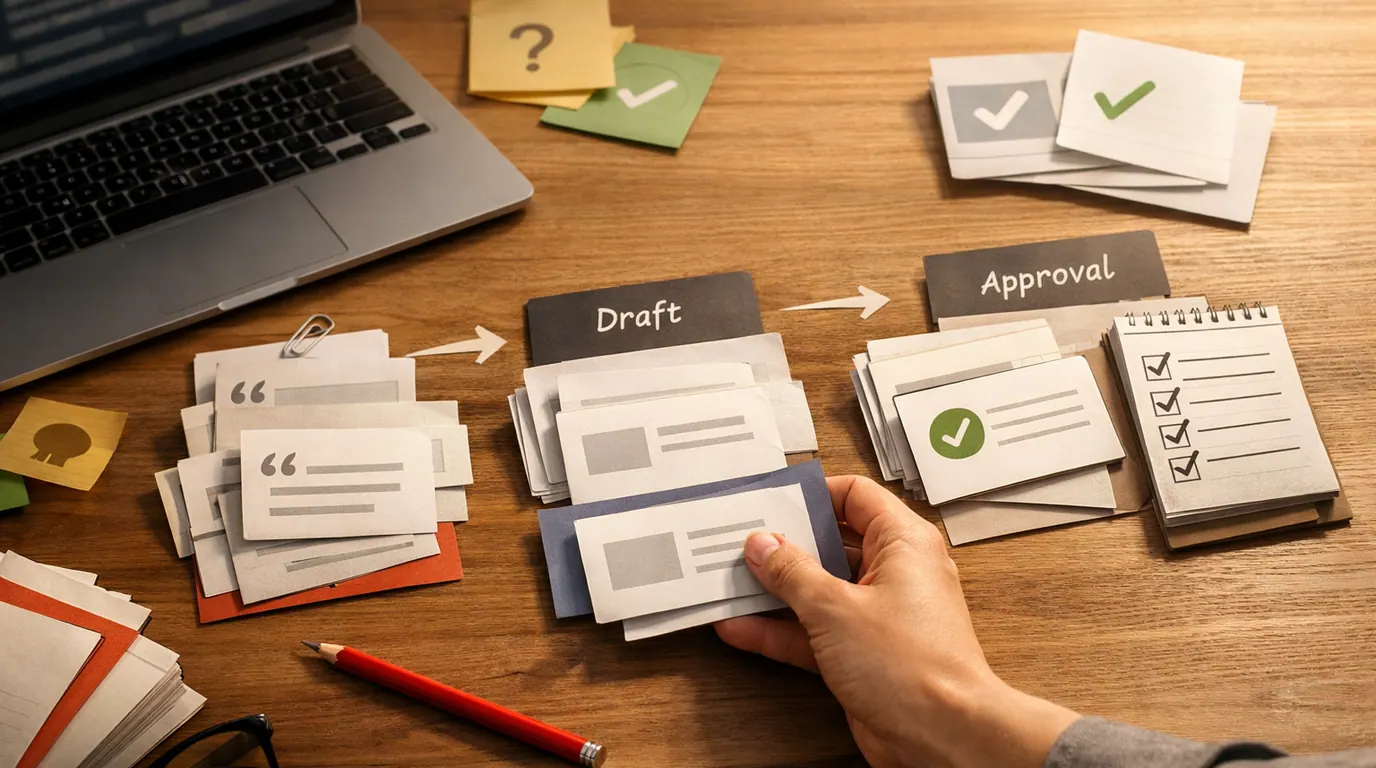
- Approve manually. A human should verify facts, claims, privacy, legal risk, brand voice, offer accuracy, and whether the copy should ship.
This staged approach also works for adjacent writing jobs. For broader drafting and editing patterns, see ChatGPT prompts for writing. For channel-specific caption work, use the ChatGPT prompts for social media library.
ChatGPT Prompts for Copywriting Checklist
Use this ChatGPT prompts for copywriting checklist before you publish, send, or hand copy to design.
Check before you use the draft
- The audience and awareness level are clear.
- The offer, CTA, and next step are accurate.
- Every claim has proof or is softened.
- Customer language is anonymized and used responsibly.
- The tone fits the brand, channel, and buyer situation.
- The copy handles at least one real objection.
- The draft does not invent numbers, testimonials, urgency, or guarantees.
Do not publish if
- The promise is stronger than the product can support.
- The copy relies on private or unapproved customer data.
- The model added features, pricing, results, or deadlines.
- The headline is catchy but unclear.
- The CTA hides what happens after the click.
- The copy sounds like any company in the category could say it.
- A regulated, legal, financial, health, or safety claim has not been reviewed.
For everyday copywriting, the most useful review question is simple: would you defend this sentence to a customer, a salesperson, a product owner, and a lawyer? If not, revise it before it leaves your draft.
What ChatGPT Copywriting Prompts Can and Cannot Do
ChatGPT is useful for speed, variation, structure, and critique. It can sort research, propose angles, rewrite awkward sections, create ad variants, and find vague claims you have stopped seeing.
It is weaker at knowing what is true about your product, what your best customers actually believe, what your legal team would approve, and which promise your market will trust. That is why strong ChatGPT prompts ask for proof gaps and human review instead of pretending the model can own the final call.
Works Well When
- You already have customer language, proof, and offer details.
- The task needs options, outlines, rewrites, or critique.
- The copy can be checked against source material.
- The workflow repeats across emails, ads, pages, or product updates.
- A human owns final approval.
Watch Out For
- You need original research but have not collected any.
- The prompt includes private or regulated data without approval.
- The copy depends on exact claims, prices, legal terms, or results.
- The model is asked to invent testimonials, scarcity, proof, or customer stories.
- No one will review the draft before publishing.
The practical standard is not whether AI can produce fluent copy. It can. The standard is whether the copy is true, specific, differentiated, and useful enough for the buyer in front of you.
The Bottom Line
ChatGPT prompts for copywriting work best when you treat them as reusable briefs, not magic sentences. Start with the buyer, offer, proof, channel, and review standard. Then ask for analysis, options, drafts, critique, and revision in separate steps.
Save the prompts that improve real work: the voice-of-customer analyzer, the angle generator, the headline prompt, the landing page prompt, the email sequence prompt, the ad variant prompt, and the critique prompt. Over time, those templates become a lightweight copy system that still keeps human judgment where it belongs.
Frequently asked questions
What should I include in a ChatGPT copywriting prompt?
Include the audience, product or offer, channel, customer pain, proof, desired action, brand voice, constraints, and a human-review rule. A prompt that only says write copy makes ChatGPT guess; a brief with real inputs produces drafts that are easier to judge.
What are the best ChatGPT prompts for copywriting?
The best prompts are tied to a copywriting job: voice-of-customer analysis, hooks, landing pages, email sequences, ads, CTAs, rewrites, and critique. They ask for options, assumptions, missing proof, and risk flags rather than one polished final version.
Can ChatGPT replace a copywriter?
ChatGPT can speed up research sorting, angle generation, draft variants, and editing passes, but it should not own positioning, claims, legal review, customer truth, or final approval. Strong copy still depends on judgment, proof, taste, and knowledge of the market.
How do I stop AI copy from sounding generic?
Give ChatGPT customer language, product details, specific proof, rejected angles, brand examples, and words you avoid. After it drafts, ask it to mark vague benefits, unsupported claims, cliches, and lines that could apply to any competitor.
Is it safe to paste customer research into ChatGPT?
Use anonymized or aggregated customer language when possible, and do not paste private, regulated, confidential, or contract-restricted data into an unapproved AI tool. Follow your company's privacy and vendor rules before using transcripts, CRM notes, or survey exports.
Should I ask ChatGPT for AIDA, PAS, or another copywriting formula?
Frameworks like AIDA, PAS, BAB, and problem-agitate-solve can help structure options, but they do not create proof. Use formulas as draft shapes, then check whether the promise, objection handling, evidence, and call to action fit the real buyer.