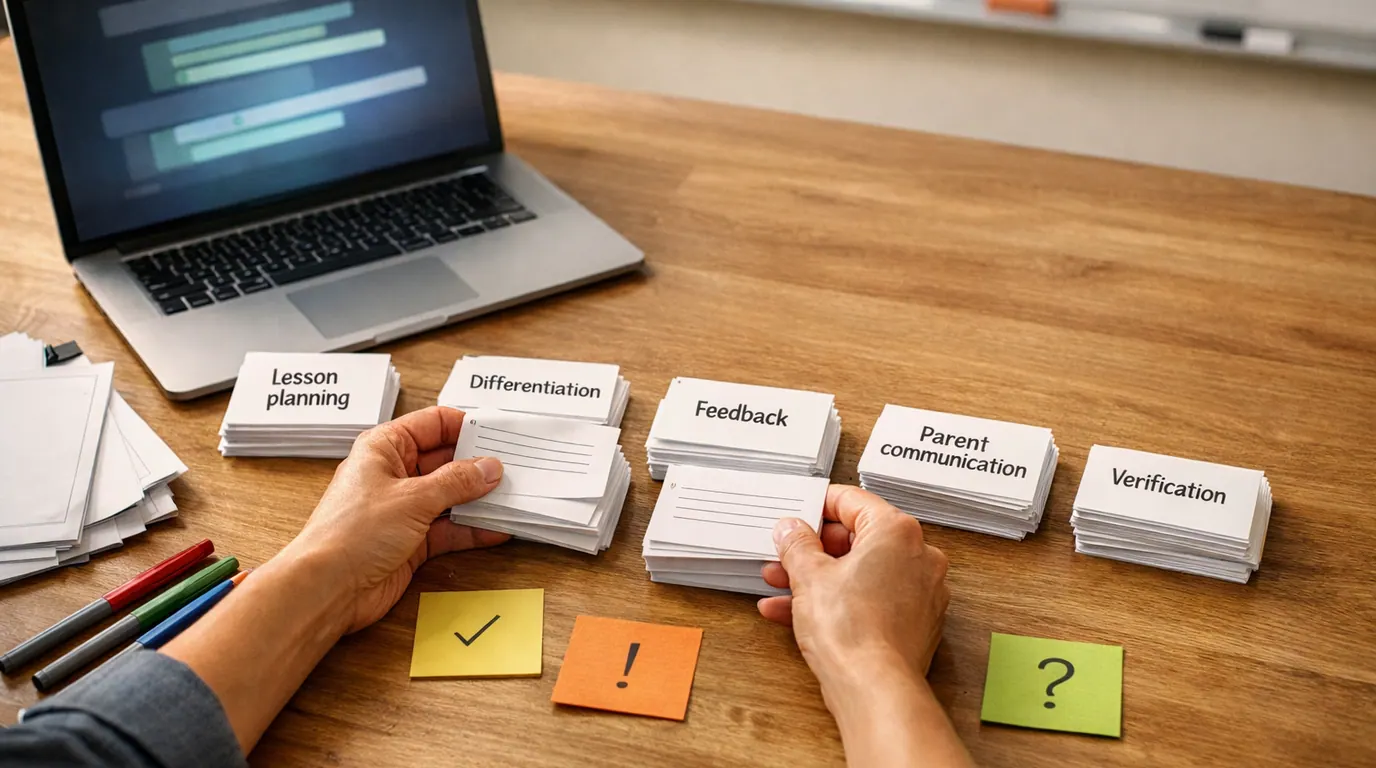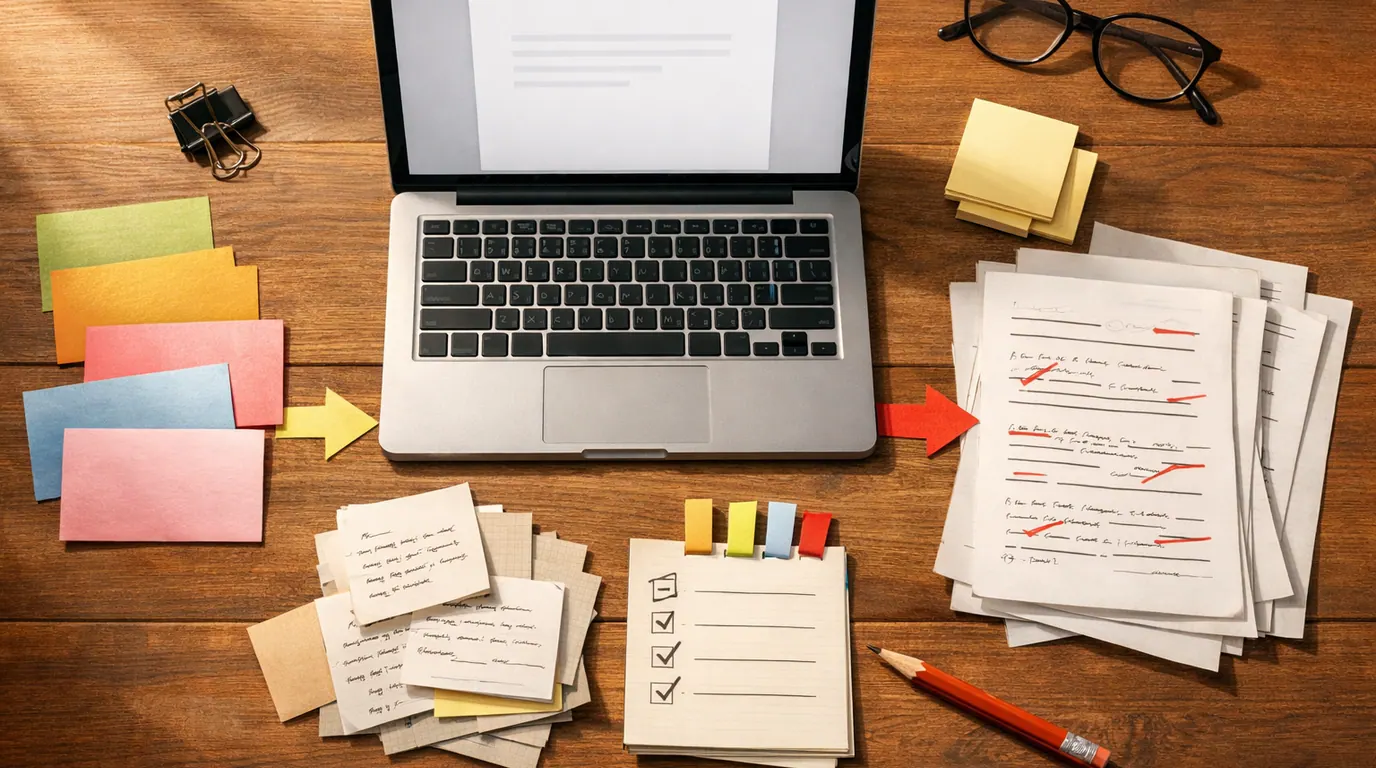
If you searched for “chatgpt prompts for writing”, you probably do not need a hundred random prompt lines. You need a way to get unstuck, shape a draft, improve weak prose, and keep the final work in your own judgment.
Good ChatGPT prompts for writing are short briefs. They tell the model what kind of help you want, what source material is true, who the reader is, what voice to use, and what a human must check before the words leave your desk.
Use this ChatGPT prompts for writing guide as a working library. Pick the writing job, copy the relevant template, add real context, then revise the output like you would revise any other draft.
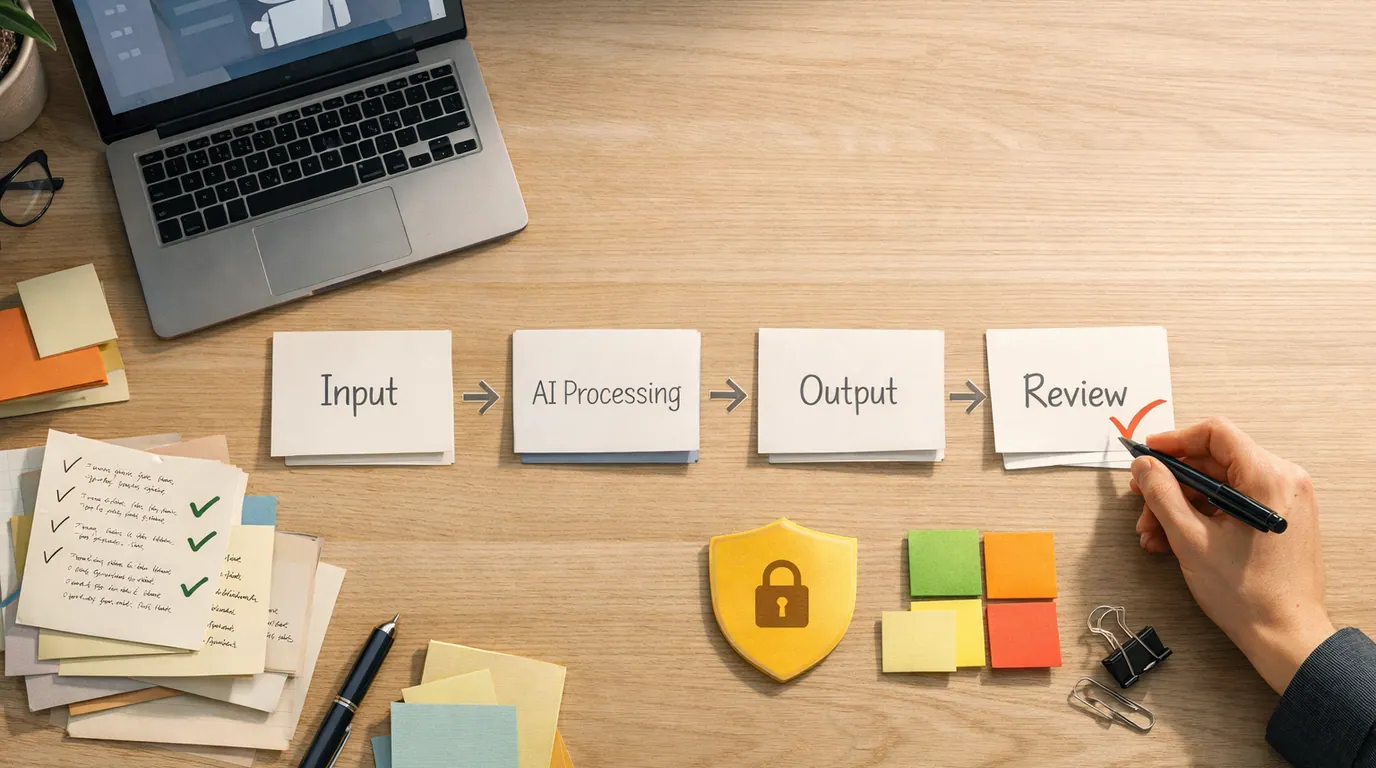
Name the stage: idea, outline, draft, rewrite, critique, polish, or repurpose.
Use notes, reader details, examples, source facts, constraints, and phrases you would actually use.
Verify facts, originality, claims, tone, privacy, and whether the final draft still sounds like you.
Start With the Writing Job, Not the Prompt
The best ChatGPT prompts for writing do not ask the model to be brilliant. They define the exact writing help you need.
Before you prompt, choose one job:
- Find angles when the page is blank.
- Turn messy notes into an outline.
- Draft one section from source material.
- Rewrite for clarity, tone, or length.
- Critique a draft without rewriting it.
- Build a scene, character, or story constraint.
- Convert one piece into another format.
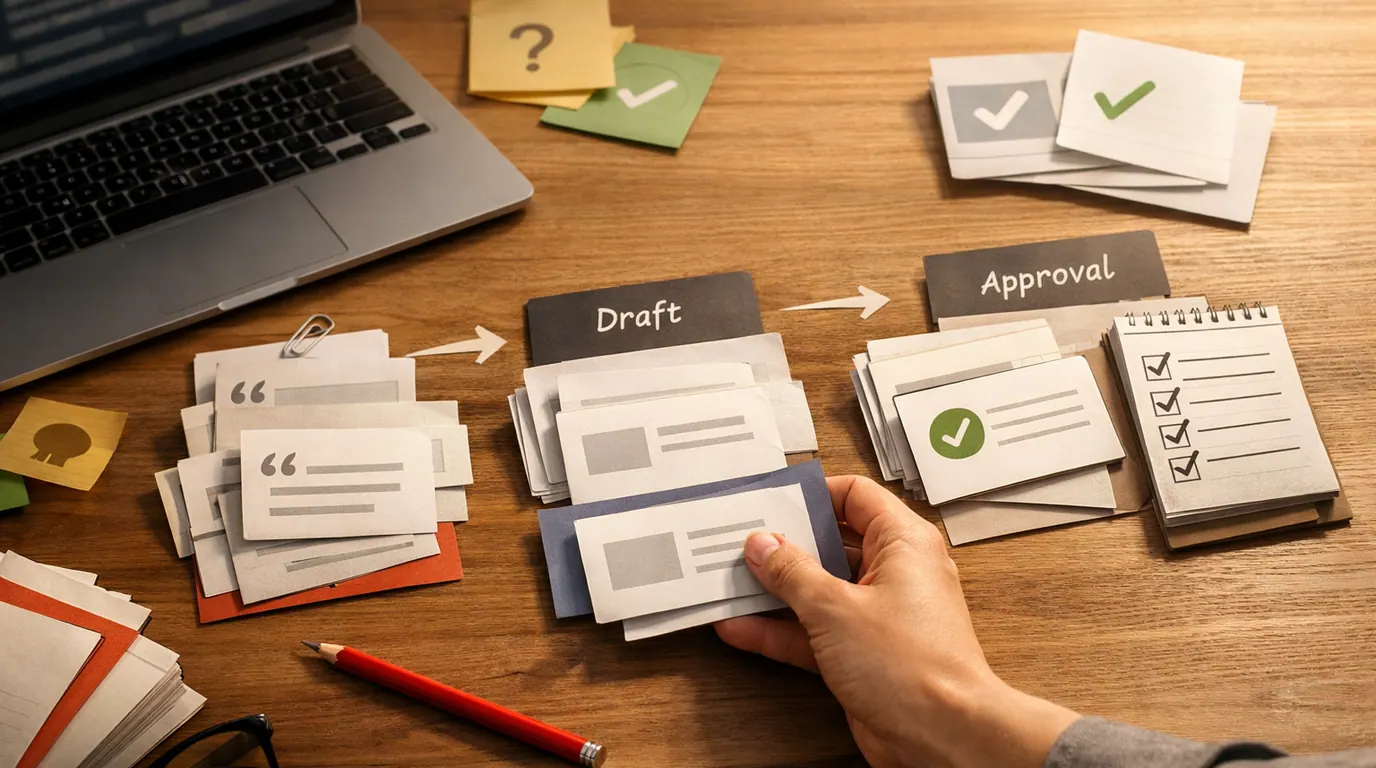
A practical ChatGPT prompts for writing strategy is to separate planning, drafting, and editing. If you ask for all three at once, you often get a smooth draft with weak assumptions buried inside it.
Use this ChatGPT prompts for writing template when you do not know where to start:
Act as a careful writing assistant for [type of writing].

Writing job: [idea, outline, draft, rewrite, critique, polish, repurpose]
Reader: [who this is for and what they already know]
Goal: [what the piece should help the reader understand, feel, decide, or do]
Source material: [notes, facts, examples, transcript, brief, research, or draft]
Voice: [plain, expert, warm, direct, literary, academic, persuasive, technical]
Constraints: [length, format, reading level, structure, words to avoid, claims to avoid]
Output: [outline, table, bullets, draft, critique, options, checklist]
Human review: [facts, voice, evidence, privacy, claims, originality, final judgment]

If the source material is not enough, ask up to [number] clarifying questions before writing.
Label assumptions clearly.This same briefing habit works beyond writing. If you want the broader mechanics, start with our guide to writing better AI prompts. If the task is business or campaign copy, the ChatGPT prompts for business and ChatGPT prompts for marketing libraries go deeper on those workflows.
Prompt Library: ChatGPT Prompts for Writing by Job
These ChatGPT prompts for writing use cases are organized by the problem you are trying to solve. Start with the row that matches your bottleneck, then use the copyable examples in the next section.
| Writing job | Use when | Ask ChatGPT for | Human review point |
|---|---|---|---|
| Idea generation | You have a topic but no strong angle | Reader problems, angles, examples, objections, and possible structures | Reject ideas that are too broad, unsupported, or not useful to your reader. |
| Thesis and angle | The piece has information but no clear point | A one-sentence claim, reader promise, counterargument, and stakes | Make sure the claim is true, specific, and worth a full piece. |
| Outline | Your notes are messy or the structure feels random | Three outline options with section goals and missing evidence | Choose the structure that serves the reader, not the one that looks most impressive. |
| Drafting | You need a first pass from real notes | A section draft based only on supplied facts, with assumptions flagged | Check accuracy, originality, examples, transitions, and whether the voice fits. |
| Voice rewrite | The meaning is right but the tone is wrong | A rewrite that preserves meaning while matching a sample or tone rule | Read it aloud and remove phrases you would never say. |
| Editing and critique | A draft exists but you need sharper judgment | Prioritized issues, specific fixes, and questions before rewrite | Accept only critiques that fit the audience and goal. |
| Creative writing | A story, scene, or character needs pressure | Character motives, conflict options, sensory details, or scene alternatives | Keep authorial control over emotion, pacing, and what belongs in the story. |
| Academic or research writing | You need to organize evidence or tighten an argument | A thesis map, literature themes, paragraph critique, or neutral rewrite | Verify citations, source meaning, plagiarism risk, and discipline-specific standards. |
| Repurposing | You need to turn one draft into posts, emails, scripts, or summaries | Channel-specific versions with constraints and reuse notes | Confirm every version still matches the channel and does not distort the original. |
The table is the shortcut: prompt by job, not by novelty. Strong ChatGPT prompts make the next human decision easier.
Copyable ChatGPT Prompts for Writing Examples
These ChatGPT prompts for writing examples are templates. Replace the bracketed fields with real context. If you do not have source material yet, ask for questions or options instead of asking for a finished draft.
1. Blank-page idea prompt
Use this when you have a topic but no useful angle.
Act as a practical writing coach.

Topic: [topic]
Reader: [who the reader is]
Reader problem: [what they are trying to understand, decide, fix, or express]
My goal: [educate, persuade, entertain, clarify, compare, explain, reflect]
Constraints: [length, format, expertise level, things to avoid]

Generate 12 writing angles grouped by:
- Useful how-to angle
- Contrarian or myth-correcting angle
- Personal or story-led angle
- Comparison or decision angle

For each angle, include the reader promise, why it could work, and what evidence or examples I would need.
Do not draft the piece yet.
Everyday example: instead of asking “write about remote work,” a manager could ask for angles for a 900-word internal memo to team leads about meeting fatigue, with examples from recent calendar audits. The output becomes a menu, not a draft pretending to know the company.
Human review: pick the angle you can support with real examples. Do not let a clever angle outrun your evidence.
2. Outline prompt
Use this when your notes are useful but the order is not.
Act as a structural editor.

Writing project: [blog post, essay, report, memo, chapter, newsletter, script]
Audience: [reader and knowledge level]
Main point I think I want to make: [draft thesis or leave blank]
Notes:
[paste notes, bullet points, source facts, examples, quotes, or constraints]

Create three outline options:
1. A straightforward teaching structure
2. A problem-solution structure
3. A story-led or example-led structure

For each outline, include:
- Working title
- Section headings
- What each section must prove or explain
- Missing evidence
- Where the reader might lose interest

Recommend the strongest structure and explain why.
Human review: choose the outline that helps the reader move through the idea. A neat outline is not always the right outline.
3. Draft-from-notes prompt
Use this when you have enough facts for a first pass but do not want ChatGPT inventing substance.
Act as a careful draft assistant.

Piece type: [article, memo, email, essay, script, proposal, guide]
Audience: [who will read it]
Goal: [what the reader should understand, decide, or do]
Voice: [specific tone]
Length: [word count or range]
Source material:
[paste notes, source facts, outline, interview transcript, examples, or research brief]

Draft [section or full piece] using only the source material above.
If a point needs support I did not provide, write [evidence needed] instead of inventing facts.
After the draft, list assumptions, weak claims, and questions I should answer before revising.
Human review: check every name, number, quote, date, and claim against the original source. AI can make a draft feel complete before the evidence is complete.
4. Voice and style rewrite prompt
Use this when a draft is accurate but sounds stiff, generic, too formal, or unlike you.
Act as a line editor.

Goal: rewrite the draft for [reader] while preserving the meaning.
Voice sample:
[paste 150 to 300 words of writing that sounds like the desired voice]

Draft to revise:
[paste draft]

Keep:
- The same facts and core meaning
- The same level of confidence
- Any required terms or names

Change:
- Sentence rhythm
- Clarity
- Flow
- Tone
- Repeated wording

Avoid:
[phrases, cliches, hype, jokes, jargon, structure, or words I do not use]

Return one revised version and a short list of the biggest edits you made.
Human review: voice matching works best when you supply a real sample and specific exclusions. Still read the result aloud; models often imitate surface rhythm while missing the judgment behind the voice.
5. Editing and critique prompt
Use this before you ask for a rewrite. Critique first, then revise.
Act as a strict but practical editor for [type of writing].

Audience: [reader]
Goal: [what the piece should accomplish]
Draft:
[paste draft]

Review the draft against these criteria:
- Clear main point
- Useful structure
- Specific examples
- Evidence for claims
- Reader relevance
- Voice and flow
- Unnecessary repetition
- Risky or unsupported statements

Return:
1. The top five issues in priority order
2. Why each issue matters
3. A specific fix for each issue
4. Three questions I should answer before rewriting

Do not rewrite the full draft yet.
Human review: useful critique should feel actionable. If the model gives vague advice like “make it more engaging,” ask for the sentence, reason, and specific revision path.
6. Creative writing prompt
Use this for fiction, memoir scenes, scripts, character work, or narrative nonfiction when you want options rather than a finished voice takeover.
Act as a story development partner.

Project: [short story, chapter, screenplay scene, memoir scene, narrative essay]
Current situation: [what is happening]
Character or narrator: [who is at the center]
Emotional pressure: [what they want, fear, misunderstand, or avoid]
Setting: [where and when the scene happens]
Constraints: [genre, point of view, tone, length, things to avoid]

Generate:
- Five scene directions
- Three conflict escalations
- Sensory details that fit the setting
- One quiet moment that reveals character
- Questions I should answer before drafting

Do not write the final scene unless I ask.
Human review: creative prompts are best for pressure, alternatives, and texture. The final language, emotional logic, and pacing still belong to the writer.
7. Academic or research writing prompt
Use this to organize an argument, make a paragraph clearer, or separate evidence from interpretation.
Act as an academic writing editor.

Field or course: [discipline]
Assignment or paper goal: [purpose]
Audience: [professor, peer reviewers, general readers, internal research team]
Draft or notes:
[paste paragraph, outline, source notes, or argument]

Help me improve the writing without adding unsupported claims.
Return:
- A one-sentence thesis or paragraph claim
- The evidence currently present
- Evidence that is missing or unclear
- A clearer version of the paragraph in a neutral academic tone
- Citation or source checks I need to complete myself

Do not invent references, quotes, page numbers, study findings, or data.
Human review: verify every source and citation manually. A clean academic paragraph is still unusable if the source interpretation is wrong.
A Repeatable ChatGPT Prompts for Writing Workflow
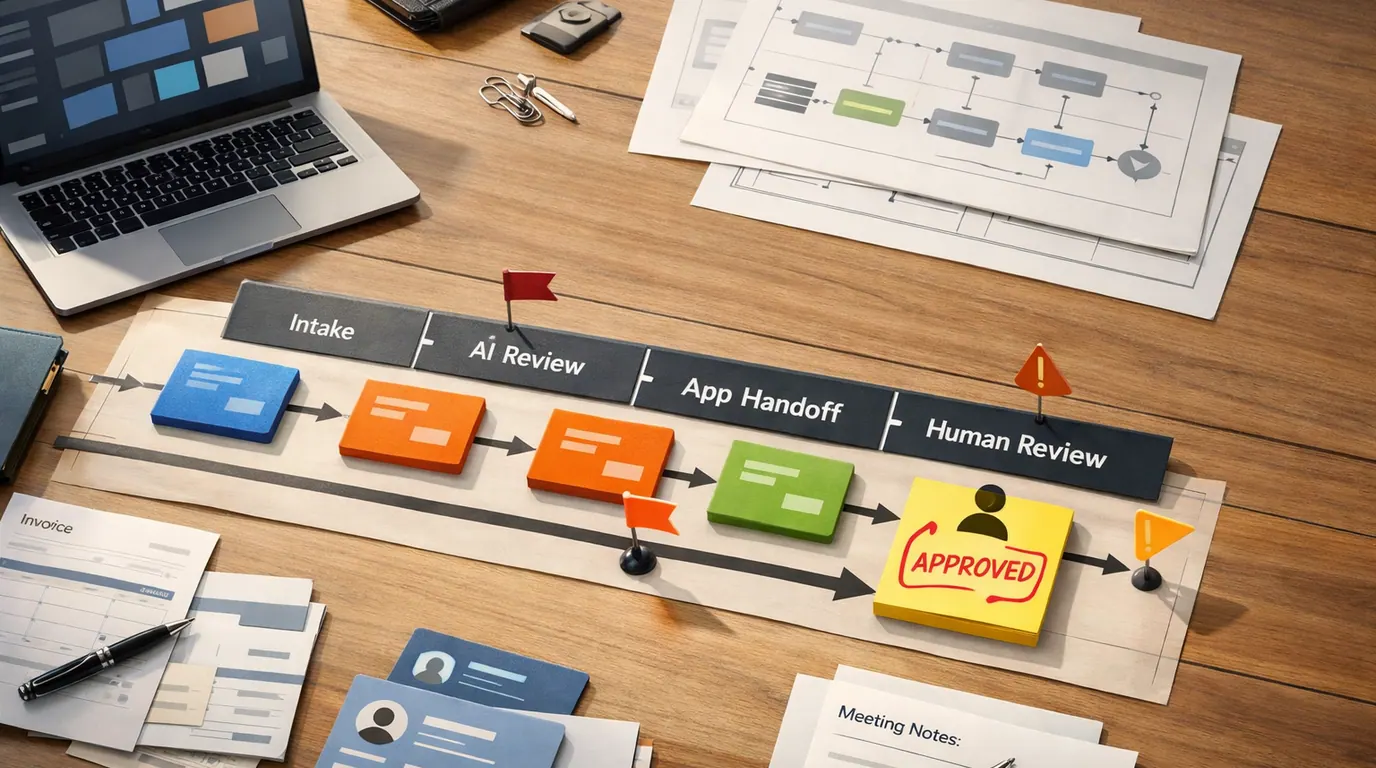
A reliable ChatGPT prompts for writing workflow has stages. You do not need all of them every time, but the order matters when the writing is important.
- Brief the job. Name the piece, reader, goal, stage, and output format before pasting a long pile of context.
- Add real source material. Provide notes, examples, facts, drafts, or constraints. If you have no source material, ask for questions or angles, not final copy.
- Ask for options before commitment. For important work, get angles, outlines, or critique before asking for polished prose.
- Constrain the output. Set length, tone, structure, exclusions, and whether assumptions should be labeled.
- Review the first answer for failure mode. Is it generic, inaccurate, too long, too smooth, too salesy, or missing the reader’s real problem?
- Revise the prompt, not only the draft. Add the missing context or criteria, then rerun the specific step that failed.
- Save the pattern. When a prompt works for recurring writing, turn it into a reusable template with fields for reader, source material, format, and review.
This is why staged prompting usually beats one giant prompt. The first output teaches you what the model misunderstood while the cost of fixing it is still low.
Turn Vague Requests Into Stronger Writing Prompts
These everyday examples show how a weak prompt becomes a usable brief. The better version gives ChatGPT a job, context, format, and review standard.
| Weak prompt | Better prompt | Why it works |
|---|---|---|
| Write a blog post about productivity. | Create three outline options for a 1,200-word blog post for freelance designers who keep missing project deadlines. Use a practical tone, include examples from client work, and list missing evidence before drafting. | It defines the reader, problem, format, tone, and the fact that outlining comes before drafting. |
| Make this sound better. | Rewrite this client update to be clearer and calmer while preserving the exact meaning. Keep it under 180 words, avoid blame, and list any sentence where the facts are unclear. | It explains what better means and protects the writer from accidental overclaiming. |
| Give me story ideas. | Generate 10 short story premises about a retired teacher who discovers a family secret. Each premise should include conflict, setting, emotional stakes, and one reason it could become predictable. | It gives character, genre direction, and a quality check. |
| Summarize these notes. | Turn these interview notes into a structured article brief with reader problem, thesis, key evidence, possible examples, unanswered questions, and a draft section order. Do not add facts not in the notes. | It converts notes into a planning artifact and blocks invented context. |
| Write my essay introduction. | Draft three possible introductions for an essay arguing that public libraries are civic infrastructure. Use only the thesis and evidence below, keep each under 120 words, and explain which one creates the clearest path into the argument. | It asks for options, length control, source discipline, and editorial reasoning. |
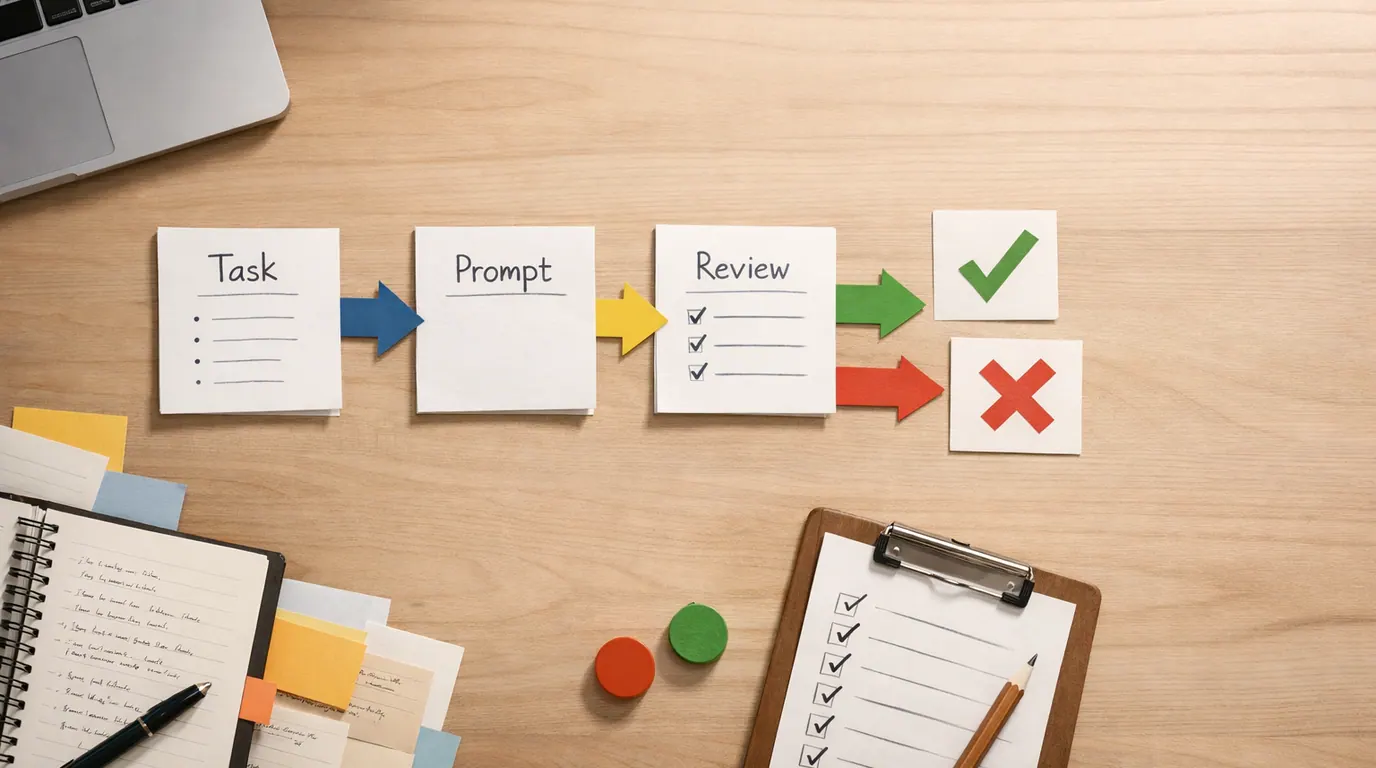
The pattern is simple: task, reader, source, constraints, output, review. You can make the prompt longer, but those six pieces carry most of the value.
The ChatGPT Prompts for Writing Checklist
Use this ChatGPT prompts for writing checklist before you trust an output or save a prompt as a template.
- The prompt names the writing job, not just the topic.
- The reader is specific enough to affect the answer.
- The goal says what the piece should help the reader understand, decide, feel, or do.
- Source material is included when factual accuracy matters.
- The output format is explicit: outline, draft, table, critique, bullets, script, scene, or checklist.
- Voice guidance includes examples or exclusions, not only vague adjectives.
- The prompt tells ChatGPT what not to invent.
- The review rule names what a human must verify.
- The first answer is treated as draft material, not a final deliverable.
For social posts and video scripts, use the same checklist but add channel behavior. Our ChatGPT prompts for social media and ChatGPT prompts for YouTube scripts guides cover those formats more directly.
What ChatGPT Is Good At and Where Writers Should Be Careful
ChatGPT can be a useful writing assistant, but it is not a substitute for taste, evidence, or responsibility.
Works Well When
- Breaking a blank page into options, outlines, questions, and first-pass structure.
- Rewriting for clarity, length, tone, and simpler sentence flow when the facts are already present.
- Finding weak transitions, repeated ideas, missing examples, and places where the reader may need context.
- Creating variations for headlines, introductions, summaries, calls to action, and repurposed formats.
- Helping a writer compare several possible directions before committing to a draft.
Watch Out For
- It can invent facts, citations, quotes, metrics, examples, and source interpretations if the prompt leaves gaps.
- It may produce polished but generic language that sounds acceptable until a human checks whether it says anything specific.
- It can flatten voice by overusing tidy structure, balanced phrasing, and repeated transitions.
- It may miss the emotional, cultural, legal, or professional context that makes a piece appropriate.
- It should not receive private, confidential, regulated, or sensitive source material unless your tool and policy allow it.
The safest habit is to use ChatGPT for draft movement and editorial pressure, then keep human review at the points where judgment matters: facts, claims, originality, taste, ethics, privacy, and final publication.
The Bottom Line
ChatGPT prompts for writing are most useful when they help you think, structure, draft, and revise in separate steps. The prompt does not need to be clever. It needs to be specific enough that the model stops guessing.
Start with the writing job. Add the reader, source material, voice, format, constraints, and review rule. Ask for options before finished prose when the stakes are high. Then edit the result with the same standards you would apply to any human draft.
The best reusable prompt is the one that makes the next version easier to judge.
Frequently asked questions
What is the best ChatGPT prompt for writing?
The best writing prompt is not one sentence. It gives ChatGPT the task, audience, draft stage, source material, voice, length, format, and review rule. For example, ask it to create three outline options from your notes, then explain assumptions and missing evidence before drafting.
Can ChatGPT write like me?
It can move closer if you provide a short sample, describe the audience, and name patterns to keep or avoid. Still review every draft because ChatGPT may overuse your surface style while missing judgment, humor, context, or facts that make the writing sound genuinely yours.
How do I stop ChatGPT from writing generic content?
Give it real inputs: reader problem, angle, examples, source notes, phrases to avoid, and the decision the piece should help readers make. Then ask it to mark vague claims and replace them with concrete details from your material instead of inventing proof.
Are ChatGPT prompts useful for creative writing?
Yes, especially for character pressure, scene alternatives, plot constraints, setting details, and revision questions. Treat outputs as options, not finished prose. The writer still chooses the emotional logic, pacing, voice, and what belongs in the final scene.
Should I use one long writing prompt or several short prompts?
Use several short prompts when the work has stages: idea, outline, draft, critique, and revision. A long prompt can work for a stable template, but staged prompting gives you more control and lets you catch weak assumptions before they spread through a full draft.
What should I check before publishing AI-assisted writing?
Check factual accuracy, originality, citations, tone, audience fit, privacy, legal or professional claims, and whether the draft says anything you would stand behind. Also remove generic phrasing, repeated structure, invented details, and lines that sound polished but empty.