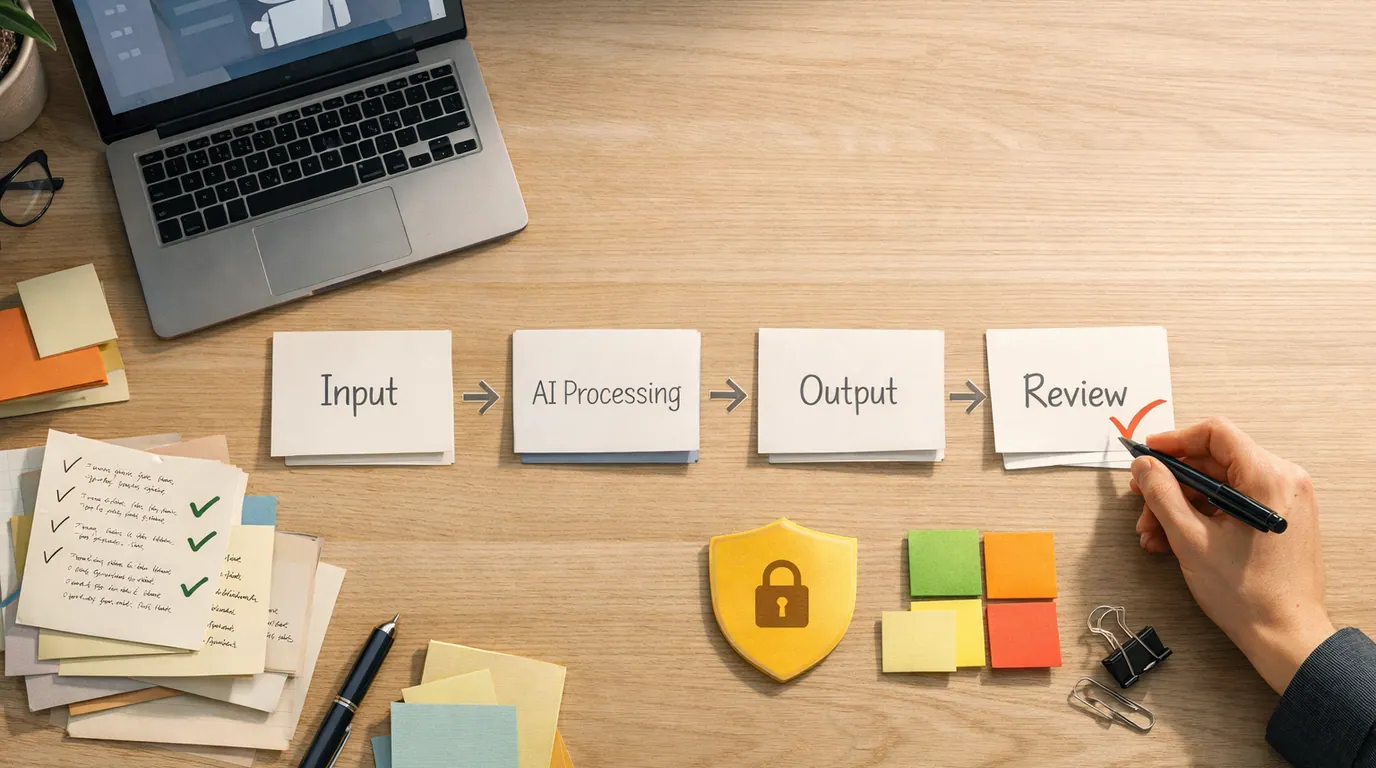
If you searched for “ai business strategy”, the useful answer is not a deck about AI trends. The useful answer is a way to decide where AI should change work, who owns the change, how the output will be reviewed, and when the company should stop, adjust, or scale.
An AI business strategy should start with the business strategy. Deloitte’s AI strategy guidance makes this point directly: the strongest plans begin with the organization’s core business direction, then work backward into AI opportunities. IBM frames an AI strategy as a roadmap for integrating AI so it supports broader business goals, not a separate technology hobby.
Use this AI business strategy guide as a working playbook. It gives you a scorecard, AI business strategy examples, a workflow, a reusable template, and a checklist you can use before funding a pilot.
Choose the revenue, cost, speed, quality, risk, or customer outcome that matters before choosing a tool.
The first pilot should create a summary, draft, classification, forecast, route, or decision brief a person can inspect.
Name the owner, allowed data, approval gate, failure path, and measurement rule before AI reaches production work.
What an AI Business Strategy Is
An AI business strategy is a plan for applying AI to the work that creates business value. It should answer six plain questions:
- Where should AI help? Pick the business priority, workflow, team, and decision type.
- What job should AI do? Summarize, classify, extract, draft, forecast, search, route, or recommend.
- What data can it use? Define approved sources, restricted data, retention rules, and access boundaries.
- Who reviews the output? Assign the person who checks quality, risk, evidence, and final action.
- How will success be measured? Use workflow metrics such as cycle time, accuracy, edit rate, rework, adoption, and customer impact.
- When does the pilot scale? Set proof criteria before the pilot begins, not after the demo looks impressive.
The strategy is not the model choice. It is not a vendor shortlist. It is not a prompt library. Those may become parts of the plan, but the useful strategy is the smallest repeatable system that moves a business priority from evidence to decision to workflow change.
The Best AI Business Strategy Starts With a Scorecard
There is no single best AI business strategy for every company. The best AI business strategy is the one that improves a specific business constraint without creating uncontrolled risk.
Use this scorecard before you fund a pilot. Give each factor a low, medium, or high rating. The first pilot should score high on business relevance, reviewability, and data readiness, while staying low or moderate on consequence risk.
| Decision factor | Good pilot signal | Weak pilot signal | What to do next |
|---|---|---|---|
| Business priority | The workflow connects to revenue, cost, speed, service quality, risk reduction, or strategic learning. | The idea is interesting, but nobody can explain which business result changes. | Rewrite the use case around a business metric before discussing tools. |
| Workflow frequency | The task happens daily or weekly and consumes visible team effort. | The task is rare, political, or too different every time. | Pick a repeatable handoff such as support triage, proposal drafts, reporting, or call follow-up. |
| Reviewability | A person can quickly inspect the AI output against source material. | The output is hard to verify or hides assumptions. | Require source links, structured fields, confidence notes, or approval steps. |
| Data readiness | Approved documents, records, examples, and permissions already exist. | Useful data is scattered, private, stale, or not approved for the tool. | Clean the data boundary and access policy before running the pilot. |
| Risk level | Errors are reversible before reaching customers, money, employees, or regulated decisions. | A bad answer could trigger legal, financial, safety, hiring, or trust damage. | Keep the first version in advisory mode with explicit human approval. |
| Owner clarity | A business owner and technical owner can both name their responsibilities. | The pilot is sponsored by enthusiasm but owned by no one. | Assign owner, reviewer, escalation path, and maintenance budget before launch. |
This keeps the AI strategy grounded. PwC’s discussion of AI and business strategy emphasizes speed, innovation, and organizational change, but speed only helps when leadership knows which decision cycles should get faster. McKinsey’s strategy-development examples show AI supporting market scans and adjacency analysis, while still requiring executive synthesis. That is the balance: let AI widen the evidence field, then make people accountable for the strategic call.
AI Business Strategy Use Cases by Business Goal
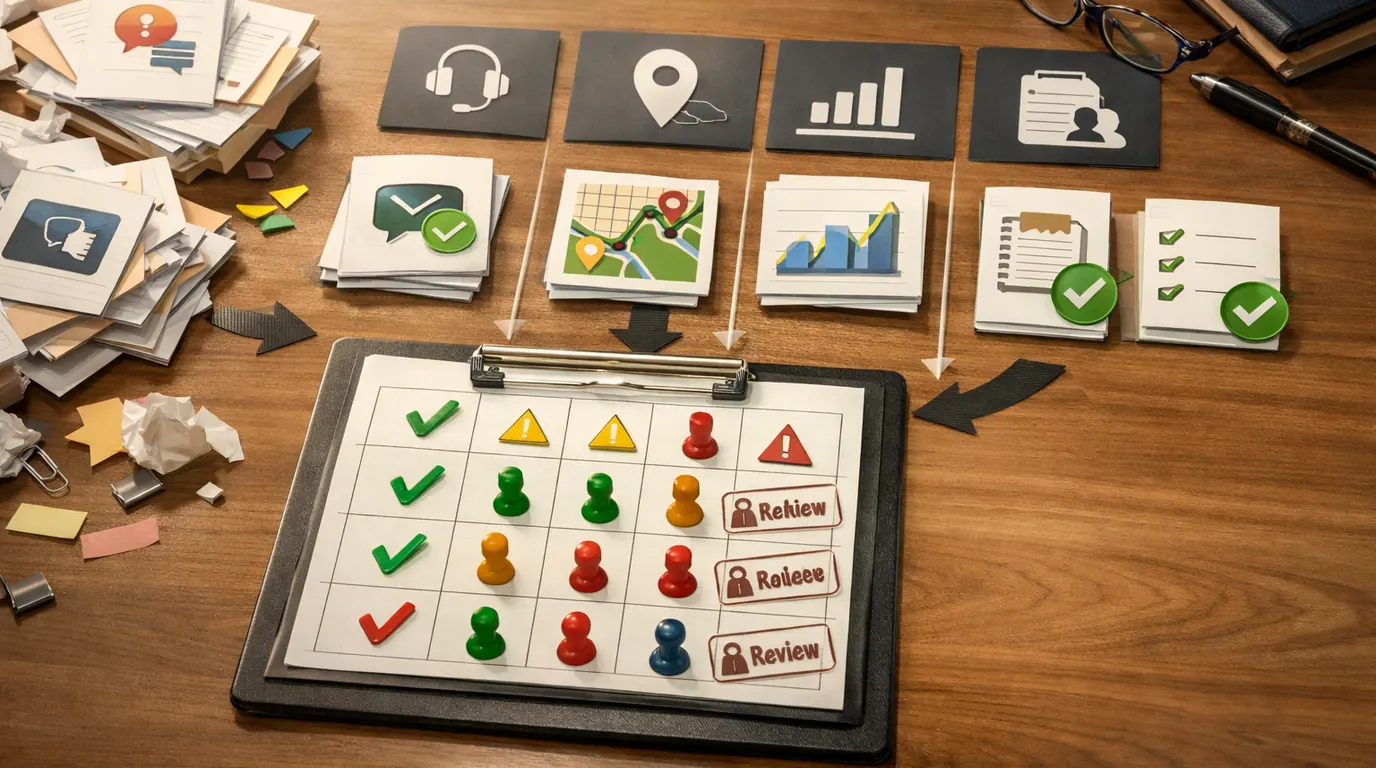
AI business strategy use cases should be grouped by business goal, not by tool category. A “chatbot project” is vague. “Reduce first-response time for tier-one support while escalating billing and account-risk cases to a lead” is a strategy candidate.
| Business goal | AI strategy move | Everyday example | Human review point |
|---|---|---|---|
| Improve customer response | Use AI to classify tickets, summarize history, draft replies, and route exceptions. | A support lead receives a daily queue where refund, billing, legal, and angry-customer cases are already flagged. | Approve customer-facing replies, refunds, account changes, and policy exceptions. |
| Increase sales focus | Use AI to summarize calls, score account signals, draft follow-ups, and prepare manager review notes. | A sales manager starts the morning with next-step briefs instead of reading every transcript manually. | Confirm commitments, discounts, buying intent, deal stage, and CRM updates. |
| Reduce reporting drag | Use AI to convert raw notes, spreadsheets, and dashboards into decision briefs. | A weekly operations report becomes a one-page brief with changes, root-cause hypotheses, and open questions. | Check source numbers, assumptions, anomalies, and whether the recommendation is supported. |
| Improve marketing throughput | Use AI to turn one approved positioning brief into channel drafts, variants, and claim checks. | A product marketer creates first drafts for email, paid social, landing copy, and sales enablement from one source brief. | Review claims, compliance, pricing, tone, brand standards, and customer promises. |
| Strengthen hiring and HR operations | Use AI to draft role materials, group survey themes, summarize interview notes, and prepare onboarding checklists. | An HR partner turns manager notes into a structured role intake and interview plan. | Review fairness, privacy, bias, legal exposure, candidate impact, and final employment decisions. |
| Find new growth options | Use AI to scan market signals, competitor moves, customer feedback, and adjacent use cases. | A strategy team asks for risks and patterns across unfamiliar segments before building an investment memo. | Validate sources, strategic assumptions, financial logic, and executive synthesis. |
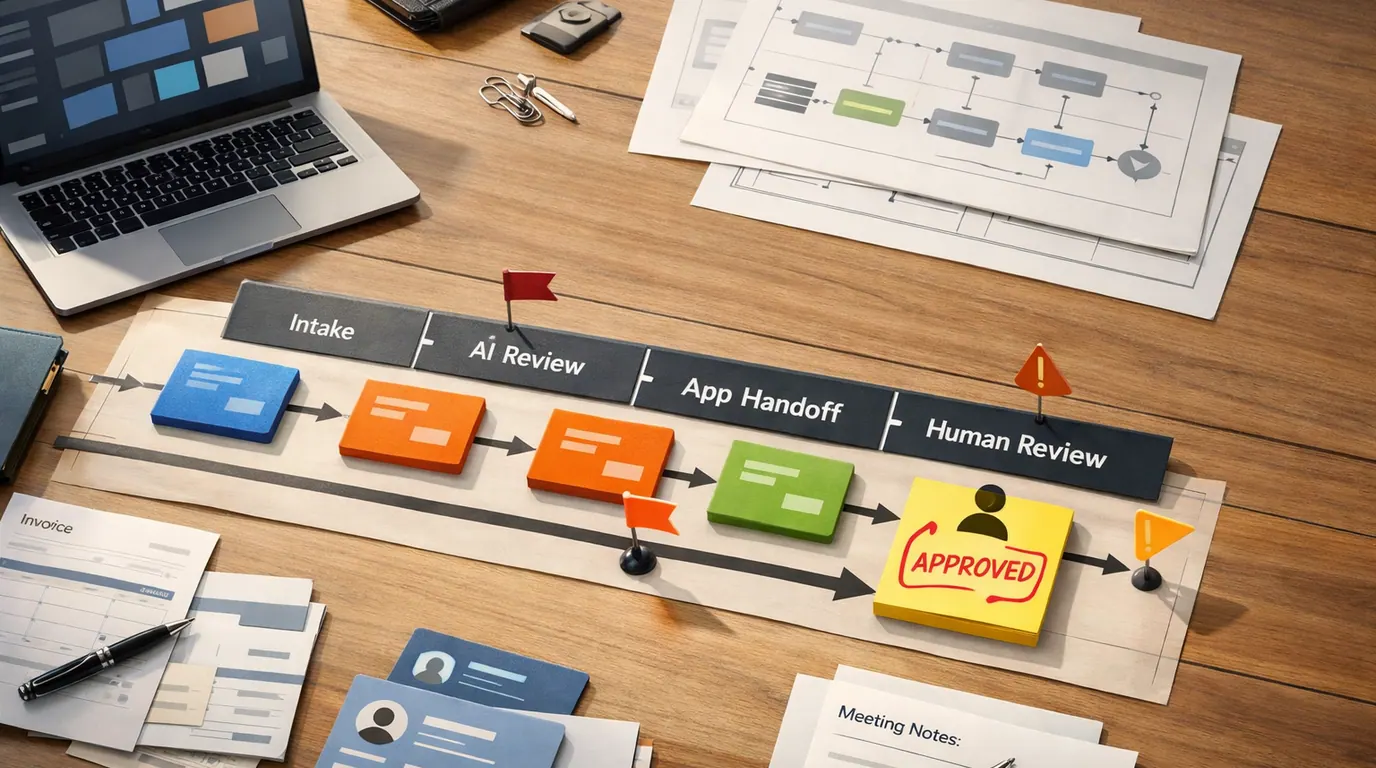
For broader operational use cases, the AI for business guide gives a wider workflow and tool view. If the strategy depends on app handoffs, approvals, and repeatable process design, use the AI workflow automation playbook next.
Build the AI Business Strategy Workflow
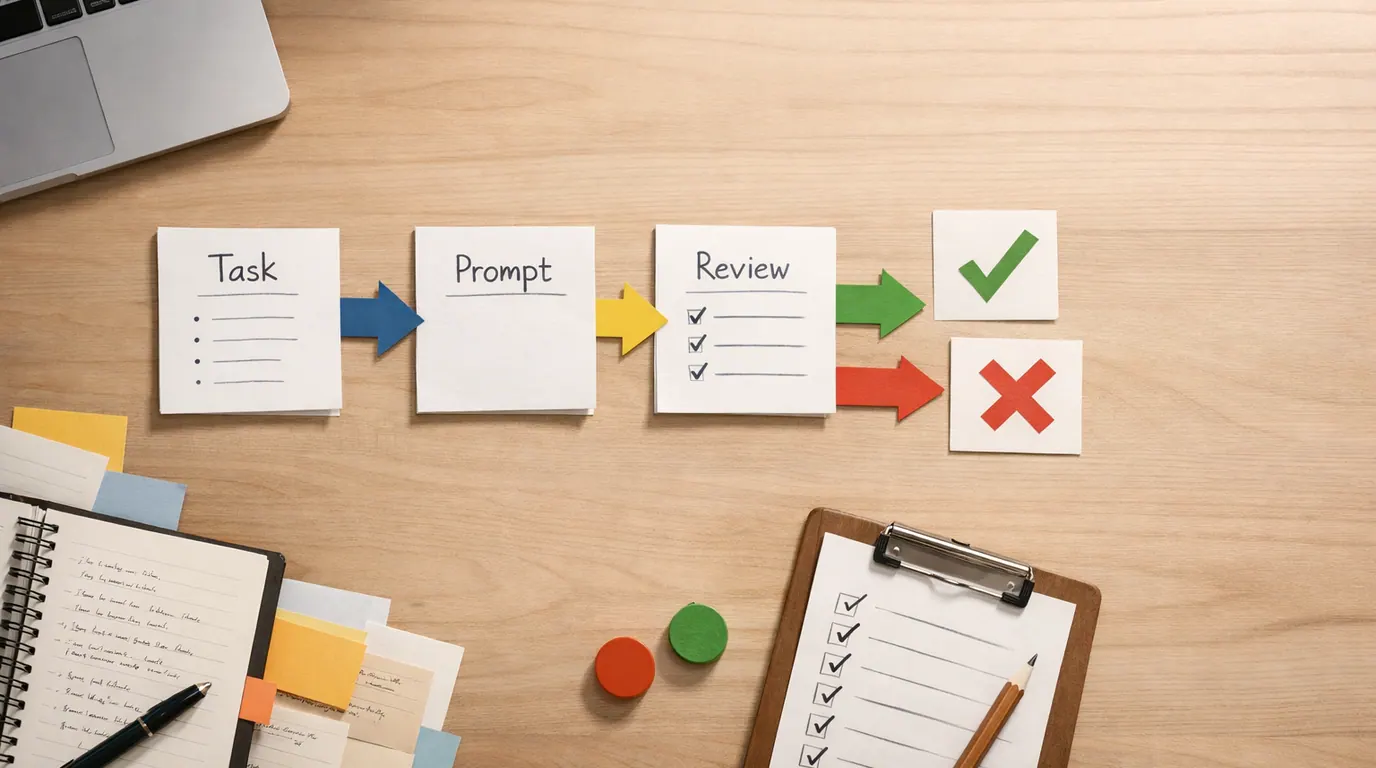
The AI business strategy workflow should move from business problem to measured pilot. Keep it narrow enough that the team can test it with real work, not demo data.
- State the business constraint. Write one sentence: “We need to reduce support escalation time for high-value customers” or “We need managers to spend less time preparing weekly revenue summaries.”
- Map the current workflow. List the trigger, inputs, decisions, tools, handoffs, delays, and final output. Mark where work gets stuck or reworked.
- Choose the AI job. Decide whether AI should summarize, classify, extract, draft, compare, search, forecast, route, or prepare options. Avoid asking it to own the whole process first.
- Define the evidence boundary. Specify which documents, systems, transcripts, tickets, customer records, metrics, or policies AI may use. Mark data that is not allowed.
- Design the review gate. Name the reviewer, what they inspect, what gets escalated, and which actions AI may never take without approval.
- Run a short pilot. Use real examples, compare AI output with current work, track edits, and collect reviewer notes before connecting production actions.
- Decide the scale rule. Expand only if the workflow improves a real metric and the team understands failures well enough to monitor them.
If the workflow needs agent-style execution, read the AI agents for business guide before granting tool access. Agents can be useful, but strategy should decide their boundaries before autonomy expands.
Use This AI Business Strategy Template
Use this AI business strategy template as a one-page planning artifact. It is designed for a pilot sponsor, department lead, or operator who needs a practical brief before asking for budget.
| Field | What to write | Example |
|---|---|---|
| Business priority | The result this AI project should support. | Reduce time from sales call to accurate follow-up. |
| Workflow | The repeatable process being changed. | Call transcript to CRM note, next steps, and customer email draft. |
| AI job | The narrow task AI performs. | Summarize call, extract objections, draft follow-up, flag missing pricing approval. |
| Allowed data | Approved inputs, systems, and restrictions. | Call transcript, CRM account fields, approved sales messaging, no private contract terms unless approved. |
| Review rule | Who checks the output and when AI must stop. | Account owner approves all customer emails and discounts before sending. |
| Success metric | The measurable result and quality check. | Follow-up sent within two hours, fewer missing next steps, manager edit rate below the agreed threshold. |
| Scale condition | The evidence required before expanding. | Three-week pilot shows lower admin time, trusted summaries, and no unreviewed customer commitments. |
If a stakeholder asks for an AI business strategy strategy, clarify that the deliverable is not a second strategy for AI. It is the company strategy translated into AI-enabled workflows, ownership, controls, and investment choices.
Run the AI Business Strategy Checklist Before Funding
Run this AI business strategy checklist before a pilot moves from idea to budget. It is intentionally practical: if the answer is unclear, the project needs more definition.
- Business result: Can the sponsor name the revenue, cost, speed, quality, risk, or customer outcome?
- Workflow boundary: Is the pilot tied to a specific process, team, trigger, input, output, and owner?
- Data approval: Are approved sources, restricted data, retention expectations, and access roles documented?
- Human review: Does the workflow show who checks facts, edge cases, customer messages, financial impact, HR impact, and compliance risk?
- Failure path: Does the team know what happens when AI is uncertain, wrong, incomplete, or unable to access a source?
- Measurement: Are time saved, edit rate, quality, adoption, rework, escalation, and user trust tracked during the pilot?
- Change plan: Are training, communication, process updates, and ownership included, or is the team expecting the tool to create adoption by itself?
- Scale rule: Is there a clear decision for expand, revise, pause, or stop after the pilot?
This is where many strategies become real. A leadership team can approve a vision, but a frontline manager needs a review queue, policy rule, exception path, and measurement habit.
Governance and Human Review Points
An AI strategy should make the human checkpoints visible. The point is not to slow every workflow down. The point is to put review where the consequence is high or the output is difficult to verify.
Works Well When
- The task repeats often enough to justify a reusable workflow.
- Source material is available, approved, and visible to reviewers.
- AI output is structured so a person can inspect it quickly.
- Errors can be caught before customers, employees, payments, records, or systems are affected.
- A business owner accepts accountability for quality, adoption, and follow-up.
Watch Out For
- The team wants AI to make sensitive decisions without a named reviewer.
- The workflow depends on private, regulated, or confidential data without approved controls.
- The output cannot show sources, assumptions, or reasoning well enough for review.
- The pilot would update systems, send messages, change access, or affect money before trust is earned.
- Nobody owns monitoring, prompt updates, exception handling, or retirement of the workflow.
Use AI to prepare decisions, not to erase accountability. For finance, legal, HR, healthcare, security, public communications, regulated industries, and customer-impacting actions, keep review explicit and auditable.
Do
- Document allowed data and blocked data.
- Require source visibility for decision briefs.
- Keep approval on sensitive actions.
- Track edits and failure patterns.
- Review vendor terms, retention, and admin controls.
Do not
- Paste confidential data into unapproved tools.
- Let AI send customer promises without review.
- Use generated analysis as financial, legal, or HR advice.
- Scale a pilot because the demo looked polished.
- Ignore the people who must use the new workflow every day.
Scale From Pilot to Portfolio
Once one pilot works, do not immediately turn every department loose. Build a small portfolio model so the company can compare opportunities and reuse what it learns.
Run a narrow pilot with real work, visible review, and a clear success metric.
Save prompts, source rules, output formats, review checklists, exception paths, and lessons from failed cases.
Use the same scorecard for support, sales, marketing, operations, finance, HR, and leadership workflows.
Turn privacy, security, review, vendor, and measurement rules into normal operating practice.
Expand only when the workflow improves useful metrics, reviewers trust the output, and ownership is funded.
Your AI strategy should get more specific as it matures. Early on, the company needs a clear pilot. Later, it needs reusable patterns: approved data sources, review standards, vendor controls, training, workflow documentation, and a portfolio view of what AI should and should not do.
The Bottom Line
An AI business strategy is not a race to adopt the most advanced model. It is a disciplined way to decide where AI can improve business work, how people will review the output, and what evidence is required before scaling.
Start with one business priority. Choose one workflow where AI can create a reviewable output. Name the owner, data boundary, approval gate, success metric, and stop rule. Then scale the patterns that survive real use.
Frequently asked questions
What is an AI business strategy?
An AI business strategy is a plan for using AI to support the company's wider goals, not a list of tools to buy. It defines the business priority, target workflows, data rules, owners, review gates, success measures, and rollout path so AI changes real work instead of producing isolated demos.
What is the first step in building an AI strategy?
Start with the business goal before discussing models or software. Choose a priority such as faster support resolution, better sales follow-up, lower reporting effort, or stronger demand planning, then identify one repeated workflow where AI can create an output a person can inspect.
How do you choose AI use cases for a business?
Prioritize use cases that repeat often, use information the team already has, produce a reviewable output, and connect to a measurable business result. Avoid first pilots where errors could affect hiring, legal exposure, payments, safety, private data, or customer commitments without strong controls.
Who should own AI strategy in a company?
AI strategy needs both a business owner and a technical or operations owner. The business owner defines the outcome and accepts accountability for the workflow. The technical owner checks tooling, data access, security, integration, monitoring, and the handoff from pilot to production.
How do you measure whether an AI strategy is working?
Measure the workflow, not the novelty of the tool. Useful signals include cycle time, review edits, rework, adoption, escalation rate, customer response quality, cost to serve, forecast usefulness, and whether managers trust the output enough to make faster or better decisions.
What mistakes make AI business strategies fail?
Common failures include buying tools before choosing a business problem, running disconnected pilots, using sensitive data without approval, skipping human review, ignoring change management, and scaling from a polished demo instead of measured workflow evidence.