If you searched for “ai agents for business”, the useful answer is not a futuristic org chart full of autonomous workers. The useful answer is a way to decide which job an agent should do, what tools it may touch, when it must stop, and who is accountable when it is wrong.
AI agents are most useful when they turn a messy business input into a reviewable next action: a routed ticket, a qualified lead, a CRM note, a finance exception packet, a campaign recommendation, or a draft response with a clear approval step. They are risky when a team gives them broad access before the process, data, and review rules are stable.
Use this AI agents for business guide as a practical playbook. It covers where agents fit, a shortlist by business job, concrete examples, a workflow design, an autonomy model, a reusable template, and the human review points that keep agent work dependable.
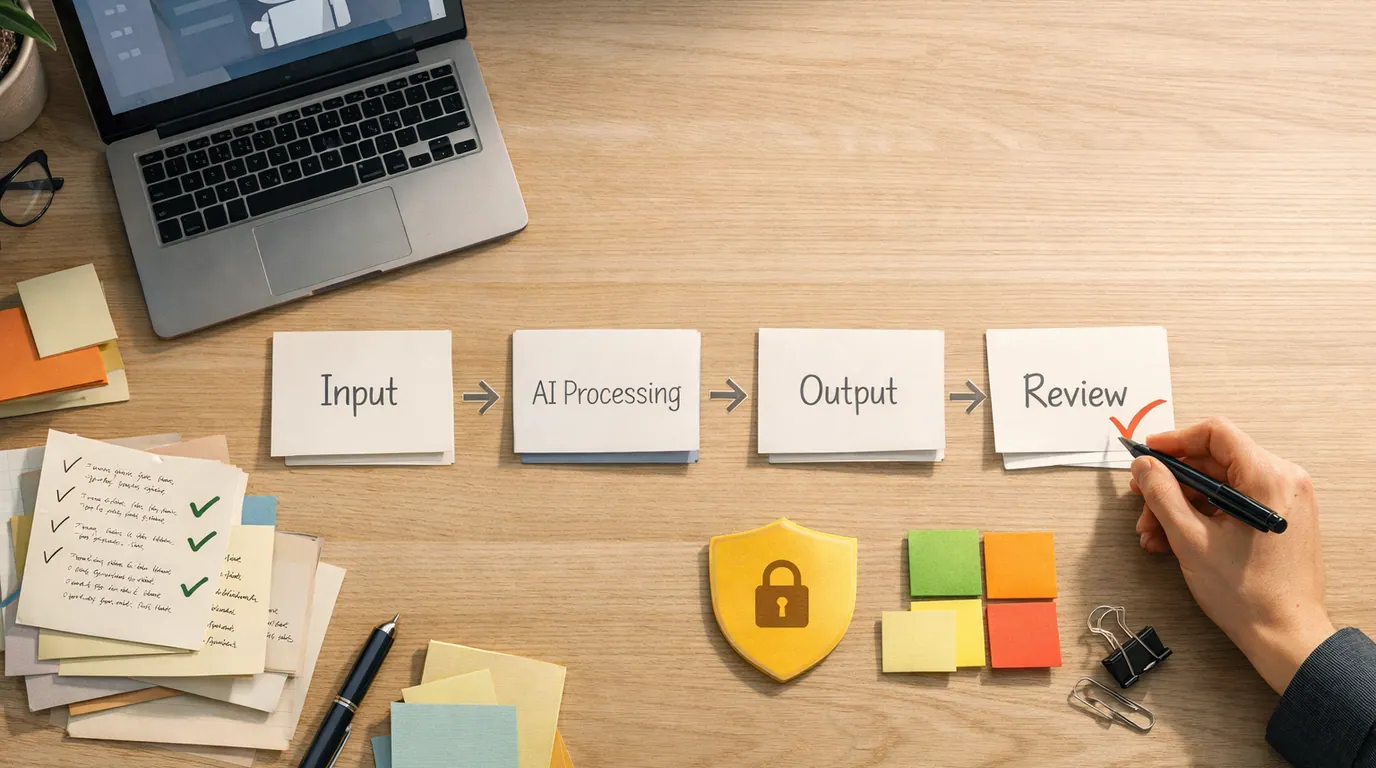
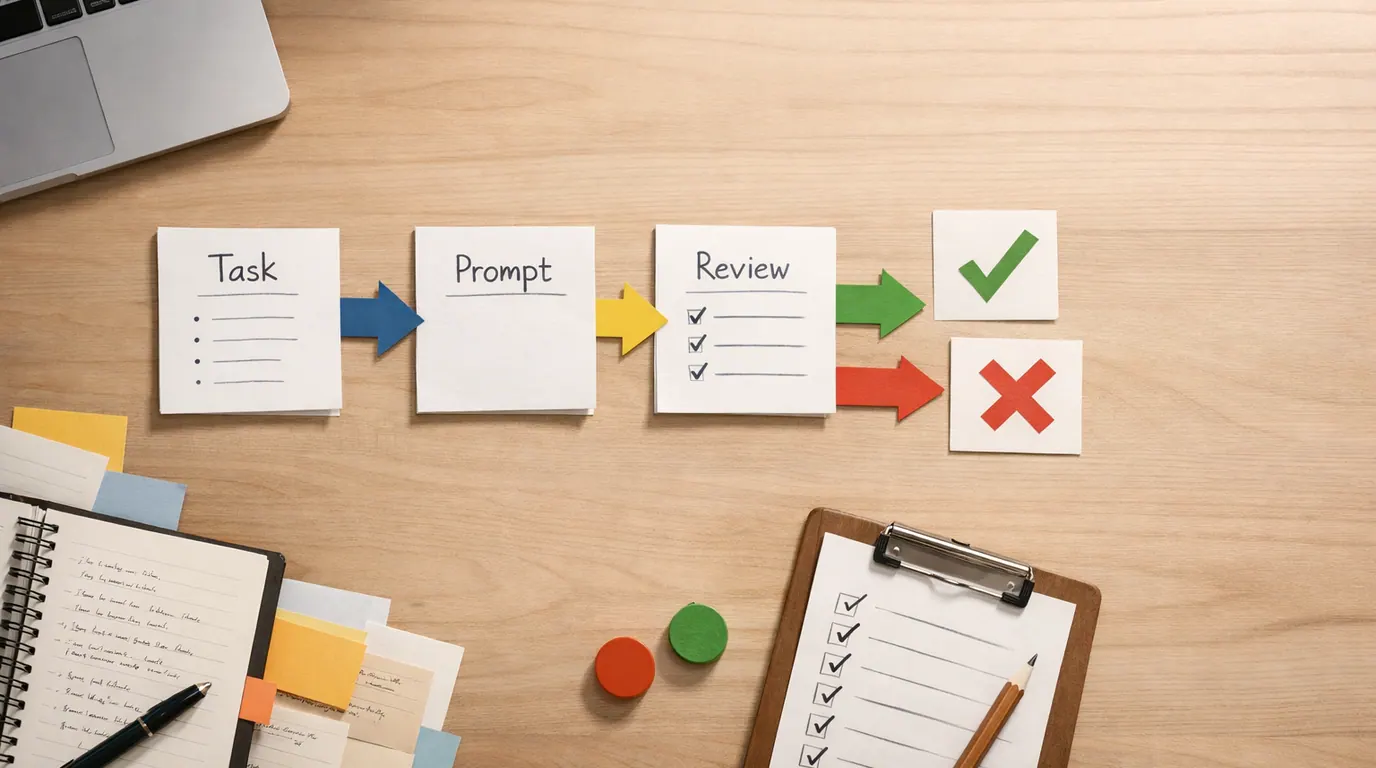
Pick a repeated workflow where the agent can read context, prepare an output, and pause before sensitive action.
The agent should show what it read, what it decided, what it changed, and what a person still needs to approve.
Limit connected apps, records, sends, writes, payments, permissions, and customer-facing actions until the pilot earns trust.
What AI Agents for Business Actually Do
An AI agent is a software system that can interpret a goal, plan steps, use tools, inspect results, and continue the workflow until it reaches a useful state or needs help. A chatbot mostly answers. An agent can also act: search a knowledge base, update a ticket draft, create a CRM task, analyze a spreadsheet, or ask a manager for approval.
BCG’s overview of AI agents describes a practical pattern: an agent analyzes context, recommends an action, and updates systems after human approval. SAP’s explainer makes the same operational point: agents can be triggered by user interactions or business events, but their autonomy should match the risk of the task.
For business teams, that means AI agents are not just “smarter bots.” They are workflow participants with four parts:
- Goal: the result the agent is trying to produce, such as “triage this support ticket” or “prepare a renewal-risk brief.”
- Context: the approved records, policies, messages, files, transcripts, metrics, and examples the agent may use.
- Tools: the apps or actions it can call, such as CRM lookup, ticket update, email draft, meeting summary, database query, or task creation.
- Control: the permissions, logs, tests, review gates, escalation rules, and owners that keep the work auditable.
Quick Picks: Best AI Agents for Business by Job
The best AI agents for business are job-specific. A sales operations agent, IT support agent, customer-service agent, and workflow builder should not be evaluated as if they were the same product. Start with the work, then choose the agent surface.
| Pick | Best for | Why it fits | Limit | Pricing/free-plan note |
|---|---|---|---|---|
| Microsoft Copilot agents | Microsoft 365 teams that want agents close to Outlook, Teams, Word, Excel, SharePoint, and business connectors | The research packet notes that Copilot agents can use knowledge, memory, actions, app context, agent flows, and marketplace options inside the Microsoft work environment. | Output quality depends on file hygiene, permissions, tenant setup, and whether the agent is allowed to act in the right systems. | Check current Microsoft 365 Copilot, agent, connector, and admin-control pricing before rollout. |
| Relevance AI | GTM, revenue, and operations teams that want domain experts to build and manage governed agents | The supplied source emphasizes expert-managed agents, escalation when confidence is low, SSO, PII redaction, observability, and management dashboards. | Governance features do not replace process ownership. A team still needs clear instructions, test cases, and action boundaries. | Check current vendor pricing, enterprise controls, telemetry exports, data terms, and implementation requirements. |
| Gumloop | Visual agent workflows for research, GTM, support, recruiting, monitoring, and recurring business processes | The research brief describes drag-and-drop workflow building plus an AI-driven approach where a user describes the workflow and the system builds it. | A visual flow can still hide vague goals. Require structured outputs, sample inputs, failure handling, and review gates. | Check current pricing, model usage, connector limits, team permissions, and enterprise controls. |
| Lindy | Small business and lean-team operations where an assistant-like agent handles recurring admin, sales, recruiting, or inbox tasks | The research packet frames Lindy as useful for small businesses that need value quickly without a long onboarding cycle. | It is not a substitute for a documented process. Agents should not silently send, approve, or update high-risk work. | Check current plan limits, connected-app permissions, usage rules, data retention, and team controls. |
| Make AI Agents | Automation-first teams that need goal-driven agents inside visual app workflows | The supplied source describes Make agents as goal-driven agents that adapt to business needs inside a broad automation ecosystem. | Visual automations still need naming, monitoring, ownership, and cleanup when apps or business rules change. | Check current vendor pricing, operations, AI usage, app limits, and team features. |
| Aisera or Voiceflow | Customer service, IT service, and support-agent experiences that need conversational intake plus workflow action | The research packet positions Aisera around business agents that access systems and execute connected tasks, while Voiceflow appears as a customer-support agent builder. | Support agents need approved knowledge, escalation, transcript review, and strong rules for refunds, accounts, privacy, and security. | Check current pricing, channel support, data controls, handoff options, and integration limits. |
This is not a hands-on benchmark or live pricing audit. It is a practical shortlist from the supplied research brief. If your immediate need is broader automation tooling rather than agent design, compare this with our best AI tools for automation and AI workflow automation guides.
Selection Method and What Was Not Tested
This article uses the provided research packet, SERP source summaries, product descriptions, and common search angles around AI agents for business, AI agents, agent builders, and business workflow automation. It does not claim hands-on testing, private security review, benchmark scoring, or a current pricing check.
The evaluation criteria were practical:
- Workflow fit: what business job the agent is likely to improve: support, sales, IT, operations, finance, marketing, research, or meeting follow-up.
- Tool access: whether the agent can connect to the systems where work actually happens without getting unlimited authority.
- Reviewability: whether a person can inspect the input, reasoning summary, proposed action, and final output before risky work ships.
- Governance: whether the tool supports permissions, identity, logs, redaction, escalation, and owner-level management.
- Setup burden: whether the team needs a simple purpose-built agent, a no-code builder, a low-code workflow, or an enterprise platform.
- Cost risk: whether pricing may depend on seats, agent runs, actions, model usage, connectors, storage, recordings, or enterprise controls.
For procurement, verify vendor pages and contracts before buying. Pricing, free plans, usage credits, model support, integrations, data commitments, and security controls change quickly in this category.
AI Agents for Business Use Cases You Can Start With
The strongest AI agents for business use cases are ordinary. They involve repeated work, messy input, and an output that is useful only after a person can review it. Those constraints make an agent useful without pretending it should run the company.
| Use case | Everyday trigger | Agent output | Human review point |
|---|---|---|---|
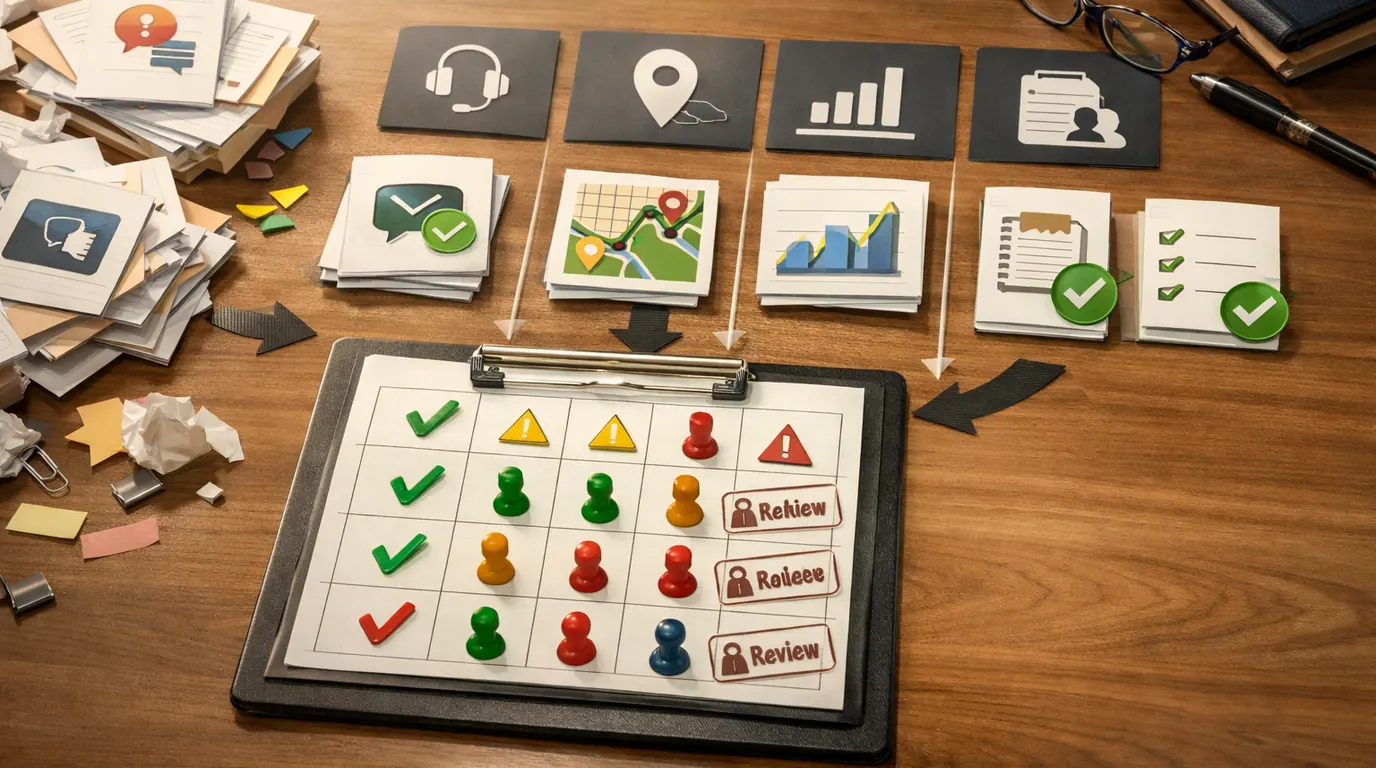
| Support triage | A customer writes a long email about a login failure, deadline, and billing concern. | Issue summary, urgency, policy match, account lookup note, draft reply, and escalation path. | Support reviews billing, refund, account access, legal exposure, angry tone, and customer promises before sending. |
| Lead qualification | A demo form, chatbot answer, or inbound email arrives from a possible target account. | Fit summary, missing fields, suggested segment, CRM note, and follow-up draft. | Sales checks consent, territory, account ownership, qualification logic, and claims before outreach. See [AI for lead generation](/blog/ai-for-lead-generation/) for the wider funnel. |
| Meeting follow-up | A sales, product, or customer success call transcript is available after a meeting. | Decisions, objections, action items, owners, dates, CRM note, and follow-up draft. | The meeting owner confirms speaker attribution, commitments, deadlines, private details, and what should not be shared. |
| Internal request routing | An employee asks for software access, equipment, policy help, or a data change. | Request type, missing information, approval need, owner, priority, and draft ticket. | IT, HR, finance, or ops checks permissions, budget, employee data, security risk, and manager approval. |
| Campaign optimization | A marketing report shows spend, conversion, audience, and creative performance data. | Performance summary, likely causes, optimization recommendations, and platform-change request. | A marketer validates source data, budget impact, brand rules, and whether the agent may update platforms after approval. |
| Invoice exception review | A vendor invoice does not match a purchase order, contract, or expected amount. | Extracted fields, mismatch summary, possible reason, reviewer packet, and blocked-payment note. | Finance verifies amounts, vendor identity, tax, fraud signals, approval authority, and source-system updates. |
These AI agents for business examples work because the agent prepares the handoff rather than hiding the decision. If the task is mainly a conversational intake problem, the build discipline in how to build an AI chatbot applies. If the task spans apps and approvals, use the rollout model in AI workflow automation.
Build an AI Agents for Business Workflow
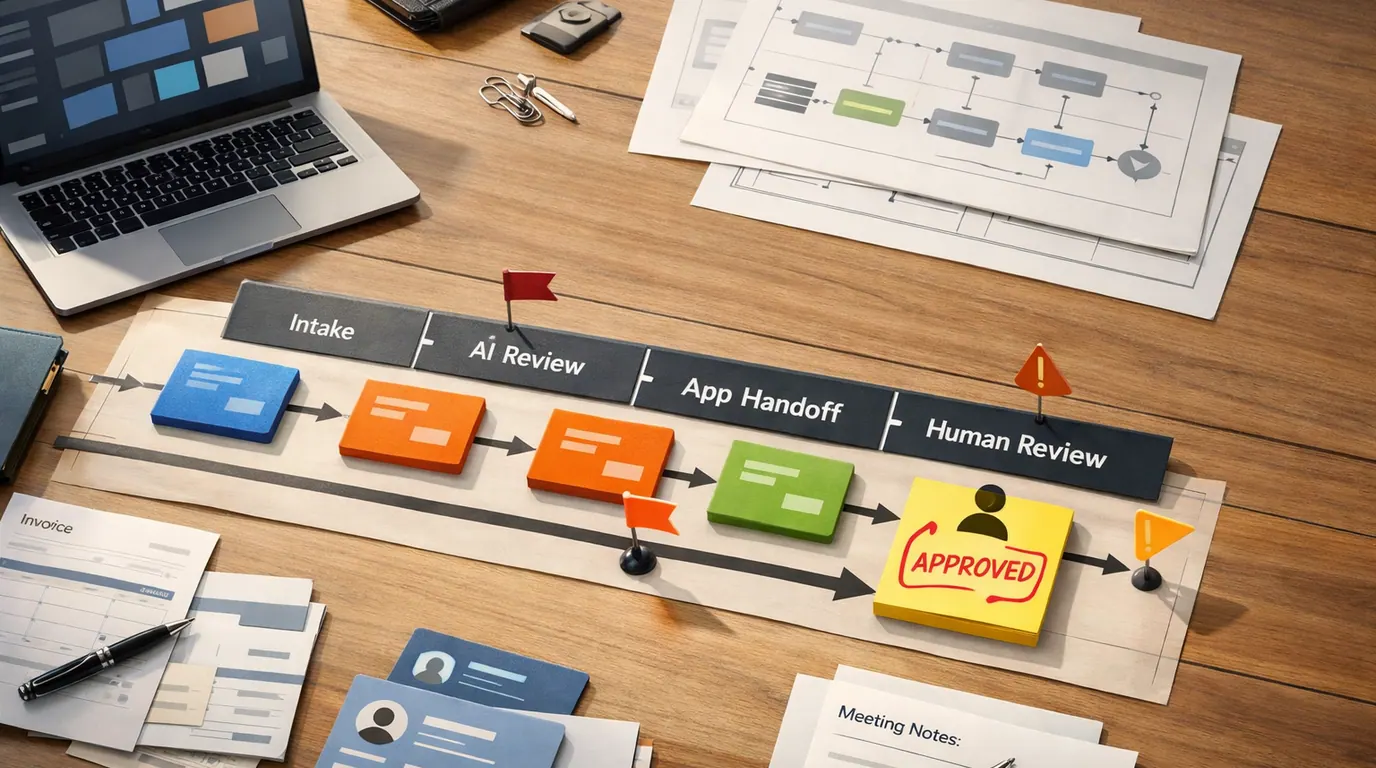
An AI agents for business workflow should be narrow enough to test with real examples. Do not start with “build a support agent.” Start with “when a billing-related ticket arrives, summarize the issue, find the relevant policy, draft a reply, and pause for a support lead before anything is sent.”
- Name the handoff. Write one sentence with the trigger, team, input, desired output, and current pain.
- Choose the agent job. Decide whether the agent should summarize, classify, extract, draft, compare, route, research, create tasks, or request approval.
- List allowed context. Name the exact docs, records, transcripts, files, tables, tickets, messages, and APIs the agent may inspect.
- Limit tool permissions. Separate read-only tools, draft-only tools, approval-required actions, and actions that are blocked entirely.
- Define the output format. Use a table, ticket draft, CRM note, decision brief, checklist, JSON-like fields, or approval request that a person can inspect quickly.
- Create edge-case tests. Include messy real examples: missing data, angry customers, duplicate records, private information, contradictory docs, and unclear ownership.
- Launch in shadow mode. Let the agent produce recommendations while a human still does the work, then compare output quality, edits, false routes, and cleanup burden.
The agent should earn autonomy by passing boring test cases, not by looking impressive in a demo.
Works Well When
- The task repeats often and already has a business owner.
- The agent can work from approved data rather than guessing.
- The output is easy to inspect before action.
- The workflow has clear exceptions and escalation rules.
- Mistakes can be caught before they affect customers, employees, money, or source systems.
Watch Out For
- The process is rare, political, undefined, or disputed by the team.
- The agent needs sensitive data before security and retention rules are approved.
- The workflow writes to a source of record without review.
- No one can explain what the agent is allowed to do.
- Success is measured by novelty rather than cycle time, quality, adoption, or lower rework.
AI Agents for Business Strategy: Autonomy Levels
An AI agents for business strategy should not begin with “fully autonomous.” Autonomy is a design choice, and the right level depends on risk, data quality, workflow stability, and the cost of being wrong.
| Level | What the agent does | Good fit | Required control |
|---|---|---|---|
| L1: Suggest | Reads context and recommends next steps without touching systems. | Decision briefs, account notes, policy summaries, risk flags. | Source review and owner approval before action. |
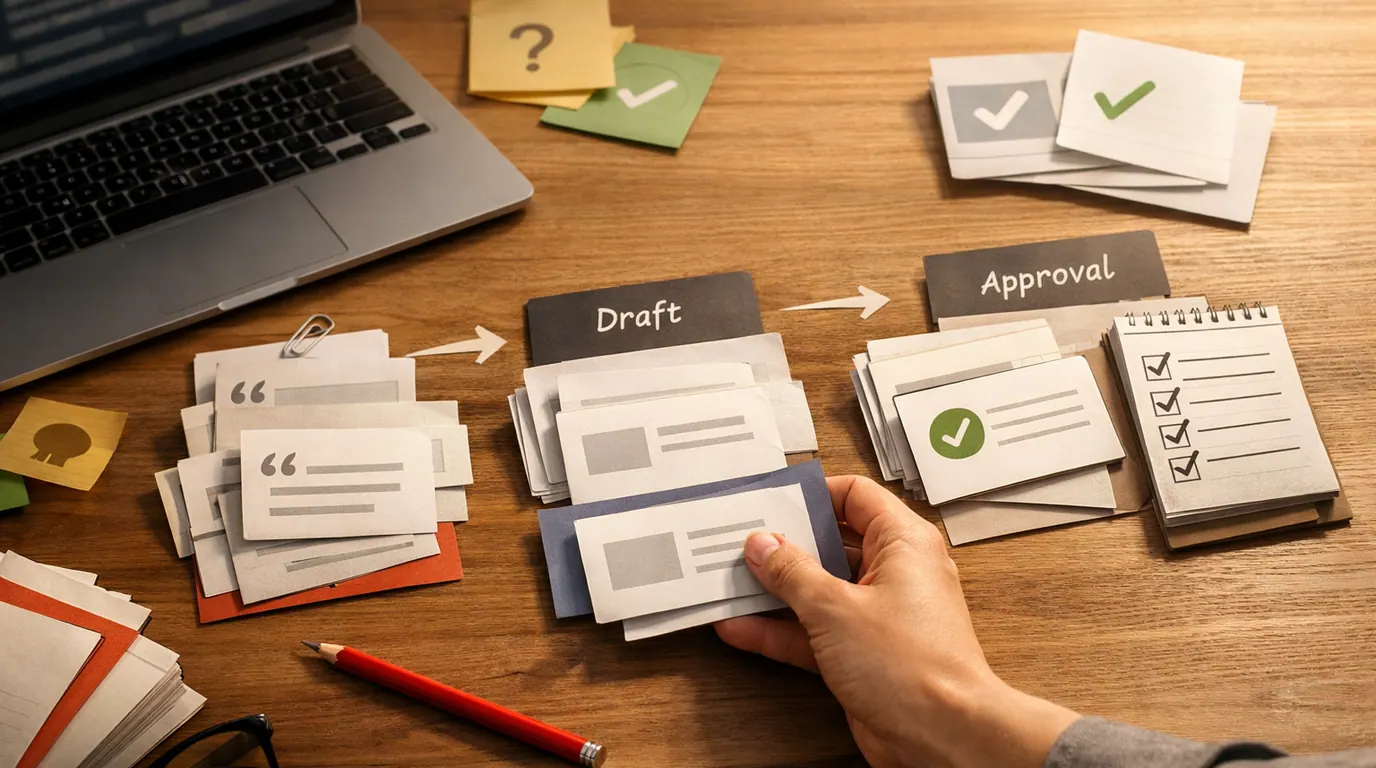
| L2: Draft | Creates a reply, task, report, record update, or checklist for a person to edit. | Support replies, sales follow-ups, meeting notes, campaign reports. | Mandatory human edit before sending or saving. |
| L3: Act after approval | Prepares an action and waits for explicit approval before sending, updating, routing, or posting. | Refund requests, CRM updates, ticket routing, internal approvals. | Approval log, exception path, rollback plan, and named owner. |
| L4: Bounded autonomy | Handles low-risk cases inside strict rules and escalates uncertainty. | Password reset intake, low-risk routing, routine status updates, knowledge-base answers. | Confidence threshold, audit log, sampled review, alerts, and blocked sensitive actions. |
| L5: Do not automate yet | Would make high-consequence decisions or use unclear private data. | Hiring decisions, legal advice, payroll, payments, security permissions, medical or regulated decisions. | Keep human-owned until governance, policy, and review are mature. |
Most businesses should spend more time at L2 and L3 than they expect. That is not failure. Human-approved action is often where agents create value without creating silent risk.
Copy This AI Agents for Business Template
Use this AI agents for business template before building, buying, or expanding a pilot. It is deliberately plain so a business owner, operator, and technical owner can agree on the same workflow.
Agent job: [Name the repeated workflow and team]
Trigger: [Form, ticket, email, CRM event, meeting transcript, file upload, report, or schedule]
Goal: [The reviewable output the agent should produce]
Allowed context: [Approved docs, records, messages, transcripts, tables, policies, or APIs]
Blocked context: [Private customer data, employee records, contracts, regulated data, credentials, source code, or other restricted material]
Allowed tools: [Read-only search, draft update, task creation, CRM lookup, ticket draft, report generation, approval request]
Blocked actions: [Send email, change access, issue refund, approve payment, update source of record, delete data, or publish externally]
Human review: [Owner, approval rule, escalation trigger, and what the reviewer must check]
Success metric: [Cycle time, edit rate, routing accuracy, rework, response speed, adoption, or lower backlog]
One-page AI agent pilot brief
For broader AI planning beyond agents, pair this with the AI for business strategy guide. A strong prompt or agent instruction helps, but it cannot replace ownership, clean inputs, permissions, and a review rule.
AI Agents for Business Checklist Before Launch
Use this AI agents for business checklist after a prototype works in a demo and before it touches customers, employees, money, private data, or live systems.
Do
- Assign a business owner and a technical owner.
- Use real examples, including edge cases, in testing.
- Write allowed data, blocked data, and retention rules.
- Separate read, draft, approve, and write permissions.
- Log inputs, tool calls, outputs, approvals, and failures.
- Measure edit rate, false routing, time saved, rework, and user trust.
Do not
- Give a new agent broad access because the demo looked good.
- Let it send customer-facing messages without review on risky cases.
- Let it update source systems without an audit trail.
- Use private or regulated data in an unapproved tool.
- Ignore prompt injection, stale knowledge, duplicate records, or broken integrations.
- Scale to another department before the first owner can explain failures.
The launch question is not “can the agent complete the happy path?” The better question is “what happens when the input is incomplete, adversarial, private, outdated, duplicated, or wrong?”
Risks, Human Review, and Failure Modes
AI agents fail differently from ordinary software. A normal automation usually breaks when a rule or integration fails. An agent can also do the wrong thing fluently: summarize the wrong source, trust stale context, follow a malicious instruction in a document, over-prioritize a noisy signal, or take a permitted action at the wrong time.
Keep human review where the consequence is real:
- Customer trust: outbound messages, support promises, refunds, pricing, renewals, cancellations, and public replies.
- Money: payments, invoices, forecasts, budget moves, discounts, procurement, and expense approvals.
- People: hiring, performance, scheduling, employee data, benefits, disciplinary action, and access requests.
- Security and privacy: credentials, permissions, customer records, confidential files, regulated data, retention, and sharing.
- Source systems: CRM fields, ERP records, helpdesk status, account settings, databases, and any irreversible update.
The safest production pattern is not “never let agents act.” It is “let agents prepare action, prove accuracy on real cases, then allow bounded action where logs, limits, and escalation are strong.”
The Bottom Line
AI agents for business are valuable when they make a real workflow clearer, faster, and easier to review. They are weak when they are treated as a general-purpose digital employee without a job description, data boundary, approval rule, or owner.
Start with one repeated handoff. Choose the agent surface that fits that job. Give it only the context and tools it needs. Test messy examples. Keep people on sensitive action. Then scale the agent after the run history proves it can handle ordinary work without creating hidden cleanup.
Frequently asked questions
What are AI agents for business?
AI agents for business are software systems that use AI to plan, use tools, read business context, and complete steps in a workflow. Unlike a simple chatbot, a business agent may summarize a ticket, check a record, draft a reply, create a task, or ask for approval before taking action.
What are the best AI agents for business?
The best AI agents for business depend on the workflow. Microsoft Copilot agents fit Microsoft 365 work, Relevance AI fits governed agent teams, Gumloop and Make fit visual workflow building, Lindy fits lean operations tasks, and Aisera or Voiceflow fit service and support use cases. Check current pricing and data terms.
How are AI agents different from automation?
Traditional automation follows fixed rules, such as moving a form response into a CRM. An AI agent can interpret messy input, decide which step comes next, call tools, draft output, and replan when information is missing. That flexibility is useful, but it requires test cases, permissions, logs, and human review.
What business workflow should use an AI agent first?
Start with a repeated handoff where the input is messy and the output is easy to inspect: support triage, lead qualification, meeting follow-up, internal request routing, invoice exception review, campaign reporting, or document intake. Avoid payroll, legal, hiring, security, and financial approvals until controls are proven.
Can AI agents replace employees?
AI agents can replace parts of repetitive coordination work, but they should not replace accountable judgment. Use agents to prepare summaries, drafts, classifications, routes, and action requests. Keep people responsible for customer promises, employee decisions, private data, payments, legal exposure, and final approvals.
What risks matter most when using business AI agents?
The main risks are private data exposure, hidden tool permissions, wrong actions in source systems, stale instructions, overconfident summaries, prompt injection, weak audit logs, and unclear ownership. A safe pilot defines allowed data, blocked actions, review gates, failure alerts, and a named owner before launch.