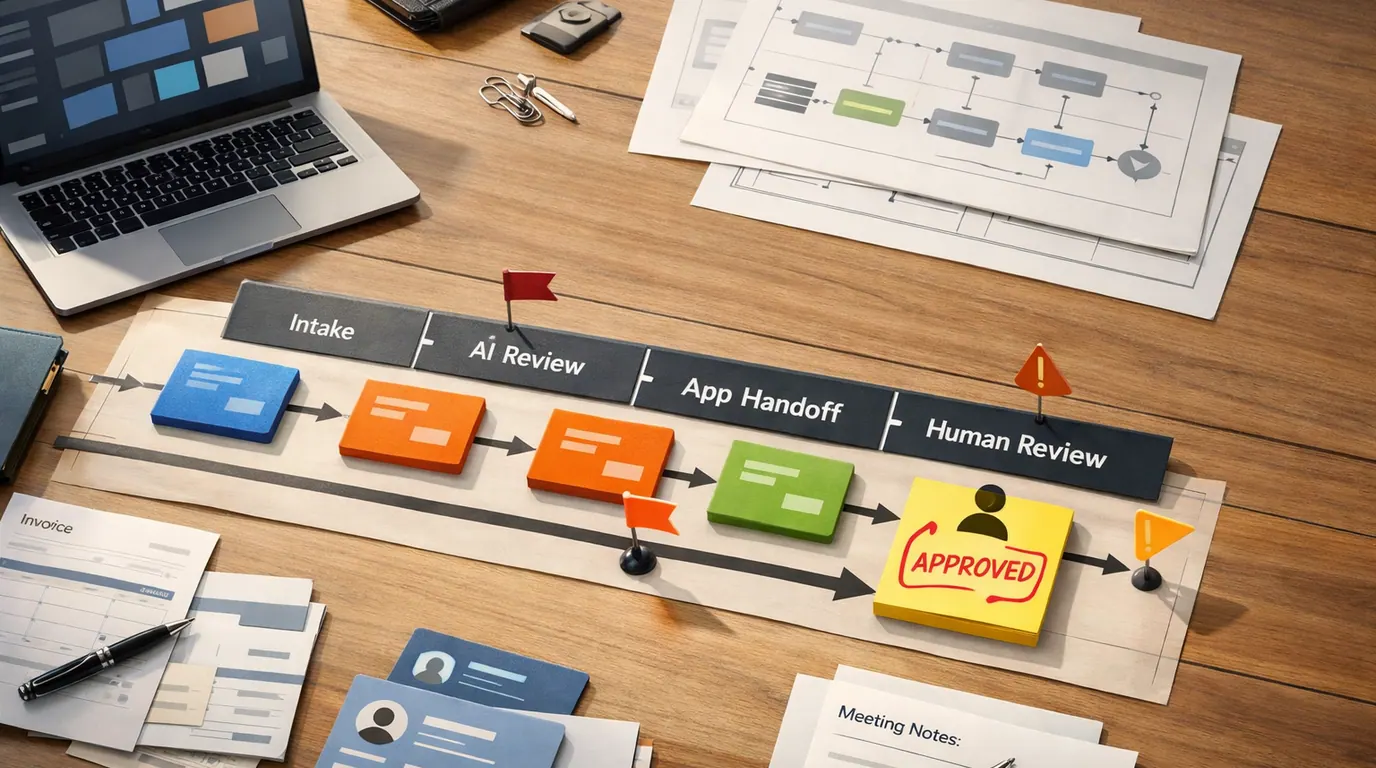
If you searched for “ai automation tools,” the useful answer is not one magic agent that runs the company. The useful answer is a shortlist matched to the kind of work you need to automate: app handoffs, visual workflows, developer APIs, approvals, data processing, customer support, enterprise RPA, or AI agents.
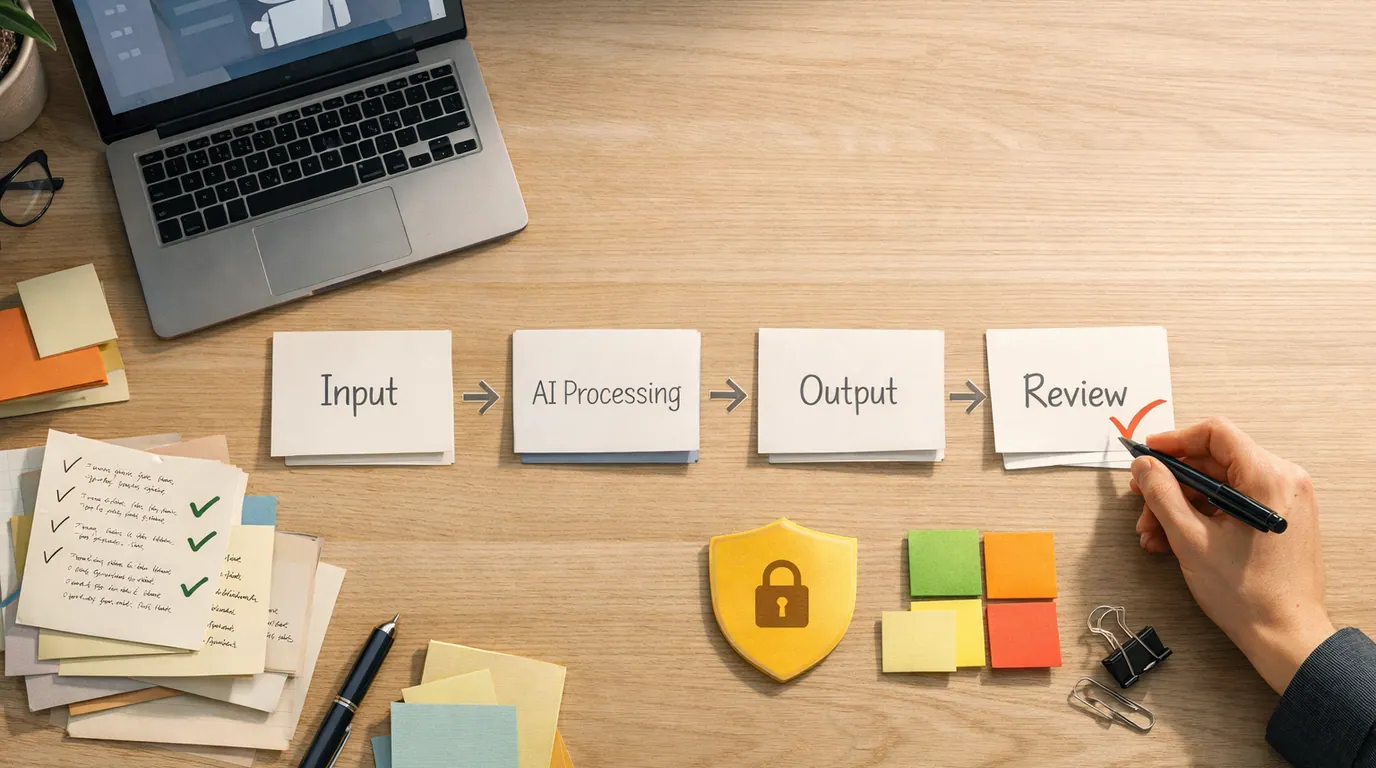
The strongest AI tools for automation do two jobs at once. They connect the systems where work happens, and they use AI to interpret messy inputs before the next action. That could mean classifying support tickets, summarizing sales calls, extracting invoice fields, drafting follow-ups, routing form submissions, or turning spreadsheet rows into reviewable tasks.
Use this guide as a practical AI automation tools comparison. Pick the workflow first, choose the tool family that fits, then add human review where the output affects customers, money, permissions, records, or trust.
Choose a repeated handoff with clear input, clear output, and a person who already owns the result.
The tool should show what triggered, what AI decided, what changed, and where failures went.
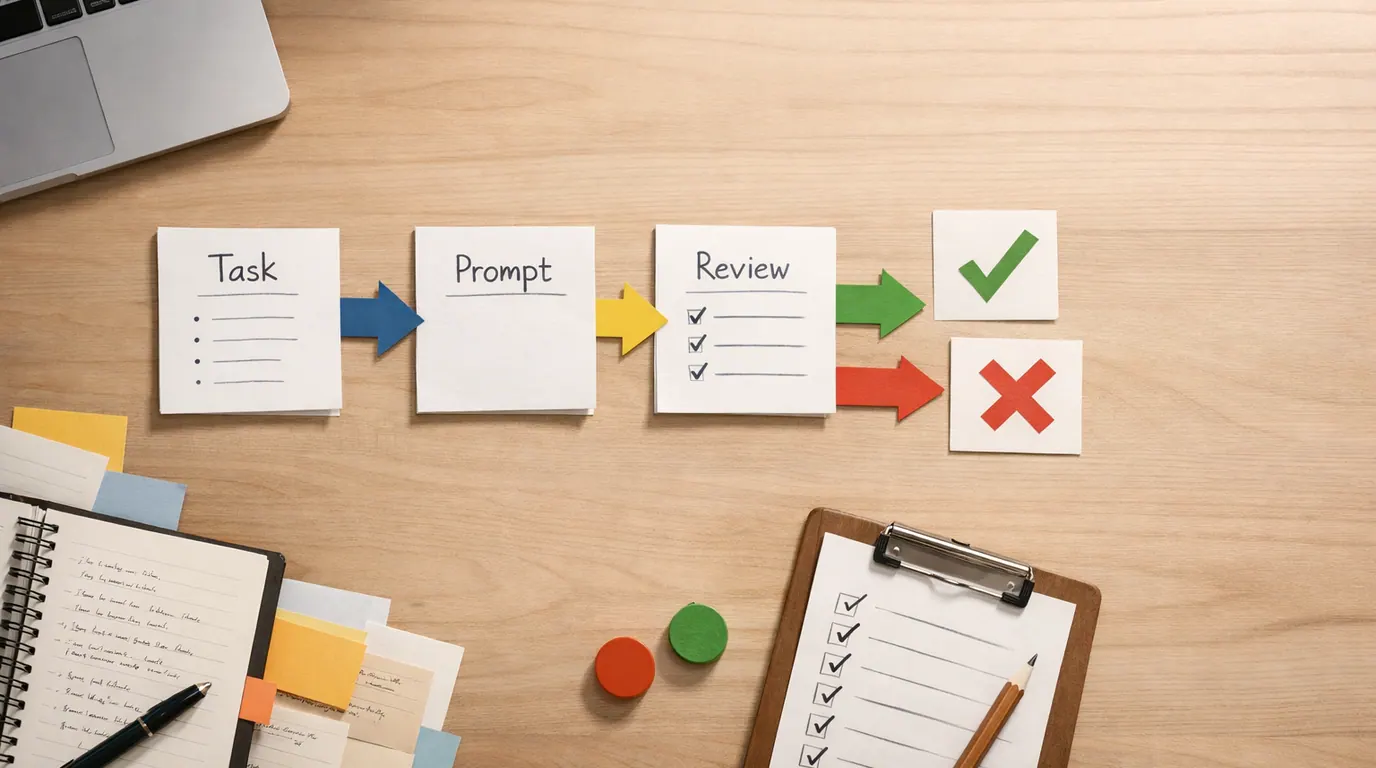
Keep approvals on exceptions, sensitive data, customer messages, and irreversible actions.
Quick Picks: Best AI Tools for Automation by Job
Start with the “Best for” column. The best AI automation tools are not interchangeable: a no-code builder, developer workflow engine, approval tool, RPA platform, and AI agent builder solve different problems.
| Pick | Best for | Why it fits | Limit | Pricing/free-plan note |
|---|---|---|---|---|
| Zapier | Broad no-code app handoffs across forms, email, spreadsheets, CRM, Slack, docs, and AI steps | Zapier is a sensible first pick when the job is connecting many SaaS apps quickly and adding AI classification, summarization, or drafting inside a workflow. | Complex branching, sensitive data, and high-volume production runs still need owners, logs, and cleanup rules. | The research packet notes a free tier. Check current task limits, app restrictions, AI features, and team controls before relying on it. |
| Make | Visual multi-step scenarios, branching workflows, and teams that want to see how data moves | Make fits operators who need a visual builder for app connections, AI prompts, routers, conditions, and workflow maps that are easier to inspect than webhook glue. | Visual canvases can still become hard to maintain without naming rules, failure alerts, and clear ownership. | Check current vendor pricing, operation limits, AI usage, team features, and enterprise controls. |
| n8n | Technical teams that want low-code speed with code fallback, custom APIs, source-available options, and self-hosting paths | n8n fits teams that need more control than basic no-code tools while still giving non-engineers a visual workflow surface. | It rewards technical stewardship. A business team without a maintainer can build flows that nobody can debug later. | Check current cloud pricing, self-hosting responsibility, support, compliance needs, and enterprise features. |
| Pipedream | Developers building API, webhook, data, and event-driven automations | Pipedream fits engineering teams that want automation close to code, logs, APIs, and custom components rather than a purely visual builder. | It is less friendly for teams that need non-technical operators to own every change. | Check current usage limits, workflow execution pricing, connected accounts, and team controls. |
| Relay.app | Approval-heavy workflows with async review, manual input, and human-in-the-loop checkpoints | Relay.app fits processes where AI prepares the work but a teammate must approve, revise, or add missing context before the run continues. | It is not the first choice for deep custom infrastructure or heavy code-based orchestration. | Check current pricing, run limits, integrations, and approval-workflow controls. |
| Gumloop | AI agent workflows for research, monitoring, GTM, support, recruiting, and recurring AI tasks | Gumloop fits teams that want AI reasoning steps on a canvas with app connections and recurring workflows around messy inputs. | Agent workflows can hide vague instructions. Require output schemas, test cases, and exception handling before scale. | Check current pricing, model usage, data connectors, permissions, and enterprise controls. |
| Lindy | AI agents for execution-heavy work such as email, scheduling, CRM updates, research, sales, operations, and recruiting | Lindy fits lean teams that want assistant-like automation for fluid tasks that do not fit simple if-this-then-that rules. | Agents should not silently send, update, or decide on high-stakes work without review. | Check current plan limits, connected-app permissions, data terms, and team controls. |
| Microsoft Power Automate | Microsoft 365, Dynamics, SharePoint, Teams, approvals, and governed enterprise workflows | Power Automate is strongest when a company already works inside Microsoft systems and needs automation near identity, files, approvals, and enterprise administration. | It can be overbuilt for a small team that only needs a few app handoffs. | Check current Microsoft licensing, connector tiers, AI features, and admin requirements. |
| Workato or Tray.ai | Enterprise integration, cross-department workflows, governed automation programs, and complex SaaS stacks | These AI automation platforms fit teams that need orchestration, governance, and integration depth beyond a single department's tool. | They are usually heavier to evaluate, buy, implement, and maintain than SMB no-code builders. | Check current vendor pricing, contracts, implementation needs, security review, and cancellation or migration risk. |
| UiPath | RPA, legacy systems, desktop workflows, repetitive screen tasks, and process automation in larger organizations | UiPath fits cases where the work still happens in older systems or interfaces that do not expose clean APIs. | UI-driven automation is brittle when buttons, layouts, or permissions change. Add canary checks and review alerts. | Check current licensing, bot runtime costs, attended vs. unattended needs, governance, and support requirements. |
This shortlist is workflow-first. If your search was for the awkward phrase “AI automation automation tools,” translate that intent as: “Which tool should automate the repeated workflow my team already understands?” That question leads to a better choice than chasing the broadest feature list.
How We Chose the Shortlist
This article is based on the supplied research packet, including current SERP patterns and source summaries from automation vendors, product roundups, and operator discussions. It does not claim hands-on benchmarking, live pricing checks, or production testing of each tool.
The evaluation criteria were practical:
- Workflow fit: which repeated job the tool is best positioned to own.
- Builder type: no-code, low-code, code-first, agentic, approval-led, enterprise integration, or RPA.
- AI role: extraction, classification, summarization, drafting, routing, decision support, or agent execution.
- Handoff quality: whether the output is inspectable, editable, logged, and easy for a teammate to understand.
- Failure handling: whether the workflow can alert, pause, retry, route to a person, or explain what went wrong.
- Pricing risk: whether usage limits, premium connectors, seats, model calls, or enterprise controls could change the real cost.
For broader rollout discipline after you pick a tool, pair this shortlist with our AI workflow automation guide. If the rollout spans multiple teams, the ownership model in AI productivity tools for teams is the better operating frame.
Compare the Main Automation Patterns
Most bad purchases happen when teams compare different categories as if they were the same. Use this table before you compare vendors.
| Pattern | Best fit | Examples | Human-review point |
|---|---|---|---|
| No-code app automation | Fast handoffs between common SaaS tools | Zapier, Make | Review before sending customer messages, updating CRM fields, or creating high-volume actions. |
| Low-code technical orchestration | Custom APIs, internal tools, self-hosting needs, and workflows engineers may maintain | n8n, Pipedream | Review code snippets, credentials, retries, logs, and production access. |
| Approval-led automation | Processes where a person must approve, edit, or add context before action | Relay.app, Microsoft Power Automate approvals | Review the approval owner, timeout rules, escalation path, and audit history. |
| Agentic execution | Fluid work such as research, scheduling, enrichment, inbox cleanup, and CRM follow-up | Lindy, Gumloop, Relevance AI, MindStudio | Review instructions, allowed tools, output schemas, and what the agent may do without permission. |
| Enterprise integration platforms | Large SaaS stacks, cross-department governance, identity controls, and complex process ownership | Workato, Tray.ai, Power Automate | Review security, procurement, admin controls, source-of-truth writes, and migration risk. |
| RPA and UI automation | Legacy apps, desktop tasks, screen scraping, and workflows without stable APIs | UiPath, Power Automate Desktop | Review canary checks, UI drift, credential handling, and alerts when a screen changes. |
The best generative AI automation tools are useful when the task needs language judgment, not just routing: extracting fields from an email, summarizing a ticket, drafting a reply, or classifying sentiment. Traditional automation is still better for deterministic steps such as “when a row is added, create a task.” The strongest workflows use both.
Product Notes: Best Fits and Watchouts
Use these notes to narrow the shortlist before a trial.
Zapier
Choose Zapier when the first problem is simple app-to-app automation across a broad SaaS stack. It is a practical starting point for lead routing, form follow-up, AI summaries, spreadsheet updates, Slack alerts, CRM tasks, and lightweight AI agents.
Human review point: do not let a Zap quietly send public copy, overwrite records, or route high-value leads without an approval or exception path. If you mainly need budget-conscious experimentation, compare it with the workflow advice in Best Free AI Tools.
Make
Choose Make when the team needs visual branching, multi-step scenarios, and a clearer map of how data moves. It fits operations teams that want to inspect paths, conditions, prompts, and downstream actions without living entirely in code.
Human review point: visual workflows still need documentation. Name each step, define what “good output” looks like, and set alerts for failed or partial runs.
n8n
Choose n8n when you want low-code workflow building plus technical escape hatches. It is a strong candidate for teams that need custom APIs, data transformations, self-hosting options, deeper logging, or engineer-maintained automations.
Human review point: technical flexibility creates responsibility. Decide who owns credentials, retries, custom code, prompt updates, and production incidents before the workflow handles real records.
Pipedream
Choose Pipedream when developers are the builders and the automation sits close to APIs, events, webhooks, logs, and code. It can be a better fit than a purely visual tool when the workflow already belongs to engineering.
Human review point: business users may not be able to debug or change the workflow. Create readable documentation and escalation paths before handoff.
Relay.app
Choose Relay.app when the workflow should not remove the human touch. Approvals, async inputs, staged reviews, and manual context make sense for HR requests, content approvals, customer exceptions, finance checks, and internal operations.
Human review point: define what approvers are checking. A rubber-stamp approval step adds friction without reducing risk.
Lindy, Gumloop, Relevance AI, and MindStudio
Choose agent builders when the work is less linear: research a lead, monitor mentions, enrich a record, draft a reply, summarize a thread, or coordinate several small steps. These are closer to AI teammates than classic trigger-action automations.
Human review point: agents need boundaries. Limit allowed apps, require structured outputs, log decisions, and keep final sends or record edits behind review until the agent has earned trust on real examples.
Power Automate, Workato, Tray.ai, and UiPath
Choose enterprise platforms when the problem is governance, scale, legacy systems, identity, approvals, integration depth, or cross-department process ownership. These tools can make sense when automation is becoming an operating program rather than a single team’s experiment.
Human review point: enterprise automation can create enterprise cleanup. Check data handling, admin ownership, audit logs, change management, procurement, and exit paths before committing.
Everyday Automation Examples
The fastest way to choose is to map the job to a concrete output. These examples are intentionally small enough to test before a large rollout.
| Workflow | Good tool fit | AI step | Review before action |
|---|---|---|---|
| Support triage | Zapier, Make, n8n, Power Automate | Classify urgency, summarize the issue, suggest a route, and draft a reply. | A support owner reviews angry, legal, refund, security, or account-access cases. |
| Lead intake | Zapier, Lindy, Gumloop, Relay.app | Summarize fit, extract company details, identify missing fields, and prepare follow-up. | Sales reviews claims, territory, consent, and high-value accounts before outreach. |
| Invoice or document extraction | Make, n8n, UiPath, Power Automate | Extract vendor, amount, date, PO number, and confidence flags. | Finance verifies totals, duplicates, approvals, and exceptions before posting. |
| Content approvals | Relay.app, Airtable, Make, Zapier | Create a brief, check required fields, draft variants, and route for approval. | An editor verifies facts, brand claims, rights, and final publishing state. |
| Social monitoring | Gumloop, n8n, Zapier, Make | Monitor mentions, classify sentiment, summarize themes, and create tasks. | A person reviews public replies, escalations, and sensitive customer context. |
| Spreadsheet cleanup | n8n, Zapier, GPT for Work style spreadsheet tools, Airtable | Normalize rows, classify categories, summarize notes, and flag missing values. | The owner checks formulas, sample rows, and source records before import. |
If your workflow is mostly research, drafting, or one-off analysis, a general assistant may be enough. The moment the output needs to write into other systems, notify teammates, or run repeatedly, you need automation controls, not just a good prompt.
Pricing, Free Plans, and Lock-In Caveats
Pricing changes often in this category because vendors charge for different things: tasks, operations, seats, premium connectors, app limits, AI model calls, agent runs, storage, bot runtimes, enterprise security, support, and implementation.
Treat pricing pages as part of the workflow test:
- Free plans: free AI automation tools are good for learning triggers, testing simple flows, and proving value. They are not a guarantee that the same workflow will be affordable at production volume.
- Usage units: compare the unit that actually scales: task, operation, run, row, minute, token, agent action, bot runtime, or connector.
- Connector limits: premium apps, databases, CRMs, and enterprise systems may require higher plans.
- Data and admin controls: team permissions, audit logs, retention, private workspaces, SSO, and approval workflows may sit behind business or enterprise tiers.
- Exit risk: check exports, workflow portability, readable documentation, and what happens if you cancel or migrate.
Do not buy an annual plan because a demo workflow worked once. Run real samples, estimate monthly volume, and check what the tool costs when the workflow becomes boring and frequent.
Human Review and Failure Points
AI automation is useful because it creates leverage. That same leverage makes mistakes travel faster. Keep the first version narrow, observable, and easy to pause.
Works Well When
- Use AI for extraction, classification, summarization, deduplication, draft preparation, routing suggestions, and recurring status updates.
- Use automation when the input source, output destination, owner, and failure alert are all clear.
- Use agents when the task is messy but still bounded by allowed tools, examples, and review rules.
- Use RPA only when APIs are not available or the legacy system makes screen-level automation unavoidable.
Watch Out For
- Do not automate customer-facing promises, refunds, hiring decisions, finance approvals, legal language, access changes, or source-of-truth edits without review.
- Do not rely on UI automation without canary checks; a small interface change can silently break a workflow.
- Do not paste sensitive data into unapproved tools just because the builder is easy.
- Do not scale a workflow that only the original builder can understand.
For sensitive workflows, use the data questions in our AI privacy concerns guide before connecting inboxes, customer records, transcripts, contracts, employee data, or financial files.
A 30-Minute Next-Action Framework
Use this before signing up for three trials at once.
- Name the bottleneck. Write one sentence: “When [trigger] happens, someone has to [manual work] before [next action].”
- Choose the tool family. Pick no-code, low-code, code-first, approval-led, agentic, enterprise integration, or RPA based on the workflow, not the brand.
- Define the output schema. Decide what the AI step must return: fields, labels, summary, draft, confidence flag, owner, and exception reason.
- Run ten real examples. Use historical inputs, compare the output with human handling, and mark wrong routes, missing fields, hallucinated claims, and unclear decisions.
- Add the review gate. Decide which cases auto-run, which pause for approval, and which go straight to a person.
- Measure the boring version. Track saved handoffs, error rate, review time, cleanup work, and whether a non-builder can understand the run history.
The right first pilot is usually small: one form to one CRM, one inbox to one ticket queue, one transcript to one task list, or one spreadsheet cleanup path. If that works, expand the pattern. If it creates more cleanup than clarity, change the workflow before changing tools.
The Bottom Line
The best AI tools for automation are the ones that fit a real workflow and leave a clear trail. Zapier and Make are practical starting points for no-code handoffs. n8n and Pipedream fit teams that need technical control. Relay.app fits approvals. Lindy, Gumloop, Relevance AI, and MindStudio fit bounded agent workflows. Power Automate, Workato, Tray.ai, and UiPath fit larger enterprise or legacy environments.
Choose the smallest tool that can connect the right systems, perform the right AI step, show the run history, and pause when a human should decide. That is how AI automation becomes useful work infrastructure instead of another fragile demo.
Frequently asked questions
What are ai automation tools?
AI automation tools combine workflow automation with AI steps such as extraction, classification, summarization, drafting, routing, or agent actions. The useful ones do more than move data between apps: they turn messy input into a reviewable next step and show where a human should approve exceptions.
What are the best AI tools for automation?
The best AI tools for automation depend on the job. Zapier and Make fit broad no-code app handoffs, n8n and Pipedream fit technical orchestration, Relay.app fits approval-heavy work, Lindy and Gumloop fit agent workflows, and UiPath or Power Automate fit larger enterprise automation needs.
Are free AI automation tools enough?
Free AI automation tools are useful for testing workflow fit, learning triggers, and proving that a small handoff saves time. They are usually weaker for volume, premium integrations, admin controls, logs, privacy commitments, and support. Check current vendor limits before relying on a free plan.
How should I compare AI automation software?
Compare AI automation software by the workflow it owns, the apps it connects, the AI step it performs, the logs it keeps, the human review gate, and the failure path. A polished demo matters less than whether a non-builder can understand what ran, what changed, and where mistakes go.
What workflow should I automate first?
Start with a repeated, low-risk handoff where inputs already arrive in a consistent place: lead intake, support triage, meeting follow-up, spreadsheet cleanup, content approvals, or internal request routing. Avoid irreversible financial, legal, HR, medical, or customer-impacting decisions until review and monitoring are proven.
What AI automation tasks still need human review?
Keep human review on customer-facing messages, high-value leads, refunds, contracts, hiring decisions, private data, financial records, security actions, and anything that edits a source of record. AI can prepare summaries, classifications, drafts, and tasks, but a named owner should approve risky action.