If you searched for “best ai writing tools,” you probably do not need a list of 50 apps. You need to know which tool fits the writing job in front of you: a blog draft, sales email, social post, novel scene, academic paragraph, SEO refresh, or final edit.
The best AI writing tools are not interchangeable. Some are flexible chat assistants, some are marketing systems, some are editing layers, and some are specialist environments for search, fiction, research, or social media. A useful Best AI writing tools answer should help you avoid paying for a polished wrapper when a simpler assistant and a better review habit would do the job.
Use this AI writing tools guide as a practical shortlist. Start with the output you need, compare the likely tools, then run one real piece of writing through a small test before buying.
Pick the recurring task first: draft, edit, optimize, repurpose, publish, research, or write fiction.
The right tool leaves fewer factual gaps, fewer generic lines, and fewer workflow handoffs.
Check facts, sources, privacy, voice, claims, originality, and whether the output is worth publishing.
Quick Picks: Best AI Writing Tools by Job
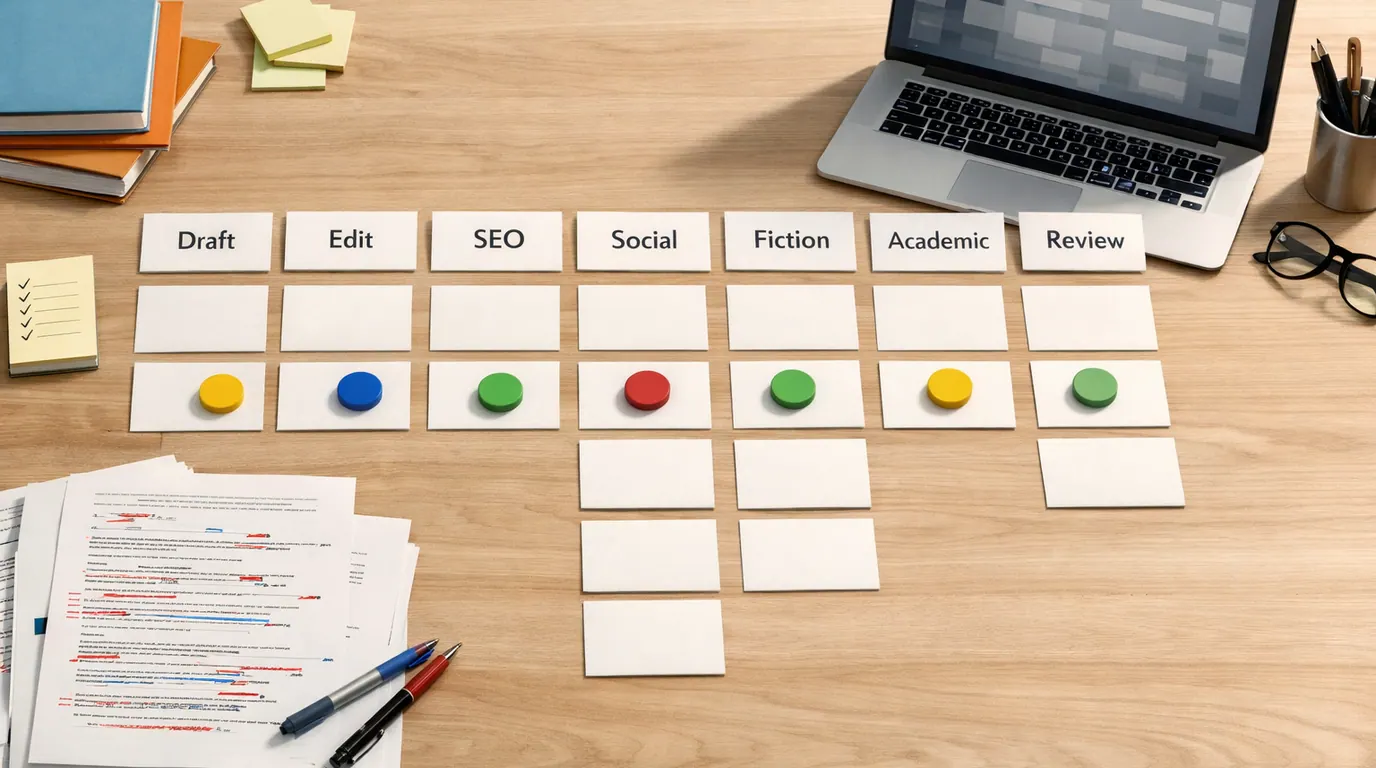
Start with the “Best for” column. This AI writing tools comparison is organized by reader job because a tool that is good at social captions may be a poor choice for a research paper, a novel, or a governed marketing workflow.
| Pick | Best for | Why it fits | Limit | Pricing/free-plan note |
|---|---|---|---|---|
| ChatGPT | Flexible drafting, brainstorming, outlines, rewrites, tables, emails, and everyday AI tools for writing | It is the broadest first stop when you need one assistant for many writing tasks before choosing specialized AI writing software. | One-off chats can bury source material, decisions, and reusable prompts. Verify facts, links, quotes, and private data handling. | OpenAI lists Free, Plus, Pro, Business, and Enterprise plan options. Check current limits for messages, uploads, tools, workspace controls, and region. |
| Claude | Long-form drafting, critique, document thinking, careful revision, and turning messy notes into structure | It fits writers who want a thoughtful collaborator for outlines, section drafts, critique, and rewrites with less template friction. | Strong prose can still contain weak evidence or overconfident claims. Review names, numbers, citations, and final voice. | Anthropic lists free and paid Claude plans. Check current usage limits, model access, file handling, and team or enterprise controls. |
| Grammarly | Editing inside documents, emails, browsers, business writing, tone cleanup, and grammar checks | It works close to where people already write, which makes it useful for final polish and quick rewrites. | Rewrite suggestions can flatten a distinctive voice or make cautious claims sound too confident. | Grammarly offers free AI writing tools and paid plans. Check current feature limits, team controls, and data terms. |
| DeepL Write | Clearer professional writing, multilingual teams, phrasing alternatives, tone, and sentence-level polish | It is useful when the bottleneck is fluency, style, and wording rather than generating a whole piece from scratch. | It will not create subject-matter expertise or source evidence for you. | DeepL Write can be tried for free, with Pro and team options available. Check current language coverage and plan details. |
| Jasper | Marketing teams, brand voice, campaign content, product copy, landing pages, and repeatable brand-safe workflows | Jasper is built around marketing execution, brand controls, and content pipelines rather than only a blank chat box. | It is more tool than a solo writer needs if you only draft occasional posts or emails. | Jasper publishes Pro and Business pricing paths and free-trial options. Verify current seats, credits, governance, and cancellation rules. |
| Copy.ai | Go-to-market content, sales copy, email sequences, GTM workflows, and AI writing automation tools | It fits teams that want writing connected to repeatable marketing and sales workflows, not just isolated copy generation. | Workflow automation can produce confident but off-brand or overpersonalized messages if source data and approvals are weak. | Copy.ai pricing and workflow credits are plan-dependent. Check current self-serve, enterprise, seat, and credit details. |
| Buffer AI Assistant | Social media writing, post variations, repurposing, captions, and platform-specific drafts | It keeps AI writing near the social publishing workflow, which is useful when the output becomes scheduled posts. | It is not a deep research, long-form, or governed brand-content system. | Buffer offers AI assistance and free entry points, but plan limits can change. Check current channel, post, and AI feature limits. |
| Surfer or Clearscope | SEO content briefs, optimization, term coverage, refreshes, and writer guidance for search-driven pages | These tools help writers compare a draft against search intent and topic coverage instead of only generating more prose. | An SEO score is not a quality score. Human editors still need examples, expertise, source checks, and reader-first structure. | SEO platforms are usually paid tools. Check current pricing, credits, exports, integrations, and seat limits. |
| Sudowrite | Fiction writers, scenes, sensory detail, character pressure, story brainstorming, and long-form creative work | It is purpose-built for creative writing rather than marketing templates or generic business copy. | It can generate attractive prose that does not fit your plot, pacing, character logic, or voice. | Sudowrite publishes credit-based paid plans and trial paths. Check current credits, rollover rules, and plan limits. |
| Notion AI | Notes, docs, outlines, knowledge bases, meeting notes, and writing inside a connected workspace | It fits writers who already organize drafts, sources, briefs, and project notes in Notion. | It is not a dedicated long-form writing environment for every author, and messy workspaces create messy outputs. | Notion AI packaging depends on account and workspace plan. Check current AI, guest, search, automation, and admin details. |
| Paperpal | Academic writing, research papers, PDF chat, citations, manuscript editing, and scholarly style | It is better aligned with academic writing needs than a generic marketer-focused AI writer. | It cannot replace source reading, methodological judgment, citation verification, or institutional integrity rules. | Paperpal has free and paid paths with upload, word, plagiarism, and PDF limits. Verify current student, researcher, and regional pricing. |
| QuillBot or free utility tools | Free AI writing tools for quick paraphrases, email drafts, summaries, grammar checks, and one-off writing help | They are useful when the job is small, low risk, and easy to inspect. | Free generators often lack workflow memory, brand controls, source grounding, and team review. | Free tools can change limits, ads, login requirements, and feature access. Check current terms before relying on them weekly. |
How We Chose This Shortlist
This roundup is based on the supplied research packet, recurring SERP patterns for “best ai writing tools,” and official product pages checked during drafting on June 16, 2026. It is not a hands-on benchmark, live security review, plagiarism audit, or claim that every product was tested with identical prompts.
The evaluation criteria were practical:
- Workflow fit: Does the tool solve a real writing job, or is it only a generic text box with better marketing?
- Output quality: Does it create a draft, brief, edit, outline, or suggestion that reduces meaningful work after review?
- Context handling: Can it use notes, brand guidance, source material, documents, style rules, or project memory in a controlled way?
- Reviewability: Can a person inspect, edit, export, cite, approve, or reject the result before it ships?
- Commercial fit: Are free tiers, trials, credits, seats, exports, admin controls, privacy terms, and cancellation risk clear enough to evaluate?
- Failure mode: What happens when the output is generic, inaccurate, too similar to source material, off-brand, private, or legally sensitive?
For current product details, check vendor pages before subscribing: ChatGPT pricing, Claude pricing, Jasper pricing, Copy.ai pricing, Buffer AI Assistant, Grammarly AI Writer, DeepL Write, Sudowrite pricing, Notion AI, Paperpal pricing, QuillBot AI Writer, and Surfer pricing. Pricing, free plans, credits, and AI feature names move quickly.
Product Recommendations by Writing Workflow
ChatGPT and Claude for flexible drafting
Use a general assistant when the writing job changes every day: outline a memo, rewrite a section, turn notes into a draft, create interview questions, critique a paragraph, or summarize source material before writing.
Best for: founders, students, creators, analysts, and solo marketers who want one adaptable assistant before paying for specialist AI writing software.
Everyday example: paste a messy product note, ask for three blog angles, choose one, then ask for an outline that marks missing evidence instead of inventing proof. After the draft, ask the assistant to flag vague claims and rewrite only the weak paragraphs.
Human review point: do not treat fluent text as evidence. Open sources, verify numbers, remove invented examples, and decide whether the final line is something you would stand behind. For reusable prompting habits, use our guide to writing better AI prompts and the templates in ChatGPT prompts for writing.
Grammarly and DeepL Write for editing and polish
Use editing tools when the draft already exists and the bottleneck is clarity, grammar, sentence rhythm, tone, or consistency. This is where many writers get the safest value from generative AI writing tools because the human source material is already on the page.
Best for: emails, internal documents, cover letters, reports, non-native English writing, support replies, and final read-throughs before publishing.
Everyday example: write the client email yourself, then ask for a clearer version that keeps the original meaning and avoids new promises. Compare the rewrite against the original instead of accepting every suggestion.
Human review point: editing tools can make specific writing sound generic. Reject suggestions that remove useful detail, soften a necessary warning, or make a claim sound more certain than it is.
Jasper and Copy.ai for marketing teams
Marketing teams should look at Jasper and Copy.ai when they need repeatable campaign workflows, brand guidance, product messaging, sales emails, landing pages, and approval paths. They are strongest when the team has real positioning, examples, and source material already defined.
Best for: teams producing repeated marketing assets across campaigns, personas, products, and channels.
Everyday example: build a campaign brief with audience, offer, proof points, forbidden claims, tone examples, and review rules. Use the tool to draft email variants, ad copy, landing-page sections, and social snippets, then route the outputs through an editor before launch.
Human review point: automation increases the cost of a bad premise. A weak brief can create dozens of polished but wrong messages. Review claims, audience fit, personalization, compliance language, and source evidence before anything is sent.
Buffer for social posts and repurposing
Buffer AI Assistant is useful when the writing output becomes a social post. The practical benefit is not only text generation; it is keeping ideation, post variations, tone edits, and publishing close together.
Best for: creators, small businesses, and lean marketing teams that repurpose blog posts, newsletters, launch notes, or videos into social content.
Everyday example: turn one approved blog section into a LinkedIn post, an X thread, an Instagram caption, and a short community update. Keep the source link, claims, and call to action visible while editing each channel version.
Human review point: platform-aware writing is not the same as audience-aware writing. Check hooks, hashtags, links, claims, accessibility, and whether the post sounds like the person or brand publishing it. For a deeper social workflow, see AI tools for social media.
Surfer and Clearscope for SEO-led writing
SEO tools are useful when the job is not “write more,” but “cover the right intent without missing obvious subtopics.” Surfer, Clearscope, Koala, and similar tools can help with briefs, term coverage, content gaps, and optimization checks.
Best for: SEO teams, content marketers, affiliate editors, and agencies that already know how to judge search intent.
Everyday example: draft a refresh brief for an existing article, compare it with the terms and questions competitors cover, then ask a writer to add better examples, clearer definitions, and missing reader decisions. The optimization tool should guide the editor, not write the final judgment.
Human review point: a high content score can still produce a forgettable page. Add original examples, source-backed claims, internal links, useful structure, and reader decisions. Our guide to using AI for SEO goes deeper on safe research, briefs, and review.
Sudowrite and Novelcrafter for fiction
Fiction writers have different needs from marketers. Sudowrite and Novelcrafter are built around scenes, characters, world details, continuity, and creative alternatives, not just product copy or blog intros.
Best for: authors who need help with brainstorming, sensory detail, scene alternatives, character pressure, and long-form story organization.
Everyday example: ask for five ways to raise tension in a scene without changing the ending. Then choose the version that fits your character, throw away the rest, and rewrite in your own voice.
Human review point: AI can generate pretty paragraphs that are wrong for the story. Keep control of plot logic, emotional truth, pacing, point of view, continuity, and the sentences that make the book yours.
Paperpal, Notion AI, and document tools for research-heavy writing
Academic and research-heavy writing needs source discipline. Paperpal is built for scholarly writing support, while Notion AI and document tools can help organize notes, summarize material, and turn research into draftable sections.
Best for: researchers, students, analysts, and knowledge workers who write from source material rather than from a blank prompt.
Everyday example: collect sources, summarize each one, separate claims from evidence, then ask for an outline that shows which paragraphs need citations. Draft only after the source map is clear.
Human review point: AI can misread sources and create fake confidence around a weak argument. Verify citations, quotes, methodology, institutional rules, plagiarism risk, and whether the paper actually makes a defensible claim. For source triage habits, use How to Use AI for Research.
Compare AI Writing Software by Task
Most buyers should not ask, “Which AI writer is best?” Ask which writing task repeats often enough to deserve a tool.
| Writing task | Tools to compare first | Useful output | Human review point |
|---|---|---|---|
| Blank-page drafting | ChatGPT, Claude, Gemini, Jasper | Angles, outlines, section drafts, rewrite options, and critique notes | Check whether the draft has a real point, true examples, and enough source support. |
| Marketing copy | Jasper, Copy.ai, ChatGPT, Claude | Campaign variants, landing sections, product copy, email drafts, and ad angles | Review claims, proof, tone, compliance language, and whether the copy matches the offer. |
| Social media | Buffer, Jasper, ChatGPT, Gemini | Platform-specific posts, hooks, captions, threads, and repurposed snippets | Check context, links, accessibility, hashtags, and brand voice before scheduling. |
| SEO content | Surfer, Clearscope, Koala, ChatGPT, Claude | Briefs, topic coverage, title options, section gaps, and draft improvement notes | Search intent, source quality, original examples, and internal links still need editorial judgment. |
| Editing and tone | Grammarly, DeepL Write, QuillBot, Claude | Grammar fixes, style alternatives, clarity rewrites, and tone adjustments | Keep meaning, specificity, caution, and voice intact. |
| Creative writing | Sudowrite, Novelcrafter, Claude | Scene options, character pressure, sensory detail, plot alternatives, and continuity questions | The author owns plot, pacing, voice, and emotional logic. |
| Academic writing | Paperpal, NotebookLM, Claude, ChatGPT | Source summaries, thesis maps, paragraph critique, citation support, and PDF Q&A | Verify every citation, quote, source meaning, and academic integrity rule. |
The strongest writing stack is usually a general assistant, a place where source material lives, a specialist for the recurring format, and one final editor that slows you down before you publish.
Free vs Paid AI Writing Tools
Free AI writing tools are enough when the work is occasional, low risk, and easy to inspect. Use them for brainstorming titles, rewriting one paragraph, summarizing notes, drafting a short email, making a checklist, or testing whether AI fits your writing style at all.
Paid tools start to make sense when one of these is true:
- You need higher limits: long documents, more files, more messages, more credits, or fewer interruptions.
- You need workflow control: brand voice, templates, reusable assets, source libraries, approvals, or project memory.
- You write with a team: shared workspaces, roles, comments, permissions, exports, history, and admin controls matter.
- You need specialist output: SEO guidance, academic review, fiction continuity, social scheduling, or marketing automation.
- You handle sensitive material: private documents, client data, HR language, legal terms, unpublished research, or customer records require stronger data controls.
Do not upgrade because a tool promises more “human” text. Upgrade when it gives you a better workflow, fewer mistakes, clearer ownership, and outputs you can review. If your main need is a broader free stack beyond writing, start with Best Free AI Tools.
A 30-Minute Test Before You Choose
Run a small test before committing to any AI writing software. Use the same real input for every candidate so you compare workflow fit instead of marketing pages.
- Choose one real task. Use a blog section, email sequence, product page, social post batch, research paragraph, or fiction scene you actually need.
- Prepare source material. Include the audience, goal, notes, examples, facts, claims to avoid, tone rules, and final format.
- Ask for a first output. Request an outline, draft, rewrite, critique, SEO brief, caption set, or scene alternatives.
- Measure edit distance. Count what you had to fix: facts, voice, structure, generic phrasing, missing examples, bad claims, and formatting.
- Check workflow drag. Look at exports, collaboration, privacy terms, integrations, credits, and whether the output lands where you work.
- Decide the role. Keep the tool only if it becomes a reliable assistant for one repeatable step, not a vague promise to “write better.”
This test is especially useful for teams comparing AI writing platforms. A tool that impresses in a demo can fail when it has to use your real sources, your approval process, and your brand rules.
Risks and Human Review Points
AI writing tools can save time, but they also make weak writing look finished. The risk is not only factual error. It is the confident removal of uncertainty, the loss of voice, and the temptation to publish words nobody has truly owned.
Works Well When
- Use AI to brainstorm angles, organize notes, draft from supplied facts, critique structure, rewrite for clarity, and repurpose approved material.
- Use specialist tools when the workflow has real constraints, such as SEO briefs, social scheduling, academic sources, fiction continuity, or brand governance.
- Save prompts, briefs, examples, and review rules when they make repeated work clearer.
Watch Out For
- Do not publish AI text you have not read, fact-checked, edited, and accepted as your own responsibility.
- Do not paste private data, contracts, customer records, HR details, credentials, or unpublished research into tools your team has not approved.
- Do not optimize for detector avoidance, word count, or SEO term coverage at the expense of reader value.
Review these before publishing:
- Facts, names, numbers, dates, citations, and links.
- Claims about products, health, law, finance, employment, safety, or compliance.
- Private data, confidential documents, customer records, and source permissions.
- Originality, plagiarism risk, over-close paraphrasing, and attribution.
- Voice, specificity, examples, structure, and whether the reader can act on the piece.
- Final ownership: who is accountable for the words after they leave the draft.
The Bottom Line
The best AI writing tools are the ones that improve a specific writing workflow. Start with ChatGPT or Claude if you need a flexible assistant. Choose Grammarly or DeepL Write when the draft needs polish. Use Jasper or Copy.ai when marketing workflows and brand controls matter. Add Buffer for social posts, Surfer or Clearscope for SEO guidance, Sudowrite for fiction, Paperpal for academic writing, and Notion AI when your writing lives inside a workspace.
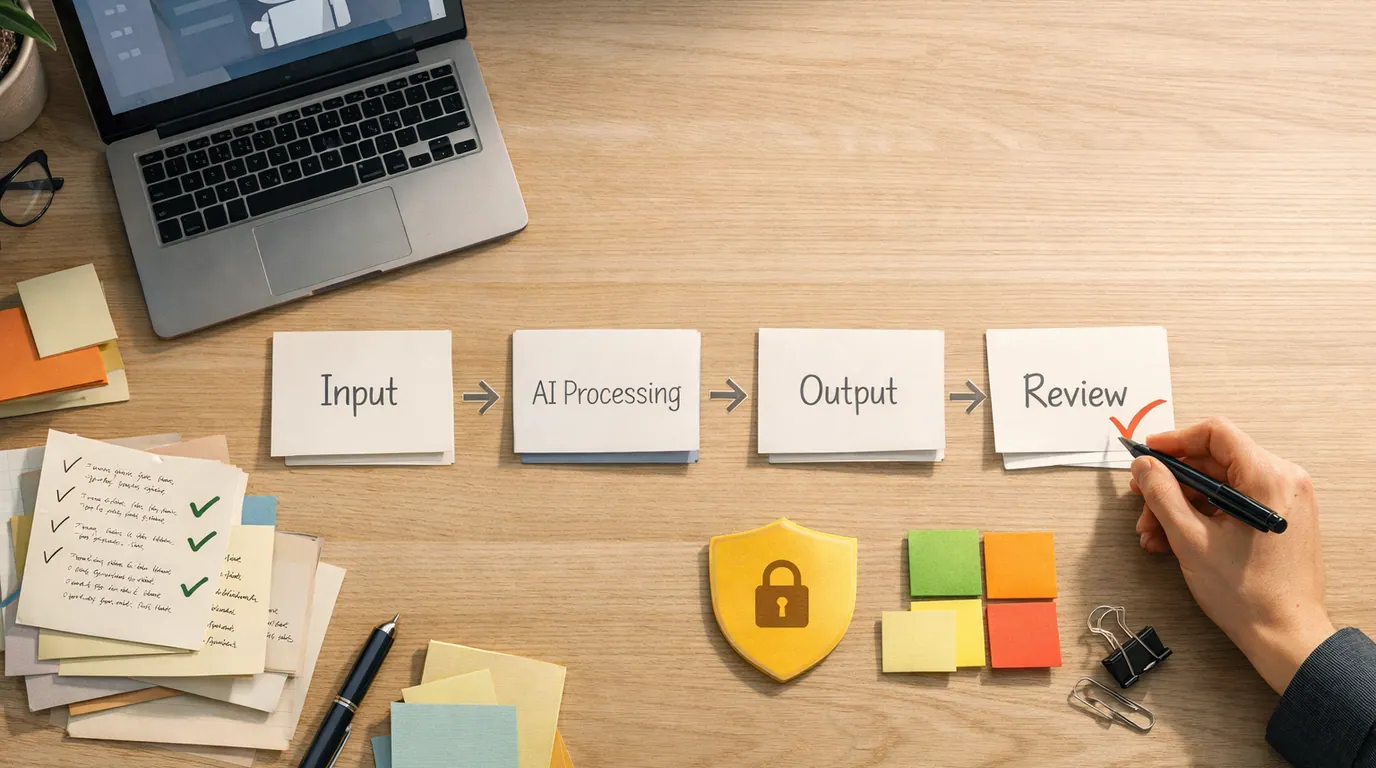
Do not build the stack around hype. Build it around the sentence you can finish: “This tool helps me turn [input] into [output], then [person] reviews [risk] before [next step].” If you cannot fill in that sentence, you do not need another AI writer yet.
Frequently asked questions
What are the best AI writing tools?
The best AI writing tools depend on what you write. ChatGPT and Claude are flexible general assistants; Jasper and Copy.ai fit marketing teams; Buffer helps with social posts; Grammarly and DeepL Write are better for editing; Surfer and Clearscope support SEO; Sudowrite is built for fiction; Paperpal fits academic writing.
Are free AI writing tools good enough?
Free AI writing tools are good enough for brainstorming, outlines, rough drafts, short rewrites, grammar checks, and trying a workflow. They usually fall short when you need higher usage limits, source control, brand governance, exports, team permissions, privacy commitments, SEO workflows, or repeatable automation.
What is the difference between AI writing software and a chatbot?
A chatbot is a flexible blank workspace where you supply the process. AI writing software usually adds templates, brand voice, document storage, SEO guidance, collaboration, approvals, or integrations. Pay for the software layer only when those workflow controls save more time than they add.
Can AI writing tools replace a writer?
They can replace some blank-page, summary, rewrite, and formatting work, but not accountable judgment. A writer still owns the angle, evidence, taste, reader empathy, facts, voice, ethics, and final decision to publish. Treat AI drafts as options that need editing, not finished work.
Which AI writing tool is best for SEO content?
For SEO content, use a general assistant for outlines and drafts, then compare Surfer, Clearscope, Koala, or similar SEO-focused tools for briefs, term coverage, and optimization guidance. Do not let an SEO score replace search intent, original examples, source checks, or human editorial judgment.
What should I check before publishing AI-assisted writing?
Check factual accuracy, source support, originality, reader value, tone, privacy, legal or professional claims, citations, links, and whether the piece says anything useful beyond a generic summary. Also remove repeated phrasing, invented details, unsupported statistics, and lines you would not defend yourself.