If you searched for “best free ai tools,” the useful answer is not a giant directory. It is a short, job-based stack you can try without turning your browser into a subscription graveyard.
The best free AI tools in 2026 are strong enough for real work, but their free plans are shaped by limits: credits, usage caps, watermarks, file restrictions, privacy tradeoffs, export limits, and weaker admin controls. A free plan is a test bench, not a permanent operating system.
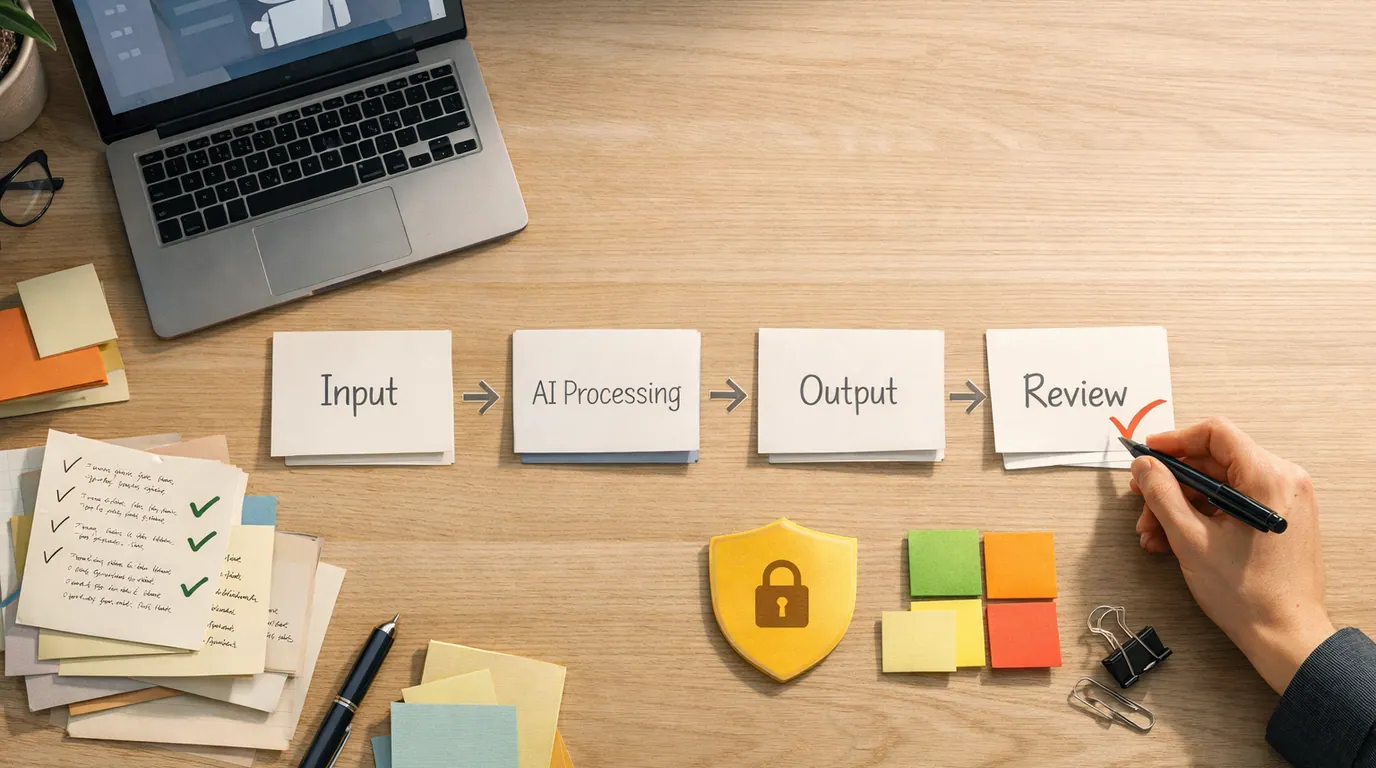
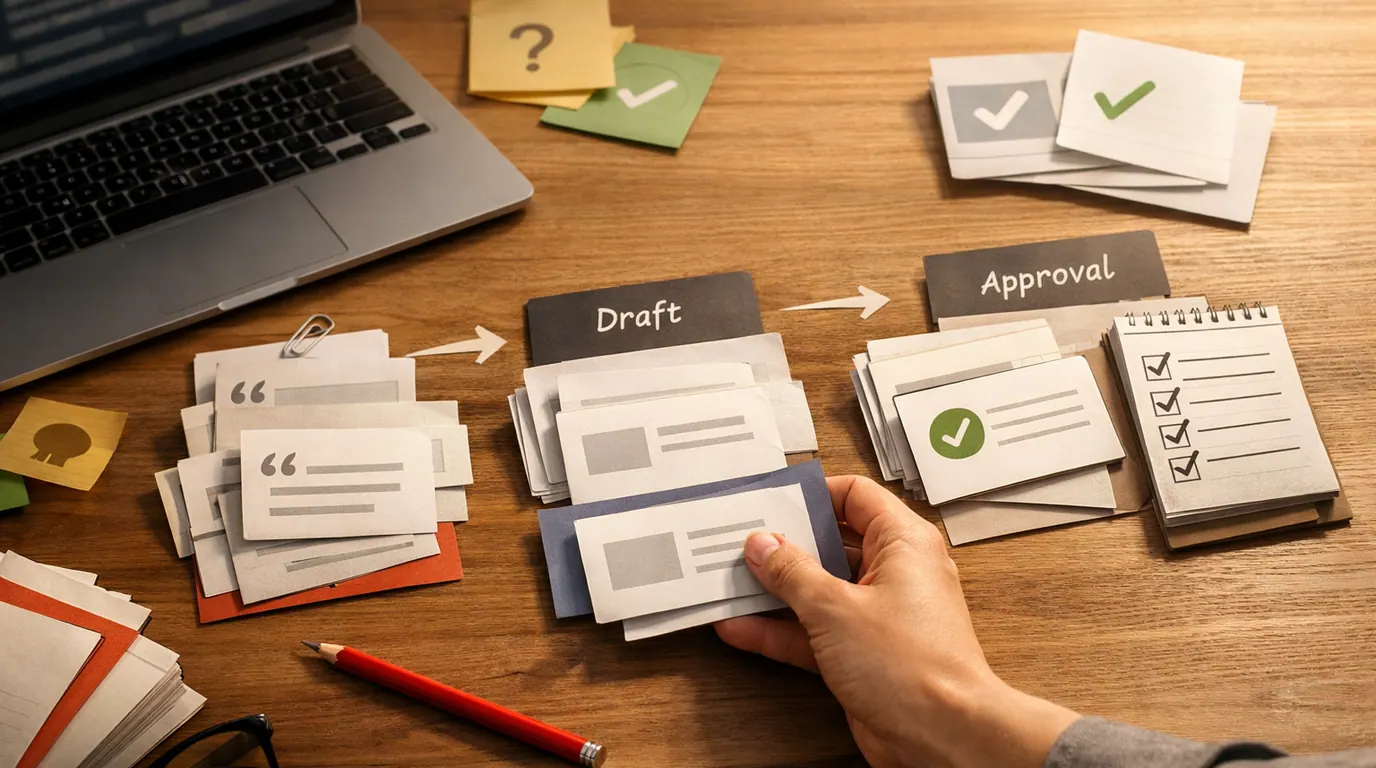
Use this free AI tools guide to choose by output: a draft, a cited answer, a document summary, a design asset, a prototype, a meeting recap, an automation, or a presentation. Then decide what still needs human review before the result becomes public, paid, sent, submitted, or used as a source of record.
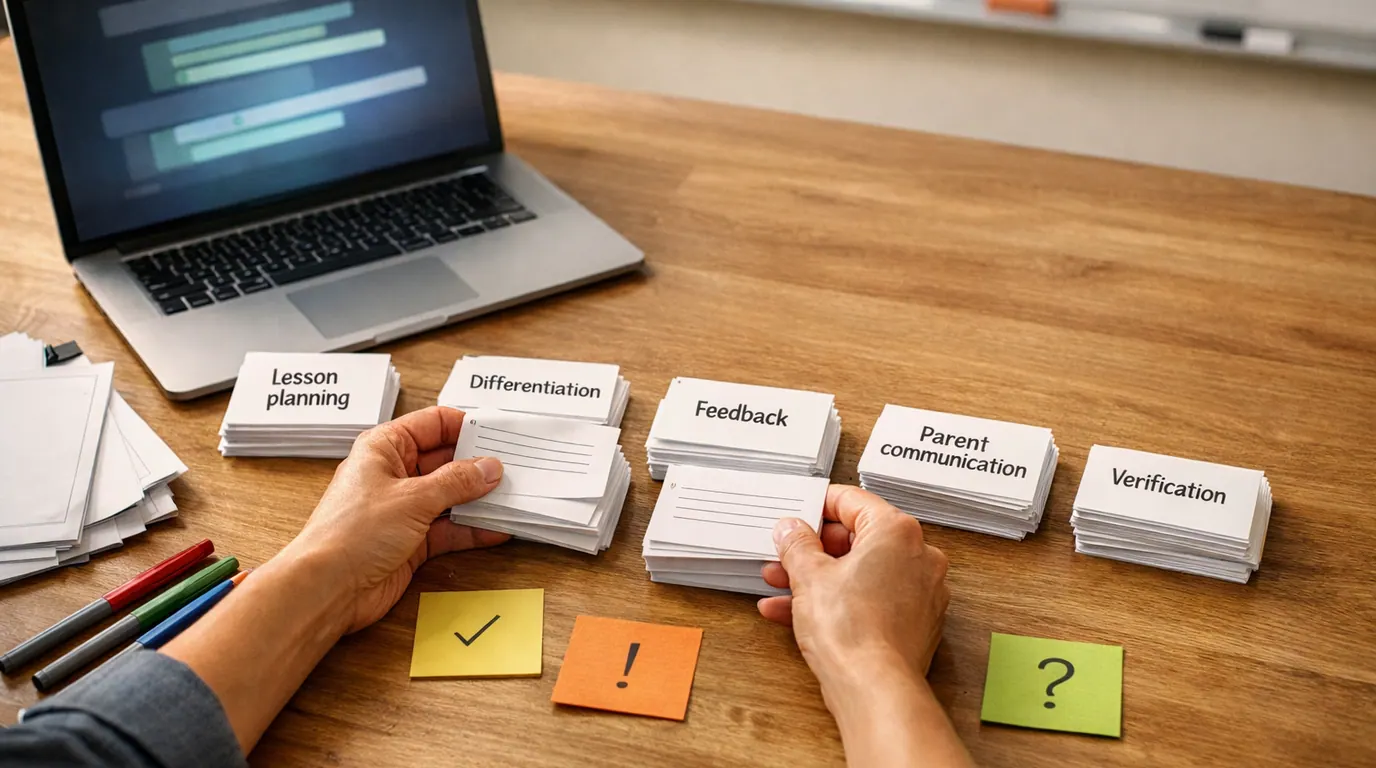
Pick the repeated task first: write, research, summarize, design, code, meet, automate, present, or edit.
The tool should produce something you can inspect, edit, export, cite, or hand off cleanly.
Free tiers change often. Check credits, quotas, privacy terms, exports, commercial rights, and renewal rules.
Quick Picks: Best Free AI Tools by Job
Start with the job column. Best free AI tools lists get noisy because they compare chatbots, design apps, coding agents, meeting assistants, and automation platforms as if they solve the same problem.
| Pick | Best for | Why it fits | Limit | Pricing/free-plan note |
|---|---|---|---|---|
| ChatGPT | General writing, brainstorming, coding help, tables, and everyday questions | It is the easiest first stop when you need one flexible assistant for drafts, outlines, code explanations, and quick learning. | It can be confidently wrong and may invent sources. Do not use it as a source of record for facts, citations, or private data. | Official ChatGPT pages list a free plan with usage limits. Check current plan details before building a routine around it. |
| Claude | Longer writing, document thinking, careful revision, and structured analysis | It is often a strong fit when the job is thoughtful drafting, critique, summarization, or turning messy notes into a cleaner structure. | Free usage is limited, and polished prose can hide unsupported claims. Review facts, calculations, and final wording. | Anthropic lists Free, Pro, Max, Team, and Enterprise options. Check current limits for files, models, region, and team controls. |
| Gemini and Google AI Studio | Google workflows, multimodal prompts, developers, students, and Gemini model experiments | Gemini fits users already working in Google apps, while AI Studio is useful when you want to try Gemini models and prototype with the Gemini API. | Availability, model access, quotas, and data terms differ between consumer, Workspace, cloud, and developer contexts. | Google says AI Studio usage is free in available regions, but API tiers, billing, and quotas still need a current check. |
| Perplexity | Research orientation and source-linked answers | It is useful when you want a quick map of a topic, current links, and a starting trail for verification. | A linked answer is not proof. Open the sources, check dates, and cite the original material when the work matters. | Perplexity offers free and paid access, but search depth, model access, and advanced features can vary by plan. |
| NotebookLM or Humata | Working with PDFs, notes, documents, and source-grounded Q&A | NotebookLM is strong for your own sources; Humata is focused on document analysis and PDF questions. | Bad source material produces bad answers. Document tools can summarize faster than they can judge source quality. | NotebookLM has free access paths through Google accounts; Humata lists a free plan with page limits. Verify current limits before uploading a large archive. |
| Canva AI | Social graphics, presentations, marketing assets, quick designs, and image generation inside a design suite | It combines AI generation with templates, editing, resizing, and export workflows that non-designers can actually finish. | Brand control, export needs, premium assets, and commercial usage can push you into paid tiers. | Canva says AI features are available on the Free plan with usage allowances; paid plans increase usage and controls. |
| Runway | Trying AI video, image-to-video, and creative motion experiments | It is one of the more practical free entry points for seeing whether AI video belongs in your workflow. | Free credits are limited and often function more like a test than a production plan. Watch for watermarks and export constraints. | Runway lists a free plan for exploration with one-time credits. Check current model access, credit rules, and commercial needs. |
| Replit or v0 | Coding help, no-code app prototypes, web UI drafts, and quick deployment experiments | Replit is useful for browser-based app building, while v0 is strong for frontend and Vercel-native prototypes. | Generated code still needs review for security, accessibility, data handling, edge states, and maintainability. | Replit and v0 both list free starts with credit or message limits. Check current billing behavior before iterating heavily. |
| Fathom | Meeting recordings, transcripts, summaries, and action items | It can turn calls into searchable notes so you can focus on the conversation instead of live note-taking. | Recording consent, transcript errors, and sensitive meeting content still need policy review. | Fathom lists a free individual plan. Team features, shared libraries, and advanced controls may require paid plans. |
| Zapier | Free AI automation tools for lightweight handoffs across apps | It is useful when the job is connecting forms, spreadsheets, email, CRM, Slack, docs, and AI steps into a repeatable workflow. | Automations need owners, failure alerts, rollback plans, and permission checks. | Zapier lists a free plan with task limits. Multi-step, higher-volume, premium-app, and team workflows may require paid plans. |
| Gamma or Napkin | Presentations, explainers, diagrams, and visual storytelling | Gamma can turn prompts into presentations and docs; Napkin can turn existing text into visuals and diagrams. | The first draft can look cleaner than the thinking behind it. Check structure, claims, branding, and export quality. | Both list free access with limits. Check credits, branding, exports, and whether paid plans are needed for serious client work. |
| Grammarly or ElevenLabs | Writing cleanup, tone checks, voice generation, speech-to-text, and audio experiments | Grammarly helps revise text close to where you write; ElevenLabs gives a free way to test voice and audio generation. | Do not let rewrite tools flatten expertise or voice tools create rights, disclosure, or consent problems. | Grammarly and ElevenLabs both list free plans. Advanced AI prompts, commercial rights, higher credits, and team controls can require paid tiers. |
How We Chose This Shortlist
This free AI tools comparison is based on the supplied research packet, current SERP patterns for “best free ai tools,” and a focused check of official product and pricing pages during drafting on June 15, 2026. It is not a lab benchmark, security review, live procurement audit, or claim that every product was hands-on tested under identical prompts.
The evaluation criteria were practical:
- Workflow fit: Does the tool solve a common job, or is it only interesting as a demo?
- Free-plan usefulness: Can a reader complete at least one meaningful task before paying?
- Reviewability: Can a human inspect sources, drafts, files, code, transcripts, visuals, or automations before use?
- Export and handoff: Can the output move into the next step without trapping the reader inside the tool?
- Risk shape: What happens when the output is wrong, private, copyrighted, public-facing, or connected to another app?
- Commercial fit: Are credit limits, watermarks, branding, privacy controls, team features, and cancellation risk clear enough to evaluate?
For current details, check the vendor pages before subscribing or uploading sensitive files: ChatGPT Free, Claude plans, Google AI Studio pricing, Perplexity, NotebookLM, Humata pricing, Canva AI, Runway pricing, Replit pricing, v0 pricing, Fathom pricing, Zapier pricing, Gamma pricing, Napkin pricing, Grammarly plans, and ElevenLabs pricing. Free limits can change faster than roundup articles.
Product Recommendations by Use Case
ChatGPT, Claude, and Gemini for everyday assistant work
Use a general assistant when the task starts from language: draft an email, summarize a messy note, outline a report, explain a spreadsheet formula, debug a short code snippet, create a checklist, or brainstorm angles before you write.
Best for: people who want one flexible assistant before building a larger stack. For example, ask for a first draft of a client follow-up, then ask the assistant to identify the assumptions, missing facts, and wording that needs legal or manager review.
Human review point: general assistants can answer smoothly without knowing whether the answer is true. For serious research, decisions, quotes, calculations, code, or customer-facing claims, verify outside the chat.
Perplexity, NotebookLM, and Humata for research and documents
Use Perplexity when you need a current source trail, NotebookLM when your own documents are the knowledge base, and Humata when the main job is PDF Q&A. These free AI platforms are useful because they make the evidence more visible than a blank chatbot.
Best for: a student reading three PDFs, a founder comparing market notes, or a marketer checking whether a claim appears in a source. Ask for a summary, then ask for the exact evidence you should open and verify.
Human review point: never cite the AI tool itself as the authority. Open the cited page, read the source paragraph, and use the original document as the source of record. For a deeper workflow, see How to Use AI for Research.
Canva, Runway, Gamma, Napkin, and ElevenLabs for creative output
Creative tools are where free plans feel most generous and most constrained at the same time. Canva can help a non-designer ship a quick social graphic or presentation. Runway lets you test whether AI video belongs in a pitch or explainer. Gamma and Napkin can speed up slides and diagrams. ElevenLabs is useful for trying voice, narration, sound, and speech workflows.
Best for: prototypes, social drafts, internal explainers, and quick alternatives. For example, turn a blog outline into a presentation in Gamma, convert the core idea into a diagram in Napkin, create social visuals in Canva, and keep final brand review before publishing.
Human review point: generative free AI tools can create rights, likeness, watermark, and brand problems. Check commercial usage, disclosure, export format, audio rights, and whether a generated visual or voice could be mistaken for a real person or brand asset.
Replit, v0, and Google AI Studio for coding and prototypes
If the job is “turn an idea into something I can click,” start with Replit or v0. Replit is friendlier for complete browser-based projects and lightweight apps. v0 is strongest for frontend UI drafts, React-style components, and fast Vercel-native prototypes. Google AI Studio is useful when you want to explore Gemini models, prompts, and developer API behavior.
Best for: landing page drafts, internal tools, rough MVPs, code explanations, and learning. If you are working on a production app, pair any generated code with the review habits in How to Write Better AI Prompts and How to Build an AI Chatbot when a conversational interface is involved.
Human review point: generated code can ship hidden risk. Review authentication, permissions, validation, secrets, accessibility, mobile states, dependency quality, and whether the generated app can be maintained after the first demo.
Fathom, Zapier, Grammarly, and Notion-style workspaces for productivity
Productivity tools are useful when they remove a repeated handoff. Fathom turns a meeting into a transcript and summary. Zapier moves information between apps and can add AI steps. Grammarly helps clean writing where it already happens. Notion-style AI workspaces can combine notes, tasks, docs, and search when your problem is scattered context.
Best for: weekly workflows. For example, record a sales call in Fathom, summarize the action items, use Zapier to create a CRM task, draft a follow-up with a general assistant, and use Grammarly for final clarity before a human sends it. Among free AI automation tools, start with one low-risk handoff before connecting customer, billing, or account systems.
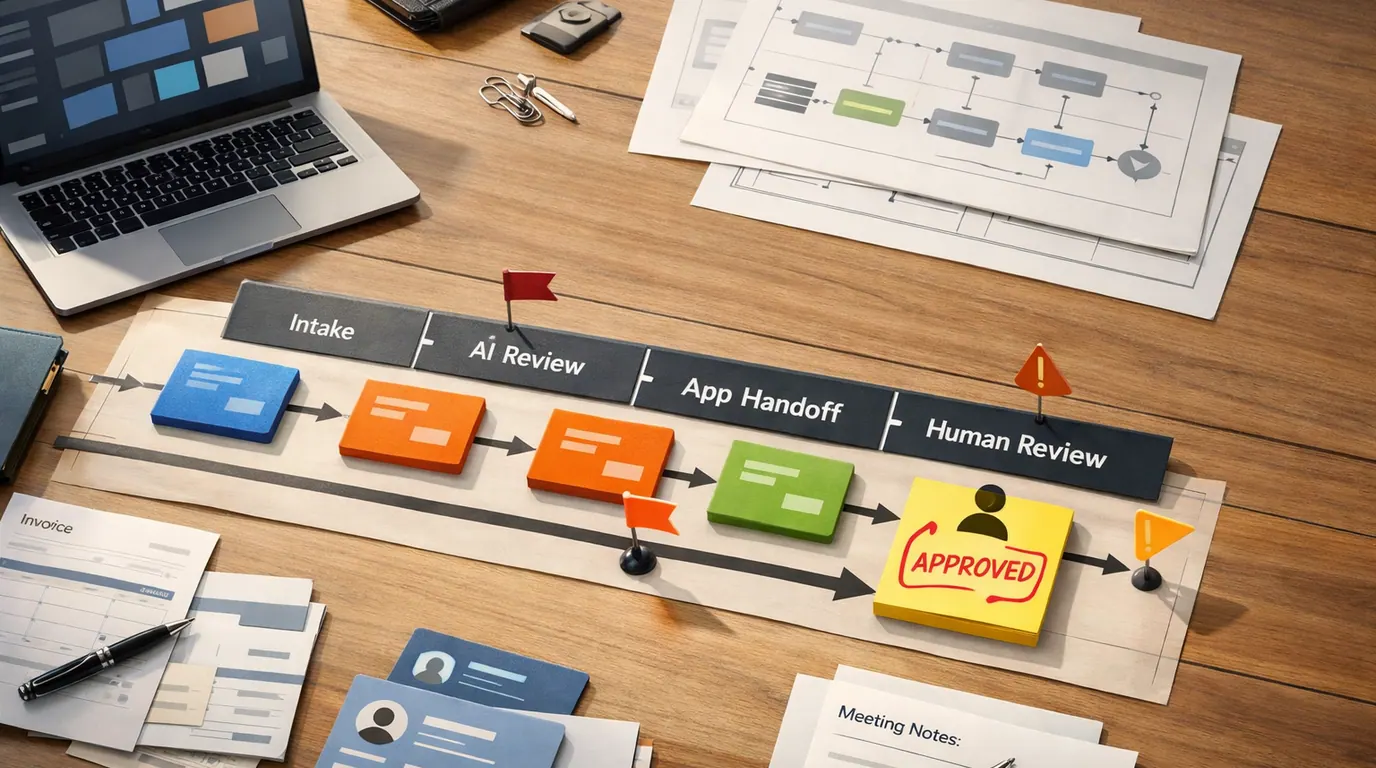
Human review point: productivity AI can touch private conversations, customer records, employee data, and business commitments. For operational rollouts, the ownership model in AI Workflow Automation and AI Productivity Tools for Teams matters more than the novelty of the tool.
Compare Free Plans by Workflow Risk
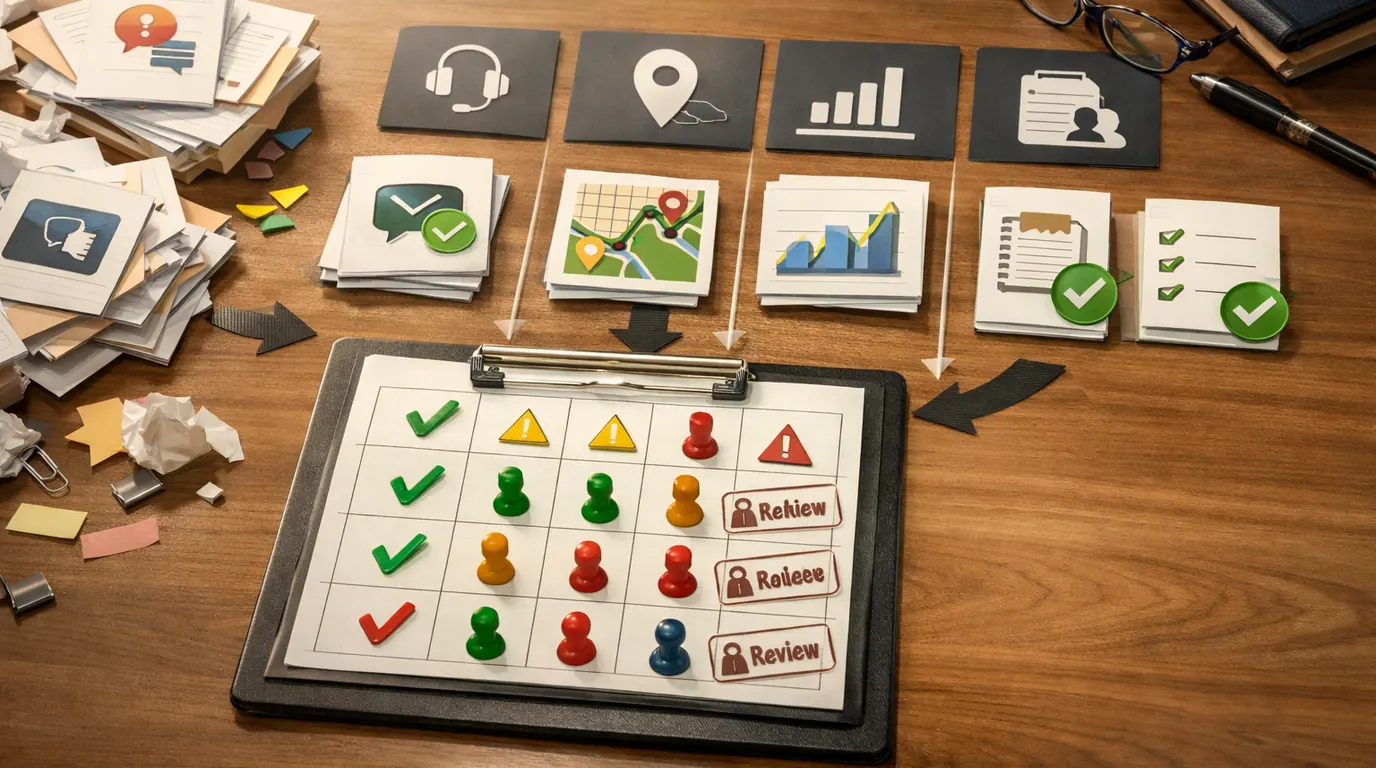
Free plans are not equal. A free chatbot used for brainstorming carries less risk than a free automation that edits a CRM, a free voice tool used in an ad, or a free document tool that stores confidential files.
| Workflow | Good free-plan use | Watch for | Human check |
|---|---|---|---|
| Writing and brainstorming | Draft outlines, rewrite rough notes, generate options, prepare questions | Unsupported facts, bland tone, accidental plagiarism, over-polished claims | Check facts, voice, originality, and whether the output says more than you know. |
| Research and documents | Summarize sources, compare PDFs, create reading questions, find source trails | Broken citations, outdated pages, misread tables, missing context | Open the source, inspect dates, quote only original material, and keep notes. |
| Design and media | Mock up social posts, slide drafts, diagrams, B-roll tests, voice demos | Watermarks, rights, brand drift, likeness issues, export limits | Review brand fit, usage terms, accessibility, and final production quality. |
| Coding and prototypes | Create a clickable draft, explain code, scaffold a small feature, test an idea | Security holes, messy dependencies, hidden billing, inaccessible UI | Review code, data handling, mobile states, errors, auth, and deployment settings. |
| Meetings and automation | Summarize calls, extract tasks, route form data, draft follow-ups | Consent issues, transcript errors, duplicate actions, private data movement | Confirm consent, inspect summaries, monitor automations, and approve sends. |
The safest free AI stack starts with low-risk drafting and research orientation. Add app connections only after you know who owns failures.
Build a Small Free AI Stack
Do not sign up for twelve tools on day one. Build a small stack around one repeated workflow and replace pieces only when they fail a real job.
Works Well When
- One general assistant for drafts, explanations, and structured thinking.
- One research or document tool for source-grounded questions.
- One creation tool for the asset type you actually publish.
- One automation or meeting tool only if the handoff repeats every week.
- One review checklist that names what a person must approve.
Watch Out For
- Five chatbots that do the same job with different interfaces.
- A document tool filled with private files no one approved.
- Creative tools used for final brand assets without rights review.
- Automations that move data but have no owner, log, or rollback plan.
- Paid upgrades triggered by curiosity instead of a blocked workflow.
For most readers, the starter stack is enough:
- General work: ChatGPT, Claude, or Gemini for drafting, planning, and explanation.
- Research: Perplexity for source discovery plus NotebookLM or Humata for your own files.
- Creation: Canva for visuals, Gamma or Napkin for presentations and diagrams, Runway or ElevenLabs only if media is part of the job.
- Build: Replit or v0 for prototypes you are willing to inspect and revise.
- Workflow: Fathom for meeting capture and Zapier for simple, supervised handoffs.
That is enough free AI software to cover most first experiments without losing control of files, exports, or review.
Pricing and Free-Plan Caveats to Check
People sometimes type searches like “free free AI tools” because they are trying to avoid a fake free trial that asks for a card, blocks exports, or becomes useless after one prompt. The practical answer is to check the limit before the task, not after you have built the workflow.
Before relying on any free tool, check:
- Usage limits: messages, credits, pages, recordings, minutes, cards, files, or automations.
- Refresh rules: whether credits reset daily, monthly, one time only, or not at all.
- Output limits: watermarks, export formats, resolution, file size, branding, or commercial use.
- Data terms: storage, deletion, training use, private mode, region, and team admin controls.
- Integration limits: premium apps, multi-step workflows, polling frequency, API access, and deployment costs.
- Upgrade trigger: the exact point where paying would remove a real bottleneck instead of feeding curiosity.
The phrase “free AI platforms” can mean very different things: a free consumer chatbot, a developer sandbox, a freemium design suite, a meeting recorder, a local app, or a cloud platform with free monthly usage. Compare the plan type before comparing features.
Limitations and Human Review Points
Free tools are most dangerous when they make unfinished work look finished. A clean slide, fluent paragraph, tidy transcript, or working prototype can still be wrong.
Keep human review for:
- Facts and sources: dates, statistics, legal claims, medical claims, financial claims, citations, and quotes.
- Customer-facing work: emails, proposals, support replies, ads, public posts, and sales follow-ups.
- Private data: employee details, client records, student data, contracts, unpublished research, credentials, and account information.
- Creative rights: generated images, voices, music, likenesses, brand assets, and anything used commercially.
- Automation actions: CRM updates, invoices, refunds, permissions, outreach, ticket routing, and messages sent from your account.
- Code: authentication, validation, dependency quality, secrets, accessibility, performance, logs, and error states.
If the review cost is higher than doing the work yourself, the tool is not free in any practical sense.
A 30-Minute Next-Action Framework
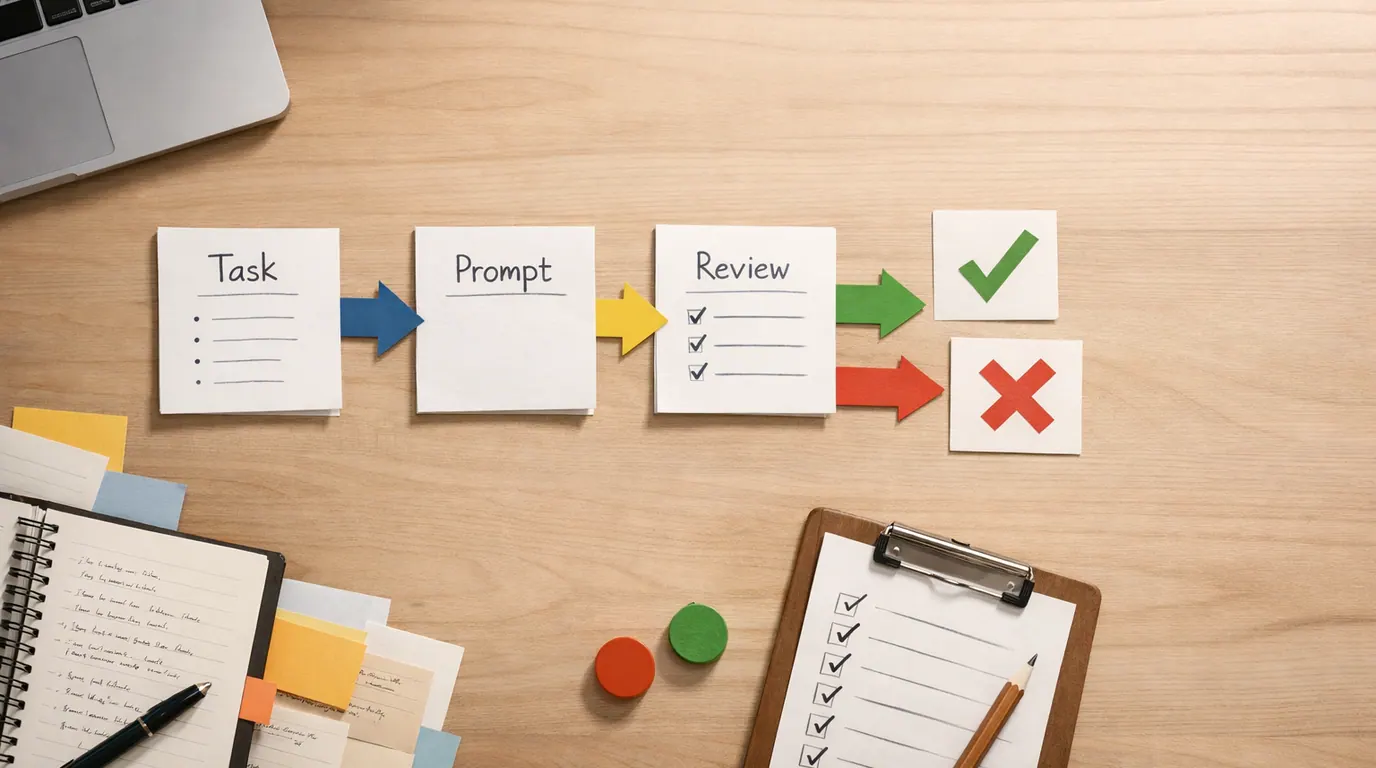
Use this framework before you create accounts everywhere:
- Choose one task you do every week.
- Define the output you want: draft, source list, summary, graphic, prototype, transcript, task, or presentation.
- Pick two tools from the quick-picks table that fit that exact job.
- Run the same low-risk input through both tools.
- Score the output on usefulness, edit time, source visibility, export quality, and risk.
- Keep the tool that reduces review work, not the one with the most impressive demo.
- Write down the paid-plan trigger: the specific limit that would justify upgrading.
Example: if you need a weekly client update, test ChatGPT or Claude for the draft, Perplexity for source checks, Canva or Gamma for a visual version, and Grammarly for final polish. If the task is a meeting-heavy sales process, test Fathom first and add Zapier only after the summary format is reliable.
That is the practical difference between collecting AI tools and building a workflow.
The Bottom Line
The best free AI tools are not the ones with the longest feature lists. They are the ones that finish one real job with an output you can review.
Start with a small stack: one general assistant, one research or document tool, one creation tool, and one workflow tool only if the handoff repeats. Check free-plan limits before you depend on them, keep sensitive data out of unapproved tools, and upgrade only when a free limit blocks work you already know is worth repeating.
Frequently asked questions
What are the best free AI tools?
The best free AI tools depend on the job. Start with ChatGPT, Claude, or Gemini for everyday assistant work; Perplexity for source-linked research; NotebookLM or Humata for documents; Canva for design; Replit or v0 for prototypes; Fathom for meeting notes; and Zapier for simple automation.
Are free AI tools really free?
Many free AI tools are genuinely usable, but free usually means limits: fewer messages, smaller files, limited credits, watermarks, slower queues, basic models, or weaker team controls. Treat a free plan as a trial of workflow fit, then check current vendor pricing before relying on it for weekly work.
What free AI tool should I use for research?
Use Perplexity when you need a quick source trail, NotebookLM when you want answers grounded in documents you upload, and Humata when the job is asking questions of PDFs. Still open the sources yourself. AI research summaries are useful orientation, not final evidence.
Which free AI tools are useful for small business workflows?
For a small business, the most useful free starting points are often Canva for quick assets, Grammarly for editing, Fathom for meeting notes, Gamma or Napkin for presentations, and Zapier for light automation. Keep customer data, pricing promises, legal terms, and final sends under human review.
Can free AI software replace paid AI tools?
Free AI software can replace paid tools for occasional drafting, brainstorming, research orientation, prototypes, and simple content assets. It usually falls short when you need higher limits, private workspaces, admin controls, exports, brand governance, commercial rights, or reliable integrations.
What should I check before uploading files to a free AI platform?
Check whether the tool stores files, uses prompts for training, allows deletion, supports private workspaces, and has terms your school or company accepts. Do not upload client records, HR data, contracts, unpublished research, medical details, or credentials to a free AI platform without approval.