If you searched for “how to use ai for research,” the useful answer is not “let AI do the research.” The useful answer is a workflow that lets AI speed up the parts that are easy to review: question framing, keyword expansion, source discovery, summary, comparison, and draft feedback.
AI is weakest when it becomes the authority. It can miss important literature, invent citations, blur source boundaries, or produce a confident summary that hides uncertainty. The researcher still has to choose the question, inspect the source, evaluate methods, interpret evidence, and decide what the work can honestly claim.
Treat this as a how to use AI for guide for everyday research: a class paper, a market scan, a policy brief, a literature review, a product memo, a grant background section, or a personal decision that needs more than a quick search.
Use AI to sharpen the question, search terms, source types, and unknowns before asking for summaries.
Every important claim should point back to a source you opened, read, and understood.
Check citations, quotes, methods, privacy, bias, and whether the final conclusion is yours.
What AI Can and Cannot Do in Research
AI can help with research by turning a messy starting point into a clearer path. It can suggest related keywords, propose subquestions, summarize a source you provide, compare viewpoints, classify notes, draft an outline, or create a checklist for gaps. That is useful because early research often suffers from too many tabs, vague questions, and scattered notes.
It cannot guarantee truth. General chatbots may not have access to paywalled papers, may misread source material, and may fabricate references. Research-focused tools can still miss important databases or field-specific context. Library guides from Georgetown University and The Chicago School Library make the same practical point: AI research tools are supplements, not replacements for database searching and source verification.
A practical how to use AI for strategy starts with three decisions:
- What kind of research is this? A quick business scan, academic literature review, user interview synthesis, policy memo, technical investigation, or school assignment has different evidence standards.
- What sources count? Peer-reviewed papers, official reports, primary data, interviews, books, company filings, standards, library databases, or credible journalism may matter more than an AI summary.
- What cannot be uploaded? Unpublished research, participant data, internal files, private health details, student records, customer records, and proprietary work may need approved systems or redaction.
The AI Research Workflow to Use First
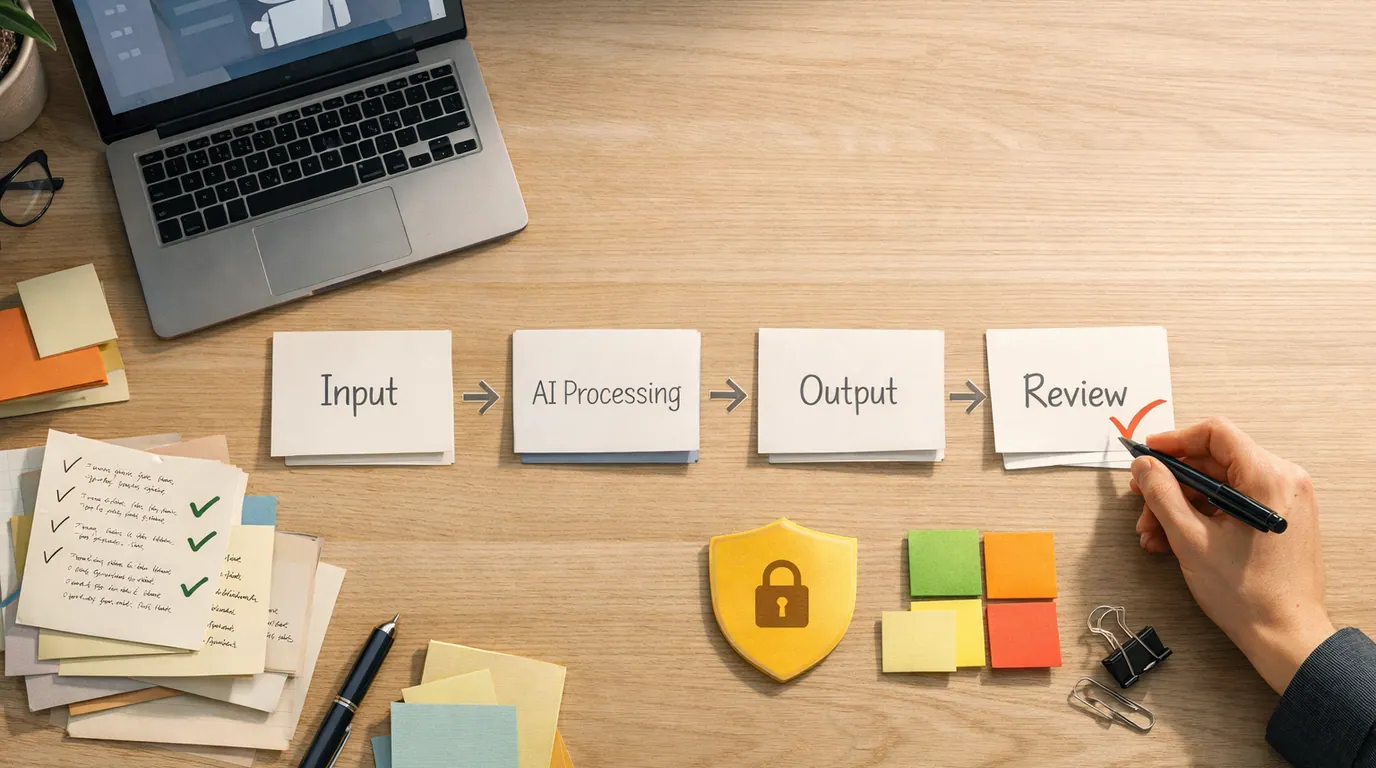
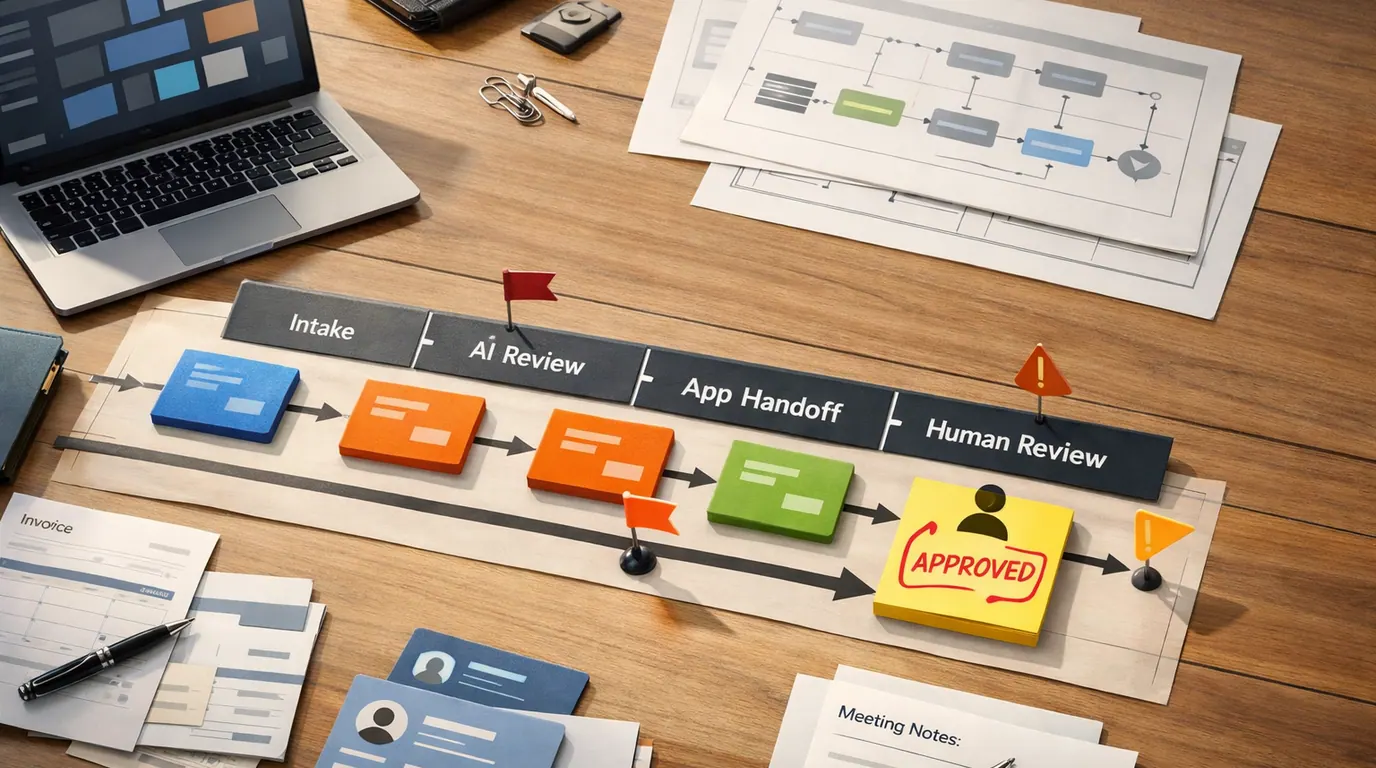
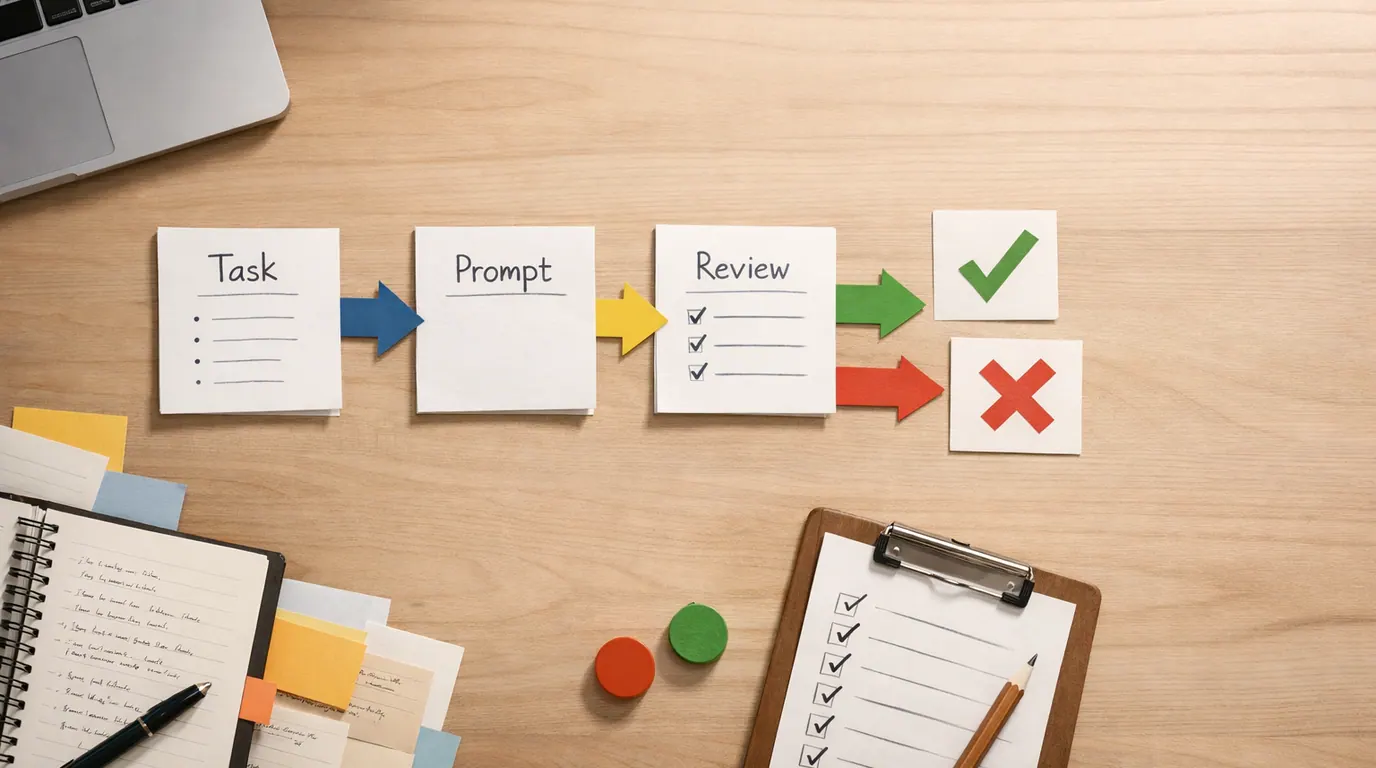
The safest how to use AI for workflow is a loop: define the question, map sources, read originals, extract evidence, synthesize patterns, and review claims. Do not start with “write my research.” Start with the next research move you can inspect.
| Research stage | How AI helps | Example request | Human review point |
|---|---|---|---|
| Frame the question | Turns a broad topic into researchable subquestions, assumptions, and search angles. | I am researching remote work and early-career employees. Give me 10 sharper research questions, grouped by productivity, mentoring, equity, and measurement. | Choose the question based on assignment, audience, scope, and what evidence you can actually access. |
| Build search terms | Suggests synonyms, related concepts, Boolean terms, database keywords, and excluded meanings. | Generate search terms for AI use in academic writing, including synonyms, narrower terms, and phrases to exclude. | Test terms in library databases or search engines and keep the ones that return relevant sources. |
| Find source leads | Points you toward paper titles, authors, organizations, reports, or databases to investigate. | List source types I should check for this policy brief: government data, academic papers, standards, and opposing viewpoints. | Open the original source, verify it exists, inspect the author, date, method, and publication context. |
| Summarize material | Condenses a source you provide into claims, evidence, methods, limitations, and useful quotes to check. | Summarize this article into claim, evidence, method, limitation, and questions I should verify. Do not add outside facts. | Compare the summary to the original, especially numbers, definitions, quotes, and conclusions. |
| Synthesize notes | Groups notes by theme, disagreement, methods, population, timeline, or evidence strength. | Cluster these source notes into themes and tensions. Separate what the sources show from what they only suggest. | Look for missing viewpoints, weak methods, overgeneralization, and source imbalance. |
| Draft and revise | Creates an outline, checks logic, identifies unsupported claims, or reviews a draft against criteria. | Review this draft for unsupported claims and places where I need a stronger citation. Do not rewrite it. | Keep the argument, wording, citation choices, and final judgment under your control. |
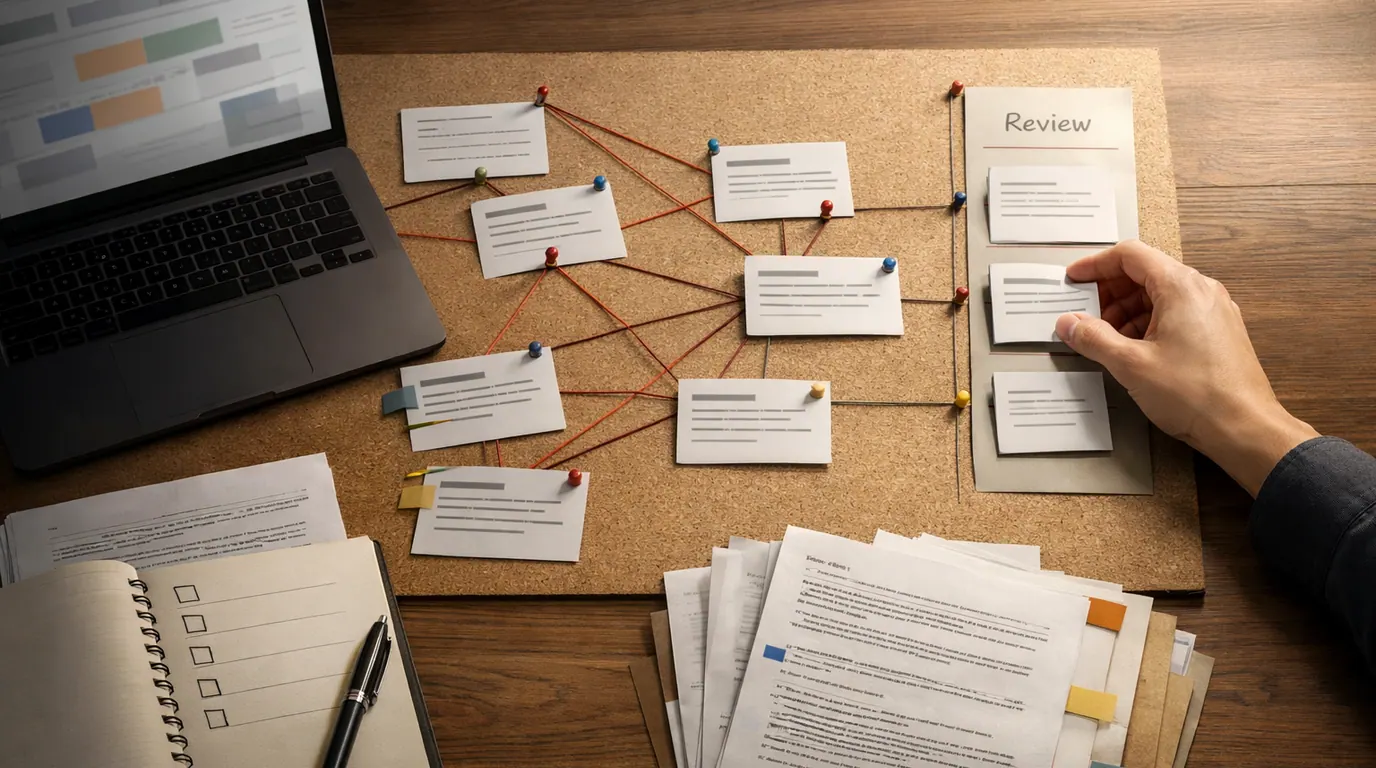
This workflow works for academic and professional research because each AI output is reviewable. It produces a better question, a search plan, a source note, a theme table, or a critique, not an untraceable answer.
For prompt structure, adapt the task, context, criteria, format, and review pattern from our guide to writing better AI prompts. Research prompts need one extra instruction: tell the model what counts as evidence and what it must not invent.
How to Use AI for Research Examples
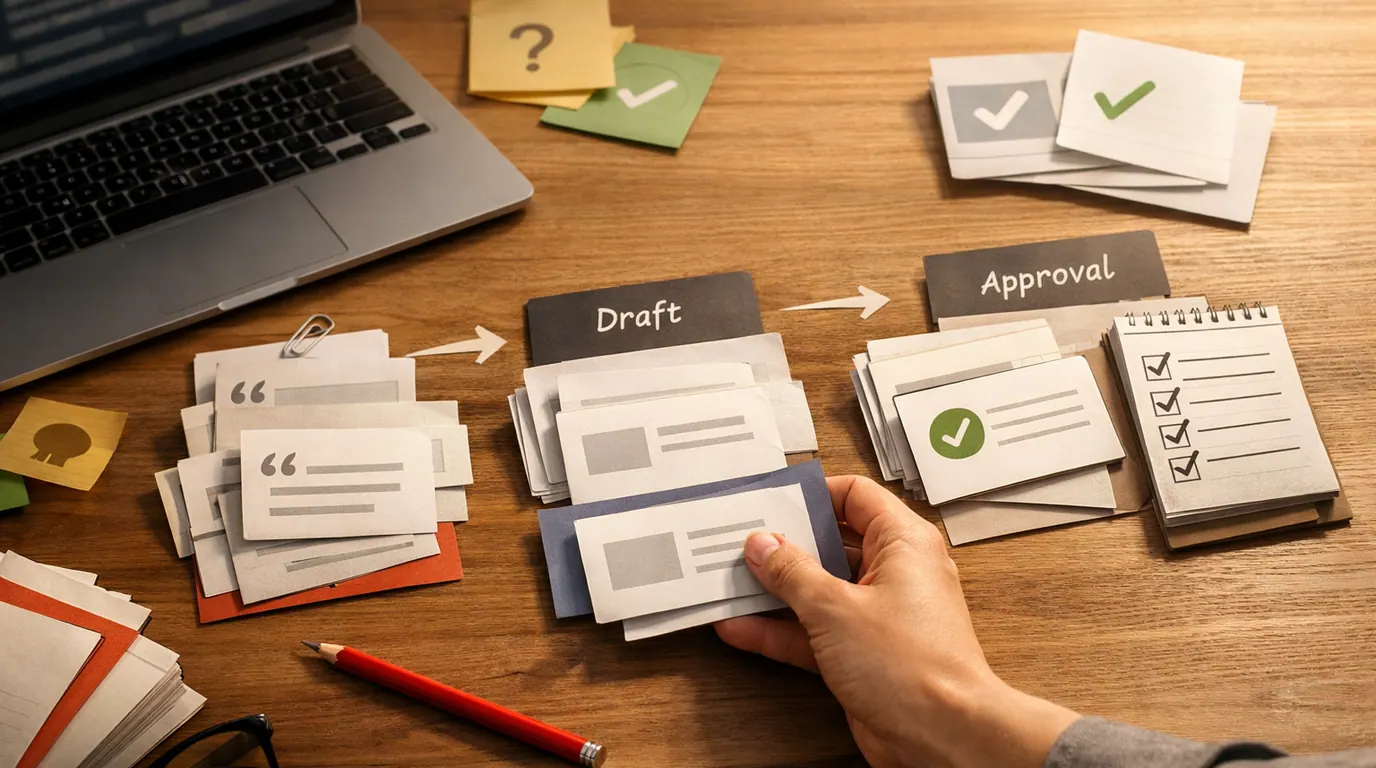
The easiest way to learn how to use AI for examples is to compare weak and stronger research moves. The better version asks AI to prepare the next human action.
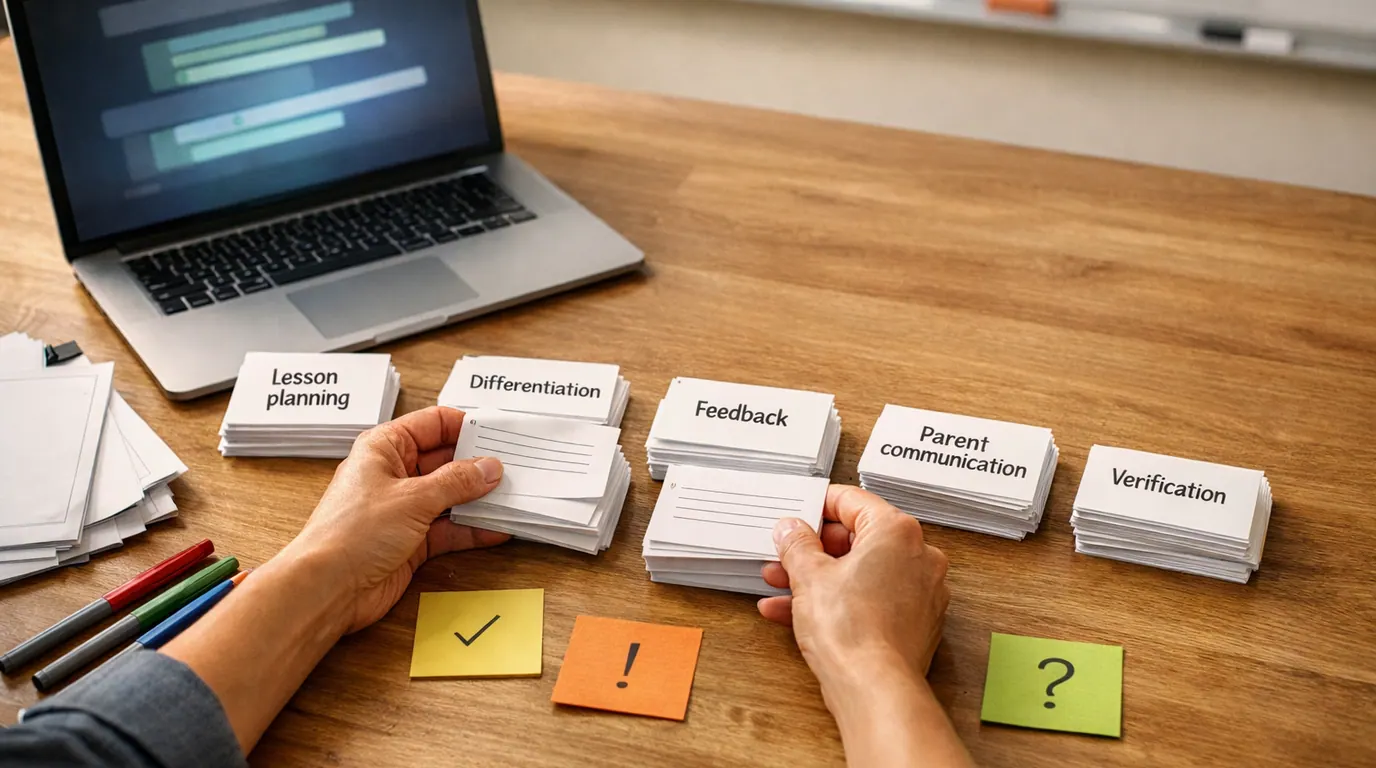
If your real question is how to use AI for use cases, start with the research stage: question framing, source discovery, note synthesis, draft review, or evidence checking. The examples below show where AI fits without taking over the final judgment.
Class paper
Weak use: “Write a paper about social media and anxiety.”
Better use: ask AI to narrow the topic into possible research questions, generate search terms, and create a source evaluation table. Then use your library database to find sources, read the papers yourself, and ask AI to critique your outline for unsupported claims.
Literature review
Weak use: “Summarize the literature on burnout.”
Better use: ask AI for keyword families, inclusion and exclusion criteria, and a matrix template. After you collect papers from databases, paste your own abstract notes and ask AI to group them by method, population, finding, limitation, and disagreement. The review still depends on your reading and judgment.
Market research brief
Weak use: “Tell me the market for team productivity apps.”
Better use: ask AI to design a research plan: competitor categories, buyer questions, pricing pages to inspect, review sites to compare, and claims that need evidence. Then collect primary pages and customer language yourself. AI can help synthesize notes, but it should not invent market size or customer proof.
User interviews
Weak use: “Analyze these raw interview transcripts” in an unapproved public tool.
Better use: check consent and privacy rules first. If allowed, remove identifiers and ask AI to classify excerpts by pain point, trigger, workaround, desired outcome, and quote candidate. Then reread the transcript before deciding which themes are real. The use of AI should be disclosed if your research protocol, institution, or publisher requires it.
Technical investigation
Weak use: “Which database should we choose?”
Better use: ask AI to create an evaluation rubric: workload, consistency needs, query pattern, team skills, hosting constraints, failure modes, and migration risk. Use AI to compare your notes, not to make the architecture decision. For operational workflows beyond research, the same handoff logic appears in our AI workflow automation guide.
Use AI Tools Without Letting Them Become Your Source
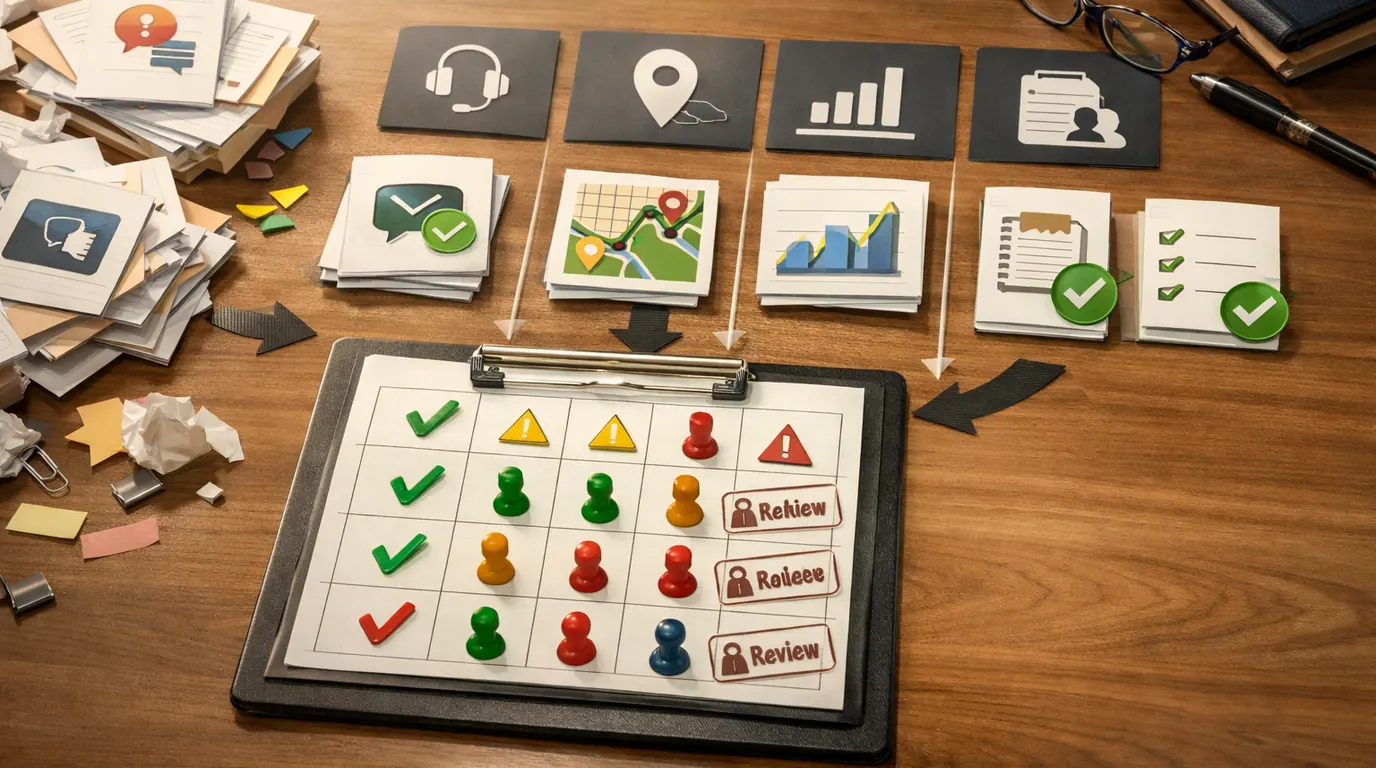
You can use AI tools in research, but the tool category matters less than the evidence trail. A general chatbot, a source-grounded notebook, an academic search assistant, a transcription tool, and a spreadsheet assistant each solve a different problem.
| Tool pattern | Good research use | Do not use it for | Human check |
|---|---|---|---|
| General chatbot | Brainstorming questions, explaining concepts, drafting search strings, critiquing outlines, and turning notes into checklists. | Final citations, unsourced claims, confidential data, or discipline-specific authority. | Ask for assumptions and verify every factual claim in an original source. |
| Source-grounded notebook | Summarizing and querying a set of PDFs, notes, transcripts, or reports you provide. | Replacing close reading or assuming your uploaded material is complete. | Open the cited source passage and confirm the summary did not distort it. |
| Academic discovery tool | Finding papers, related work, abstracts, author networks, and possible keywords for database searches. | A complete literature review or final source selection. | Use library databases, read full papers, and check methods before citing. |
| Transcription or interview tool | Turning recordings into searchable notes, speaker turns, and first-pass themes. | Sensitive participant data without consent, approval, or retention controls. | Correct transcript errors and follow your research privacy protocol. |
| Spreadsheet or analysis assistant | Cleaning datasets, suggesting analysis steps, explaining formulas, and creating QA checks. | Unreviewed statistical conclusions or final charts that drive decisions. | Validate formulas, sample data, assumptions, outliers, and interpretation. |
If you are choosing tools for school research, our AI tools for students shortlist covers study notebooks, research discovery tools, writing feedback, and privacy caveats. The broader rule is the same for students and professionals: choose the tool by research job, not by hype.
Duke myResearchPath emphasizes verification, privacy, and responsibility when researchers use generative AI. The University of Iowa also warns researchers to check whether an AI tool is approved for the data they want to enter. Those cautions matter more than the product name.
Copyable AI Research Template
Use this how to use AI for template when you need a structured research session. Replace the bracketed sections with your topic, audience, source rules, and review standard.
Act as a research assistant, not as the final authority.

Research topic:
[topic]

Audience and purpose:
[class paper, executive brief, literature review, product memo, policy note, grant background, personal decision]

Research question I am considering:
[draft question]

Allowed sources:
[peer-reviewed papers, official reports, library databases, primary interviews, public company pages, standards, credible journalism, provided notes]

Sources or data you must not invent or assume:
[citations, statistics, quotes, private data, unpublished findings, participant details, internal documents]

Help me with:
1. Sharpening the research question
2. Suggesting search terms and source types
3. Listing viewpoints or methods I should compare
4. Creating a source evaluation table
5. Identifying likely gaps, risks, and verification steps

Return the output as:
- Refined question options
- Search terms
- Source map
- Evidence checklist
- Claims that need verification
- Next three actions

Rules:
- Do not fabricate citations, titles, authors, quotes, or statistics.
- Mark uncertainty clearly.
- Separate facts from hypotheses.
- Tell me which claims require original-source verification.
Here is a shorter prompt for reading a source you already have:
Summarize the source below for research use. Use only the provided text.

Return a table with: main claim, evidence, method or source basis, limitation, useful quote to verify, and follow-up question.

After the table, list any claims that should not be trusted until I check the original source.

Source:
[paste permitted excerpt or notes]
The template is deliberately strict because research errors often begin as small conveniences. A model guesses a date, smooths over a limitation, or supplies a citation-like phrase. Good prompts make that behavior easier to catch.
Human Review, Privacy, and Citation Rules
AI research output needs review because research is not only information gathering. It is a chain of accountability: who asked the question, where the evidence came from, how the method works, what the limitations are, and why the conclusion follows.
Use this how to use AI for checklist before you rely on any AI-assisted research output:
- Source exists: Can you open the cited source through a publisher, library, official website, database, DOI record, or archive?
- Source says it: Does the original source actually support the claim, or did AI overstate the finding?
- Method fits: Was the evidence based on experiments, interviews, surveys, administrative data, theory, commentary, or another method?
- Scope is clear: Does the claim apply to your population, time period, market, country, discipline, or use case?
- Opposing evidence was checked: Did you search for disagreement, null findings, critiques, or newer work?
- Private data is protected: Did you avoid unapproved uploads of identifiable, confidential, proprietary, or unpublished material?
- AI use is disclosed when required: Did your class, journal, client, employer, or research protocol require a note about AI assistance?
APA guidance on AI in research and writing stresses human oversight and disclosure where required. The UW Graduate School similarly frames AI use as a responsible research practice question, not just a productivity trick. If privacy is the main concern, pair this article with our guide to AI privacy concerns.
Works Well When
- Use AI to brainstorm research questions and keywords
- Use AI to organize notes into themes you can inspect
- Use AI to summarize sources you provide and can verify
- Use AI to critique unsupported claims in your own draft
- Use AI to create a repeatable source review checklist
Watch Out For
- Do not cite sources you have not opened
- Do not upload sensitive data to unapproved tools
- Do not let AI decide the meaning of ambiguous evidence
- Do not treat a fluent answer as a literature review
- Do not submit mostly AI-generated research as your own work
A 30-Minute Next-Action Framework
When you are stuck, do not ask AI to finish the project. Ask it to help you take the next research step. This 30-minute loop is small enough for a class assignment, business memo, or early literature review.
- Minutes 0-5: state the question. Write the current research question, audience, deadline, and what kind of evidence would count.
- Minutes 5-10: ask for a source map. Have AI suggest source types, search terms, and viewpoints to compare. Remove anything outside scope.
- Minutes 10-20: collect real sources. Search databases, official sites, reports, or primary material yourself. Save links, metadata, and notes.
- Minutes 20-25: ask for a review table. Paste permitted notes or excerpts and ask AI to organize claims, evidence, methods, limitations, and open questions.
- Minutes 25-30: choose the next human action. Read the most important source, refine the question, check a claim, find opposing evidence, or draft a paragraph with citations you verified.
This is the practical answer to “How to use AI for research”: use AI to reduce friction between human research moves. It should help you know what to read, what to question, what to verify, and what to do next.
The Bottom Line
AI can make research faster when it produces reviewable artifacts: search terms, source maps, summaries, theme tables, critique notes, and checklists. It becomes risky when it replaces source reading, citation verification, privacy judgment, or final interpretation.
The best use of AI is as a research assistant that keeps asking better questions. The final evidence trail still needs a person who can open the source, understand the method, protect the data, and stand behind the claim.
Frequently asked questions
Can I use AI for research?
Yes, if the tool is allowed for your setting and you keep control of the research judgment. Use AI for brainstorming questions, finding source leads, summarizing material you can verify, organizing notes, and drafting review checklists. Do not treat AI output as evidence unless you trace it back to a reliable original source.
What is the best way to use AI for research?
Start with a clear question, then ask AI to help map keywords, source types, competing viewpoints, and gaps. Use it to create a reading plan and summarize sources, but verify names, dates, methods, quotes, and conclusions against the original material before you cite or publish anything.
Can AI replace a literature review?
No. AI can accelerate parts of a literature review by suggesting search terms, surfacing papers, extracting themes, and comparing abstracts. It cannot guarantee full database coverage, judge field-specific importance, or replace reading the core sources. Use library databases, expert judgment, and citation checks alongside AI.
What research tasks should not be fully delegated to AI?
Do not fully delegate final claims, citations, methodology decisions, data interpretation, peer-review responses, ethical judgment, or work involving confidential participants. AI can prepare drafts and questions, but a researcher should own the evidence trail, limitations, privacy choices, and final argument.
How do I stop AI from inventing sources?
Ask for source leads, not finished citations, and require links or identifiers you can open. Then search the title, author, DOI, publisher, or database record yourself. If a source cannot be found in a reliable catalog or publisher page, remove it. Never cite a paper, statistic, or quote only because a chatbot produced it.
Is it safe to upload research data to AI tools?
Only upload data that your policy, consent language, contract, and privacy review allow. Avoid putting private health information, interview transcripts, unpublished findings, student records, client files, proprietary data, or identifiable participant details into unapproved tools. When unsure, anonymize, summarize, or use an approved system.