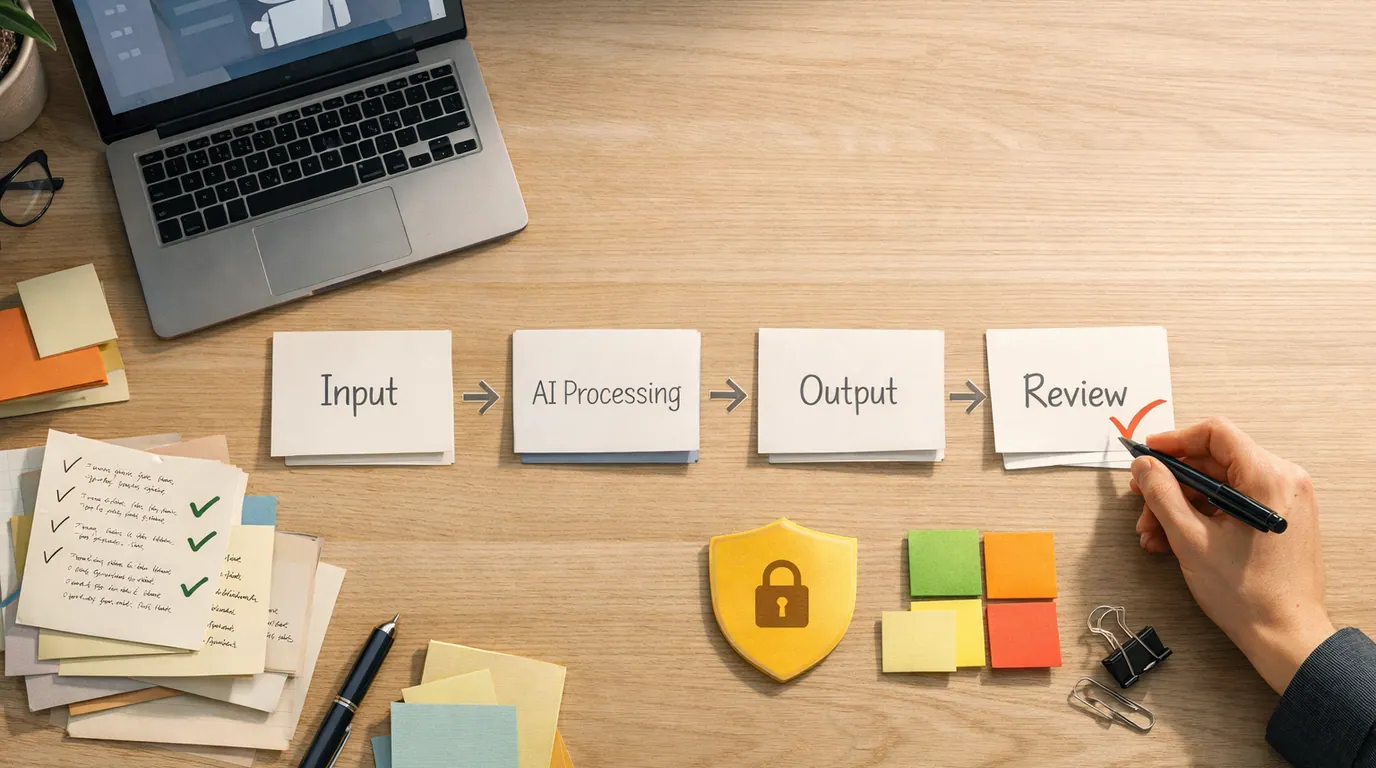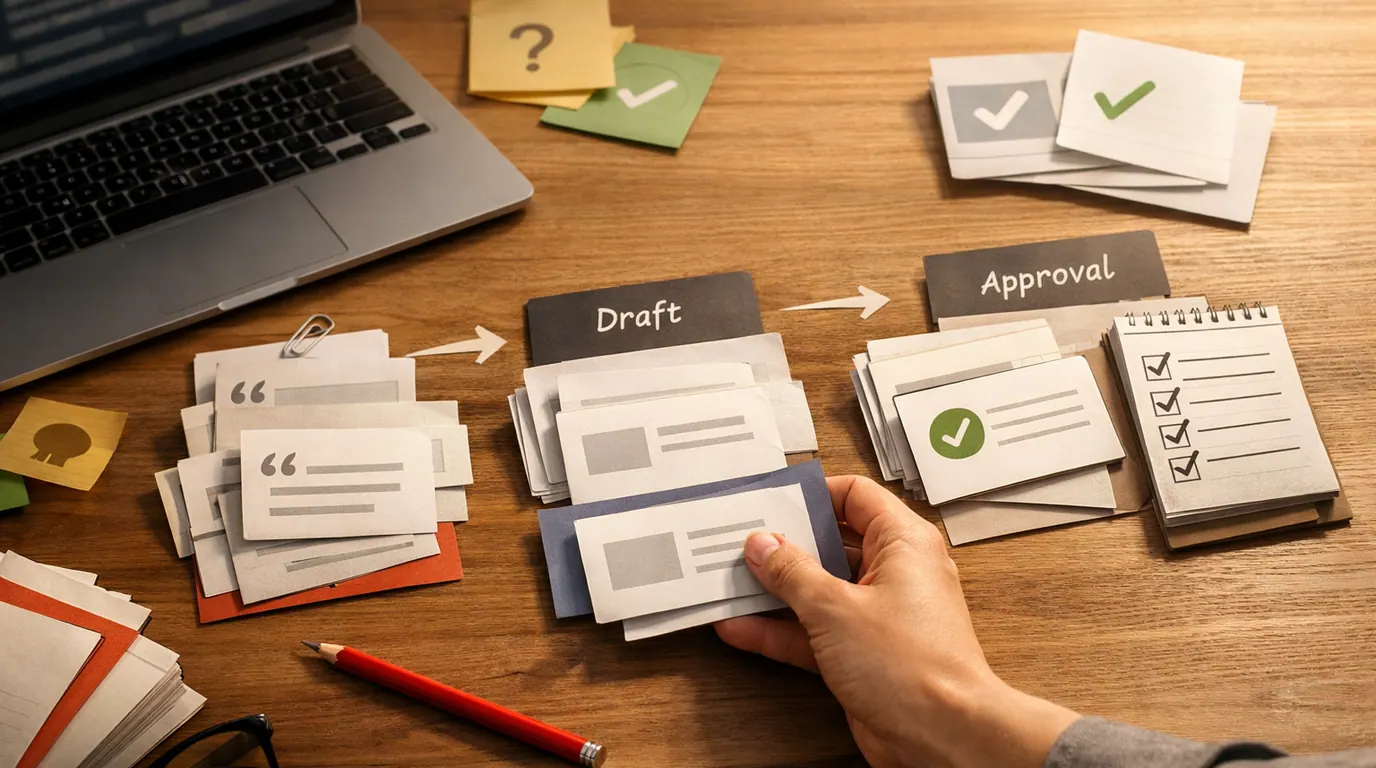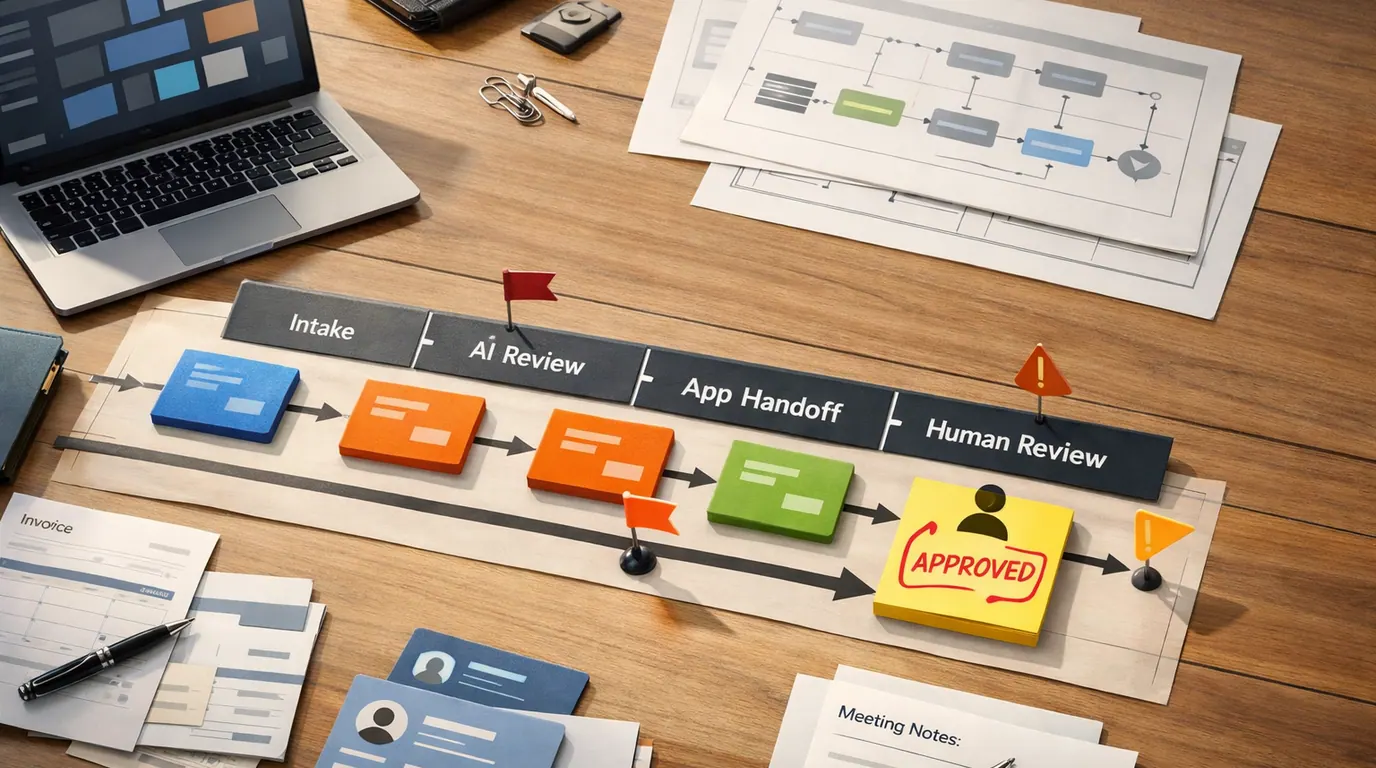
If you searched for “ai lead generation”, the useful answer is not “send more cold emails with a bot.” The useful answer is a practical way to find better-fit prospects, notice buying signals earlier, qualify inbound interest faster, and route the right next action to a person who can actually close the loop.
AI lead generation can help across the funnel: prospect research, contact enrichment, visitor capture, predictive scoring, personalized outreach, lead routing, meeting booking, and CRM cleanup. It can also create a mess if the team automates bad lists, over-trusts intent scores, or lets generated outreach ship without review.
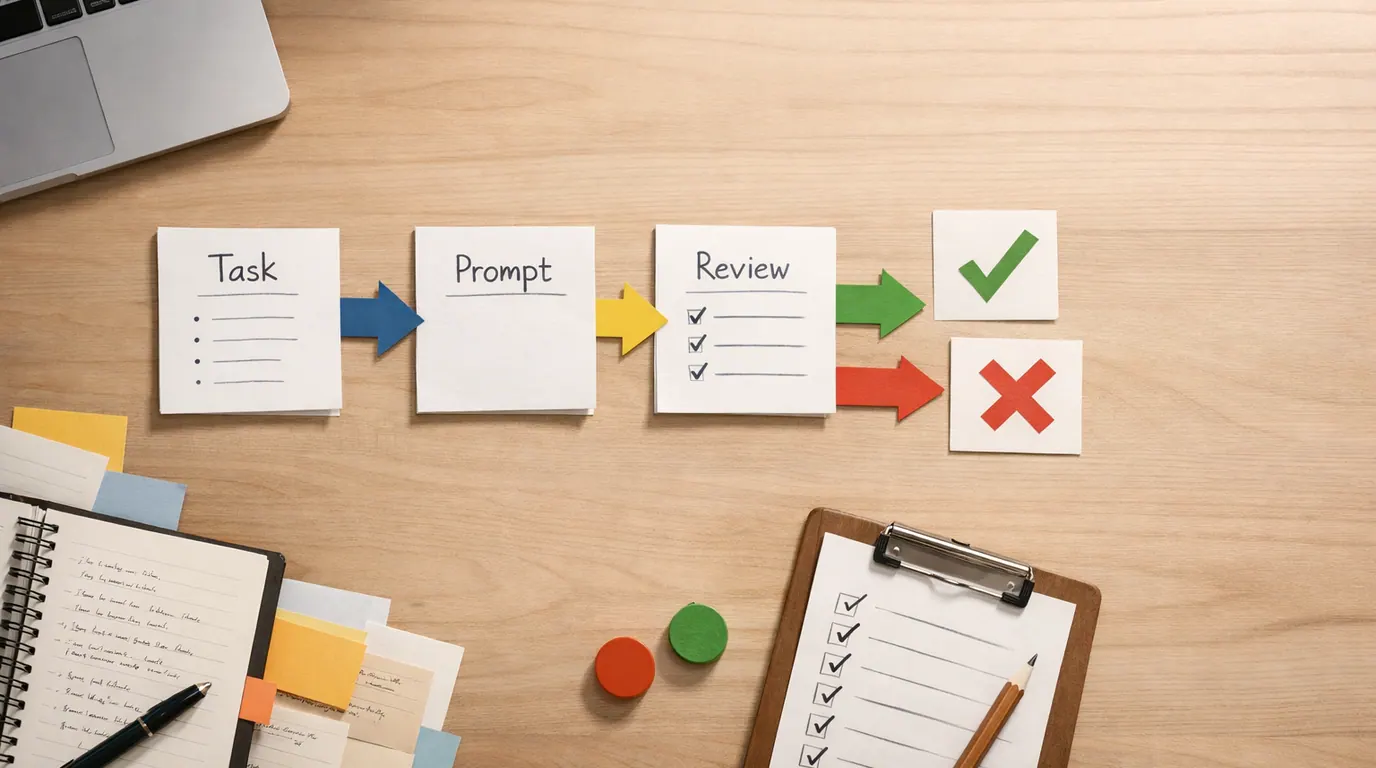
This AI lead generation guide is written for sales, marketing, and founder-led teams that want a usable next step. Start with the bottleneck, pick a small workflow, choose a tool by job, and define the human review point before you scale.
Choose lead sourcing, capture, enrichment, scoring, outreach, routing, or follow-up before shopping for software.
The output should be a lead, reason, next action, owner, and review trail, not just a larger contact list.
People still approve claims, targeting rules, sensitive outreach, data use, and final qualification decisions.
What AI Lead Generation Actually Does
At its simplest, AI lead generation uses AI systems to help a business identify, qualify, prioritize, and engage potential customers. That can mean machine learning models that score leads, natural language tools that draft outreach, enrichment systems that fill in missing account data, or AI agents that qualify visitors through chat, email, phone, or CRM workflows.
The important shift is from static lists to signal-based work. A traditional process might say, “Here are 2,000 companies in this industry.” An AI-assisted process can ask a better question: “Which accounts match our ideal customer profile, show a relevant signal, have a reachable buyer, and deserve a human follow-up today?”
Use AI for lead generation when at least one of these problems is visible:
- Fit is unclear: reps spend time on companies that were never likely to buy.
- Intent is buried: website visits, content engagement, product actions, or third-party signals do not change priority.
- Research is slow: sellers manually look up company size, role, tech stack, funding, hiring, or recent news.
- Inbound gets cold: forms, demo requests, chats, and event scans wait too long before routing.
- Outreach is generic: personalization is either manual and slow, or automated and obviously thin.
- CRM data is weak: duplicates, missing fields, stale accounts, and unclear lead sources make scoring unreliable.
Quick Picks: Best AI Lead Generation Tools by Job
If you want a best AI lead generation shortlist, start with the workflow stage instead of the broadest feature list. The right tool for website capture is not always the right tool for cold-email infrastructure, CRM scoring, or marketing data cleanup.
| Pick | Best for | Why it fits | Limit | Pricing/free-plan note |
|---|---|---|---|---|
| Apollo | B2B prospecting, data enrichment, inbound routing, and multichannel outreach | Apollo combines lead data, targeting filters, enrichment, sequencing, AI research, and workflow automation in one sales platform. | Credit limits, data quality, and campaign governance still need review. Do not assume every enriched contact is accurate. | Apollo's pricing page mentions trials and a free forever Starter downgrade option. Check current credits, sending limits, and plan terms. |
| Instantly | Cold-email outreach, deliverability workflows, lead database work, and AI sales agents | Instantly is built around finding leads, launching campaigns, personalizing outreach, routing replies, and managing inbox infrastructure. | High-volume email can damage sender reputation if lists, consent, messaging, and domain setup are weak. | Instantly separates outreach, leads, and CRM pricing. Check current plan limits, credits, warmup rules, and add-ons before scaling. |
| Seamless.AI | Real-time B2B contact discovery and list building | Seamless.AI is a fit when the primary job is finding and validating contacts for target accounts before outreach. | Contact data still needs verification, suppression rules, and duplicate checks before it enters sales engagement. | Seamless.AI states that it is free for up to 50 credits, then uses multiple pricing options. Confirm current packages with the vendor. |
| monday CRM | Lead management, routing, CRM automation, meeting notes, and team handoff | monday CRM fits teams that want lead capture, qualification, prioritization, reminders, follow-ups, and pipeline work inside a configurable CRM. | It is weaker if your real problem is net-new contact data. CRM automation cannot fix a poor ideal customer profile. | monday CRM advertises full access with no credit card. Check current CRM pricing, AI packaging, and seat requirements. |
| Salesforce Sales AI | Enterprise CRM teams that already run on Sales Cloud | Salesforce fits when lead scoring, prospecting, engagement, routing, conversation insights, and pipeline updates need to stay inside the CRM. | Setup, data model quality, permissions, and admin ownership matter. Enterprise AI inside a messy CRM will still produce messy work. | Salesforce publishes Sales Cloud pricing and says Sales Cloud Unlimited includes its Sales AI products. Verify edition, add-ons, and current terms. |
| Jotform AI Agents | Website, form, phone, and chat lead capture for lightweight qualification | Jotform fits teams that want conversational lead capture, templates, qualification questions, CRM handoff, and follow-up without building a custom agent. | A form agent is only as good as its qualification script and handoff rule. Review answers before treating them as sales-ready. | Check current Jotform plan limits, agent usage, channels, integrations, and compliance settings before using it on live lead flows. |
| Leadzen.ai | Meeting-focused outbound packages and AI SDR workflows | Leadzen.ai is more service-like: it frames outcomes around sales-qualified leads and confirmed meetings rather than only contacts. | The fit depends on geography, allowed industries, campaign quality, and how your team validates meeting quality. | Leadzen's pricing page lists confirmed-meeting packages and a minimum commitment. Confirm region, exclusions, and current package terms. |
| Improvado | Marketing data cleanup, attribution, analytics, and AI-ready reporting | Improvado fits teams whose lead generation problem is fragmented campaign data rather than missing outreach software. | It will not replace prospecting or sales engagement tools. Its value depends on data discipline and analytics ownership. | Improvado is typically evaluated through demo and sales conversations. Check current pricing and data-source requirements. |
This is not a hands-on benchmark or a claim that one product is universally best. It is a practical shortlist by job, based on the supplied research packet and a limited official-page check on June 2, 2026. For procurement, verify current pricing, security terms, integrations, export rights, cancellation terms, data usage, and regional compliance before committing.
How We Chose the Shortlist
The selection method was intentionally workflow-first. The research packet showed recurring SERP patterns around predictive scoring, intent data, enrichment, AI chatbots, personalized outreach, and CRM automation. Official pages for Salesforce, IBM’s explainer, Apollo, Instantly, Seamless.AI, monday CRM, Jotform AI Agents, Leadzen.ai, and Improvado were used to ground product-level claims.
The criteria were:
- Workflow fit: Does the tool solve a clear lead-generation job, or does it only add generic AI copywriting?
- Data quality: Can the team inspect lead source, enrichment fields, freshness, duplicate risk, and suppression logic?
- Signal quality: Does it help explain why a lead is prioritized, not just assign a mysterious score?
- Handoff quality: Can it route the lead to CRM, calendar, email sequence, owner, or nurture path without manual copy-paste?
- Human review: Is there a natural checkpoint before outreach, qualification, scoring, or automated routing affects a real person?
- Cost shape: Are costs seat-based, usage-based, credit-based, meeting-based, or bundled into a larger CRM?
We did not run a live data-accuracy benchmark, inspect private security documents, test deliverability, or compare every vendor in the market. Treat this as a buying map, then run your own pilot with your own CRM data, email domains, ICP, and lead-quality definitions.
The AI Lead Generation Workflow
The strongest AI lead generation workflow is not a machine that sends more messages; it is a closed loop that decides what deserves human attention.
Use this seven-step loop:
- Define the ideal customer profile: name the account types, buyer roles, firmographics, regions, trigger events, exclusions, and deal sizes you actually want.
- Capture signals: collect website visits, demo requests, chat answers, content engagement, product usage, event scans, referral sources, job changes, funding, hiring, tech stack, or relevant account news.
- Enrich and clean: add missing company and contact fields, verify emails, deduplicate records, suppress bad-fit accounts, and keep source labels intact.
- Score fit and intent: rank leads with a transparent model that separates profile fit from current buying signal.
- Choose the next action: route to a seller, send to nurture, ask a qualification question, book a meeting, or hold for review.
- Draft context-aware outreach: use AI to create a first version, but require a human to check claims, tone, timing, privacy, and relevance.
- Feed outcomes back: record what converted, what bounced, what was disqualified, and what objections appeared so the model and process improve.
One practical pattern is a two-score system. Give every lead a fit score and an intent score. A perfect-fit account with no current signal might go into nurture. A lower-fit account with urgent intent may need review before routing. A high-fit, high-intent lead should get a fast human follow-up.
That distinction matters because an AI lead score can look precise even when it is based on weak data. Require the system to show the reason: job title match, company size, target industry, pricing-page visit, reply sentiment, webinar attendance, recent funding, or CRM history. If the reason is invisible, the score should not drive automation by itself.
AI Lead Generation Use Cases and Examples
The most useful AI lead generation use cases are narrow enough to test in one month. These AI lead generation examples show what that looks like in everyday work.
| Use case | Everyday example | AI output | Human review point |
|---|---|---|---|
| Inbound qualification | A visitor fills out a demo form and answers a chatbot question about company size and timeline. | Lead profile, fit summary, urgency label, suggested route, and meeting link. | Check whether the answer meets your real qualification criteria before marking it sales-ready. |
| Predictive scoring | Your CRM has 18 months of won, lost, and disqualified leads. | A ranked list of leads with likely-fit reasons and recommended follow-up priority. | Inspect whether the model favors old sales habits, biased data, or channels that were simply tracked better. |
| Contact enrichment | A webinar signup only includes name, email, and company. | Company size, industry, role, LinkedIn-style profile fields, and duplicate detection. | Verify high-value leads manually and keep suppression rules for bounced, opted-out, or irrelevant contacts. |
| Personalized outbound | An SDR wants to contact 100 target accounts that recently hired RevOps leaders. | Draft opening lines, account notes, channel sequence, and objection prompts. | Remove unsupported claims, overfamiliar language, and fake personalization before sending. |
| Lead routing | A pricing-page visitor from a target account requests more information. | Automatic assignment to the right rep, Slack alert, CRM update, and calendar link. | Confirm routing rules, territories, account ownership, and escalation thresholds. |
| Nurture segmentation | A lead reads three technical guides but does not request a demo. | Suggested segment, next content, and timing for a lighter follow-up. | Make sure nurture content matches the buyer's actual stage instead of pushing sales too early. |
| CRM cleanup | The sales team has duplicate accounts, missing fields, and stale stages. | Duplicate flags, field suggestions, stale-record alerts, and cleanup tasks. | Do not let AI overwrite source-of-record fields without an owner and rollback path. |
For outreach drafts, reuse the same briefing discipline you would use for any AI writing workflow: task, context, source material, constraints, format, and review. Our guide to writing better AI prompts gives a simple structure, and the ChatGPT prompts for marketing library has campaign and email prompt patterns you can adapt.
Build Your AI Lead Generation Strategy
An AI lead generation strategy should be smaller than most teams expect. Do not start with “automate prospecting.” Start with a sentence that names the handoff:
When [lead signal] appears for [ICP segment], AI will [classify/enrich/score/draft/route], then [human owner] will review [specific fields or claims] before [next action].Examples:
- Inbound SaaS: when a pricing-page visitor from a target account submits a demo form, AI enriches the account, checks fit, summarizes the likely use case, and routes it to the correct AE for same-day review.
- Agency outbound: when a company matches the ICP and shows a hiring or funding signal, AI drafts a three-sentence account note and first email, then an SDR checks relevance before adding it to a sequence.
- Local services: when a website chat collects service need, location, budget, and timeline, AI labels urgency and sends qualified leads to the owner, while unclear leads get a follow-up question.
- Enterprise marketing: when event attendees engage with a product track, AI segments them by account fit and topic interest, then marketing ops approves nurture paths before syncing to CRM.
Pick metrics that reveal quality, not just activity:
- Speed-to-lead: how quickly qualified inbound reaches a person.
- Lead-to-meeting rate: whether the workflow produces useful conversations.
- Meeting-to-opportunity rate: whether meetings fit the sales process.
- Disqualification reason rate: whether AI is learning what not to send.
- Bounce and spam complaint rate: whether outreach quality and data quality are acceptable.
- Human edit rate: how much review is needed before AI-generated outreach can be used.
If you are rolling this out across a team, connect it to broader team productivity and governance habits. The rollout pattern in AI productivity tools for teams is useful because lead generation touches shared data, messaging, tools, and ownership.
AI Lead Generation Checklist
Use this AI lead generation checklist before launching a pilot:
- Name the workflow: one lead source, one segment, one owner, one next action.
- Define fit: target industries, company size, role, geography, budget range, use case, and explicit exclusions.
- Define intent: signals that matter, signals that are weak, and signals that should trigger human review.
- Clean the data: remove duplicates, verify email data, confirm lead-source tracking, and archive stale records.
- Write the review rule: what a person must check before outreach, scoring, routing, or CRM updates go live.
- Set the suppression rules: opt-outs, competitors, existing customers, open opportunities, bad-fit verticals, bounced addresses, and regulated contacts.
- Test with a holdout: compare AI-assisted leads against a human-reviewed sample before trusting automation.
- Track outcomes: meetings, opportunities, disqualifications, reply quality, complaints, edits, and manual cleanup.
- Review after 30 days: keep, adjust, or stop the workflow based on lead quality and operational burden.
The best first pilot is usually inbound qualification, enrichment of known leads, or scoring inside an existing CRM. Fully automated outbound is higher risk because bad data and bad copy can create visible brand, compliance, and deliverability problems fast.
Limits, Data Rules, and Human Review
AI lead generation fails in predictable ways. It overvalues easy-to-measure signals, treats stale data as current, makes outreach sound personalized when it is only templated, and hides weak assumptions behind confident scores.
Set these guardrails before expanding:
- No black-box routing for high-value leads: require a visible reason before a lead is escalated, suppressed, or disqualified.
- No unsupported personalization: generated outreach should not claim a prospect has a pain, project, budget, tool, or buying intent unless the source is known.
- No unapproved private data: keep customer records, call notes, contracts, and regulated data inside approved systems.
- No fully automated sensitive decisions: humans should review scoring logic that affects access, eligibility, pricing, regulated industries, or employment-related outreach.
- No CRM overwrites without rollback: AI can suggest cleanup, but source-of-record changes need ownership and auditability.
- No deliverability experiments at scale: test domains, lists, opt-out handling, bounce thresholds, and copy before increasing volume.
Privacy is not a side issue here. Lead generation often touches personal data, behavioral tracking, enrichment providers, email outreach, consent, and regional rules. For a broader risk frame, see our guide to AI privacy concerns.
The Bottom Line
AI for lead generation is worth using when it improves a specific handoff: a better lead list, a clearer score, a faster inbound response, a stronger follow-up draft, or a cleaner CRM record. It is not worth using when it only increases activity without improving fit, timing, reviewability, or trust.
Start with one workflow. Choose the tool by the job it performs. Keep a human checkpoint where the decision matters. After 30 days, keep the pilot only if it produces better conversations, less manual cleanup, and a clearer path from signal to qualified opportunity.
Frequently asked questions
What is AI lead generation?
AI lead generation uses machine learning, predictive analytics, natural language tools, and automation to find, qualify, prioritize, and engage potential customers. The useful version is not just a bigger list. It helps a team decide which leads deserve attention, why they matter, and what should happen next.
What is the best AI lead generation tool?
The best tool depends on the job. Apollo fits teams that want a broad prospecting and outreach platform, Instantly fits cold-email execution, Seamless.AI fits contact discovery, monday CRM fits lead management, and Salesforce fits teams already built around Sales Cloud. Check current vendor pricing before buying.
Can AI replace SDRs for lead generation?
AI can reduce manual research, enrichment, routing, scoring, first-draft outreach, and meeting handoff work. It should not fully replace SDR judgment for target-account selection, sensitive outreach, objection handling, relationship building, or final qualification. The highest-value loop is AI handling volume while humans handle decisions.
What data do I need before using AI for lead generation?
Start with a clear ideal customer profile, clean CRM fields, lead-source history, account attributes, engagement signals, conversion outcomes, and rules for disqualification. If your CRM is stale or your source tracking is inconsistent, AI scoring and personalization will often amplify bad assumptions instead of improving pipeline quality.
Is AI lead generation safe for customer data?
It can be safe only when the workflow has privacy, consent, retention, access, and review rules. Avoid pasting private customer data into unapproved tools, verify how vendors use uploaded data, and keep a human owner for compliance-sensitive outreach, regulated industries, and any decision that affects a person's access or opportunity.
How should a small business start with AI for lead generation?
Pick one narrow workflow with a measurable handoff, such as qualifying website inquiries, enriching demo requests, scoring inbound leads, or drafting first follow-ups. Run it for 30 days, compare AI outputs with human review, track lead quality and response speed, then expand only if the process improves without adding hidden cleanup work.